My friends Natalia, Salva, Voro, and Nico have a ranch. OK, I say “friends”, but honestly Natalia and Salva feel like much more than just friends. They feel like family, like close cousins. OK, it is not exactly a ranch. For a number of years they have had a small bit of land up on a hill outside Canals. It was dry, and a bit barren, but it did have a view to the distance of Montesa. This year, Salva proudly announced to me that they had bought a bit of land at the edge of Annauir, their hometown. “Want to go take a look?” “Of course!” I answered.
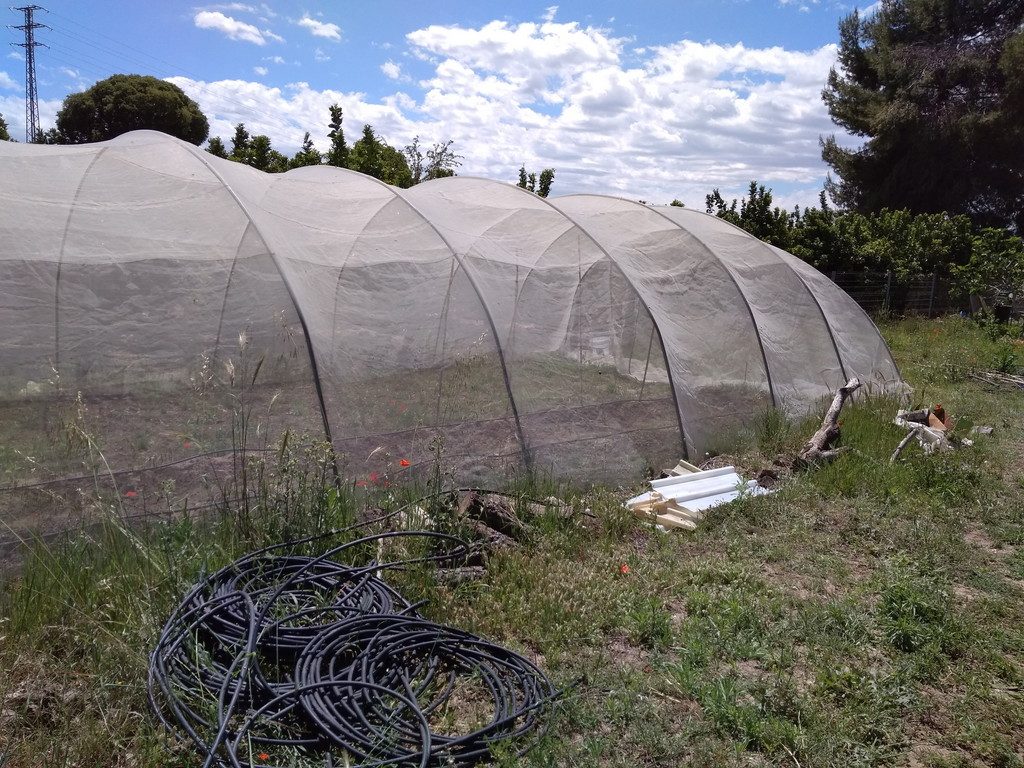
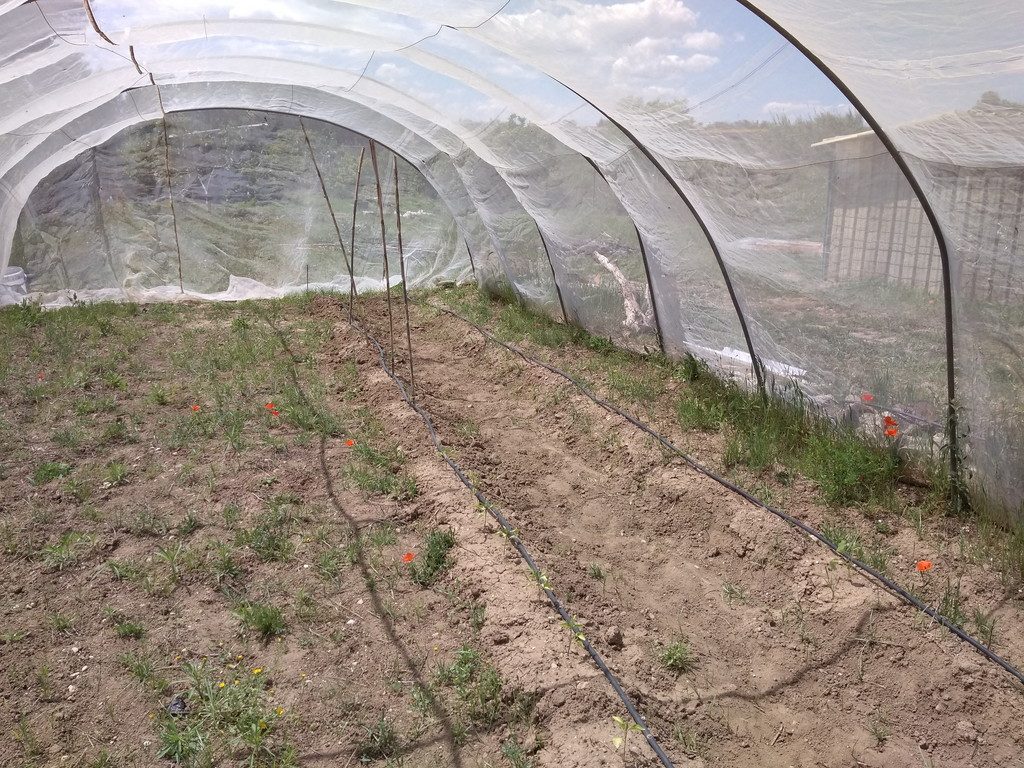
The plot of land was enclosed within a fence and included a couple of sheds/outbuildings. He pointed out what would soon be his chicken coop, and a variety of fruit trees. Variety? There was at least one of just about every fruit tree you can imagine. They had not had the property very long, and he was working to fix things up a bit before the heat of summer arrived. He was placing irrigation tubing within a fabric-protected greenhouse where he would plant a variety of vegetables.
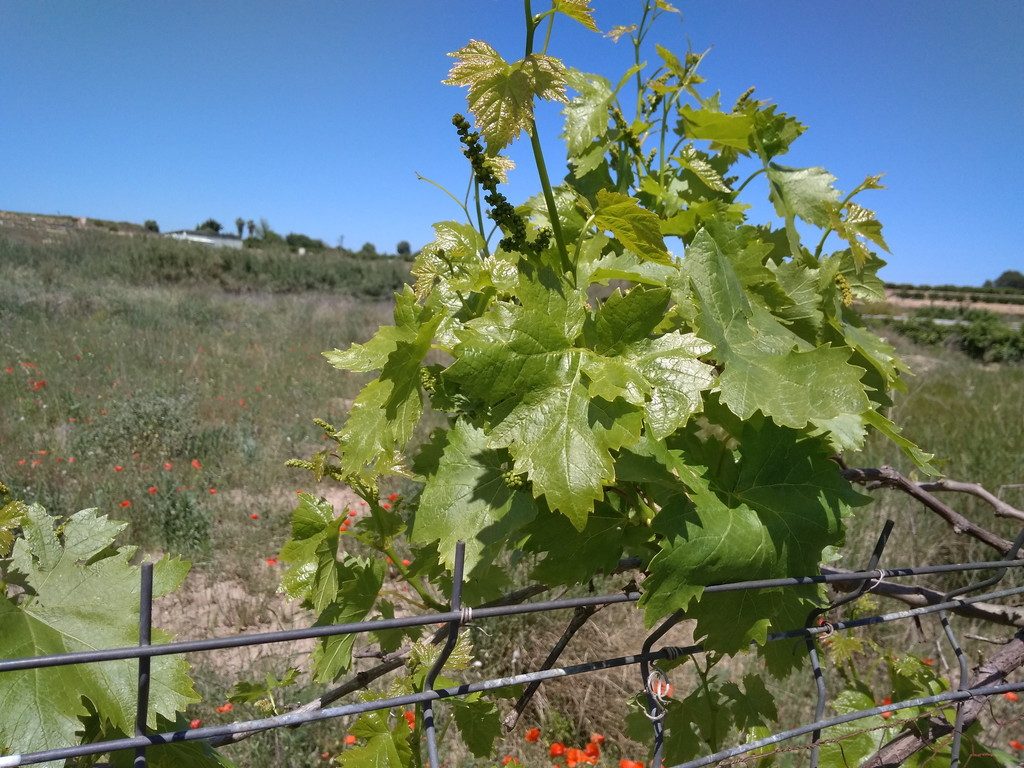
Outside, by the border fence there were roses and even some grape vines, with tiny budding grapes.
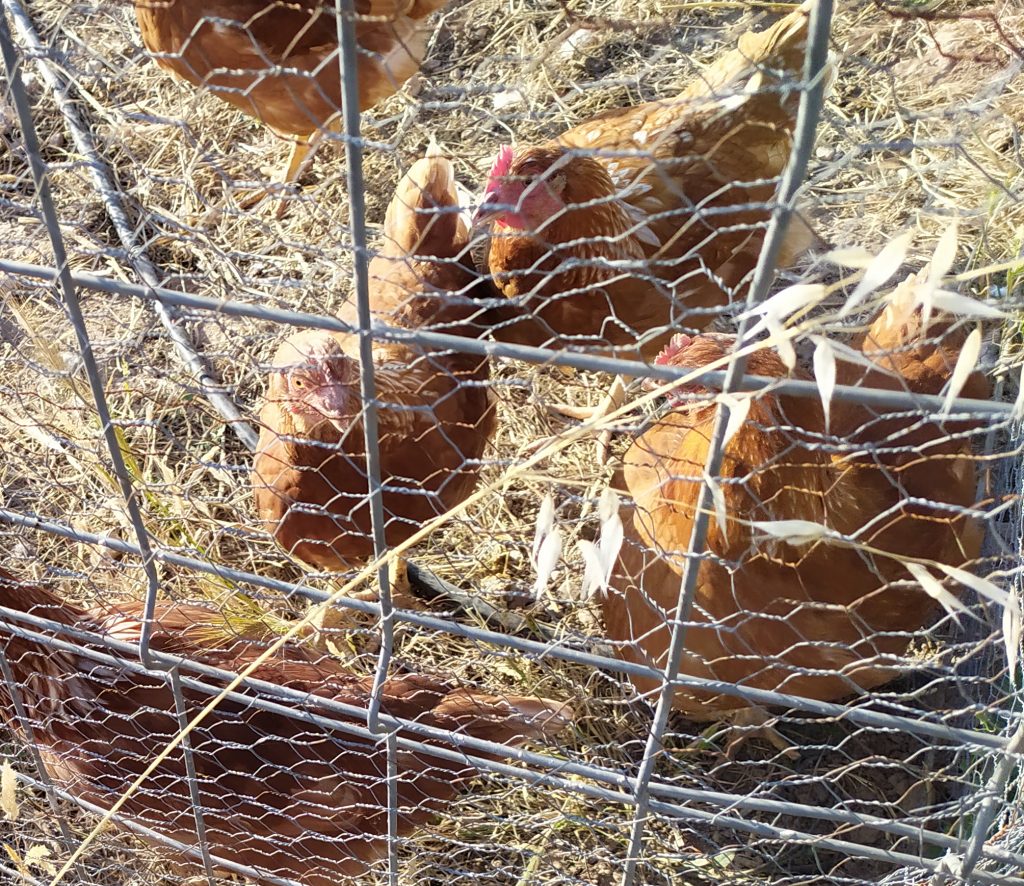
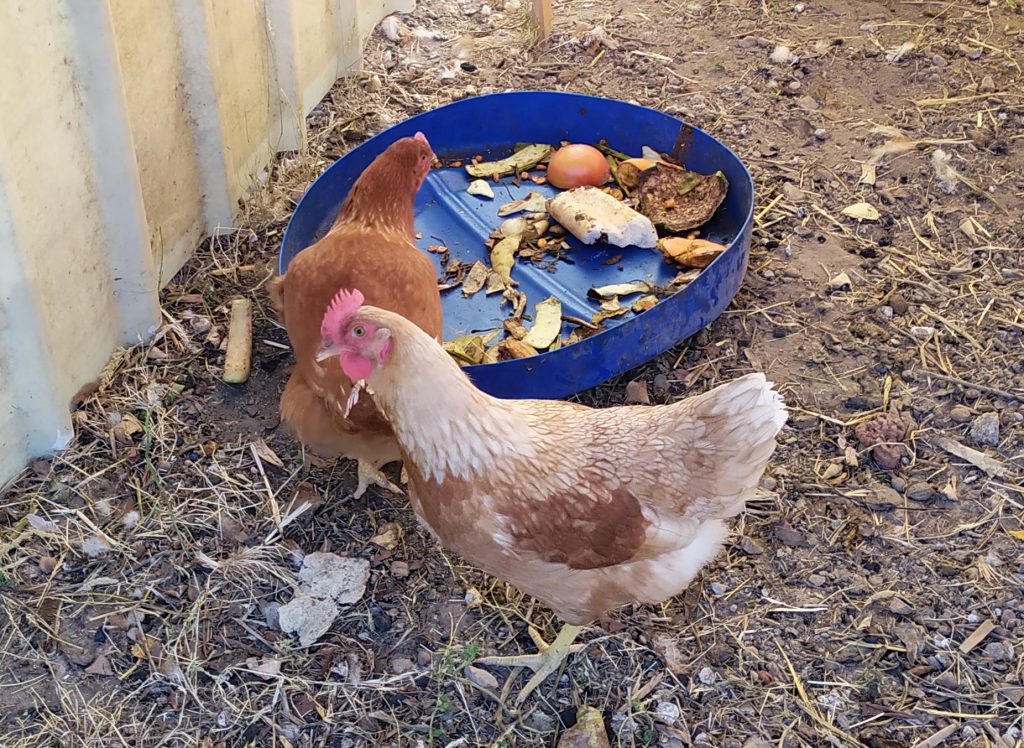
About a month later, before I headed home to Colorado, Salva took me back again. The coop had chickens clucking along who decided that perhaps my shoes were food-like substances. Vegetables were slowly growing in the garden area, and crazy snails were working their way up any vertical surface or stick.
I think it is great that their two small children would have this bit of terreno as part of their world as they grow up.
As Salva drove me back to Xàtiva I said to him, “You have a really good life here.” He said “Yes, we are happy. A person can always want more. But if we are not satisfied with what we have, a person will never be happy.”
The weather is getting much nicer, and I decided it was high time I visited my friends Rafa and Marta who live in Ontinyent.
(click on any photo to go to an enlarged view. In that view, click again to “zoom in”.)
Rafa picked me up in Xàtiva, and they showed me their beautiful flat before we headed out to see the sights.
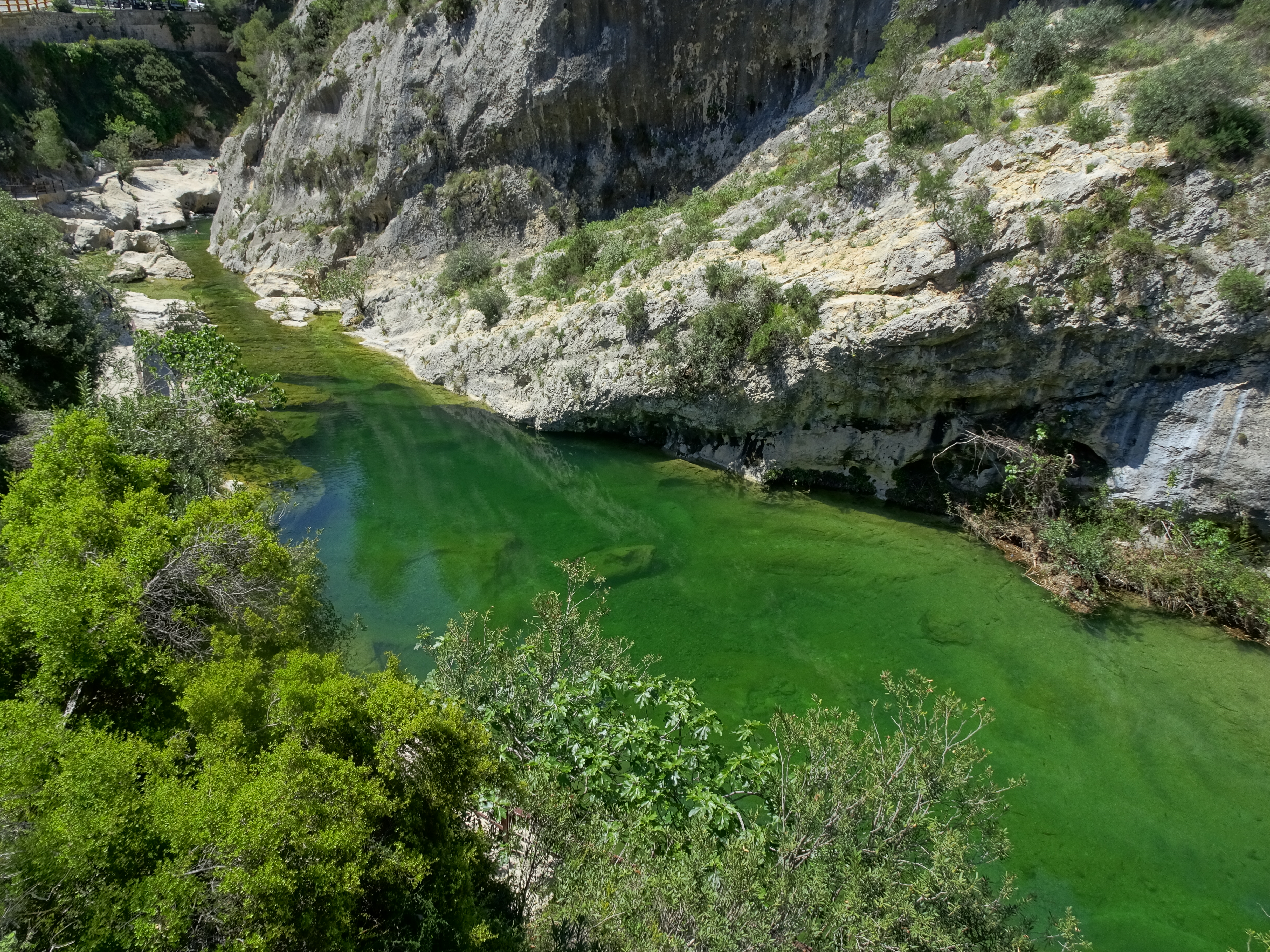
Very close to town is an oasis called Pou Clar (Clear Spring)
Pou Clar
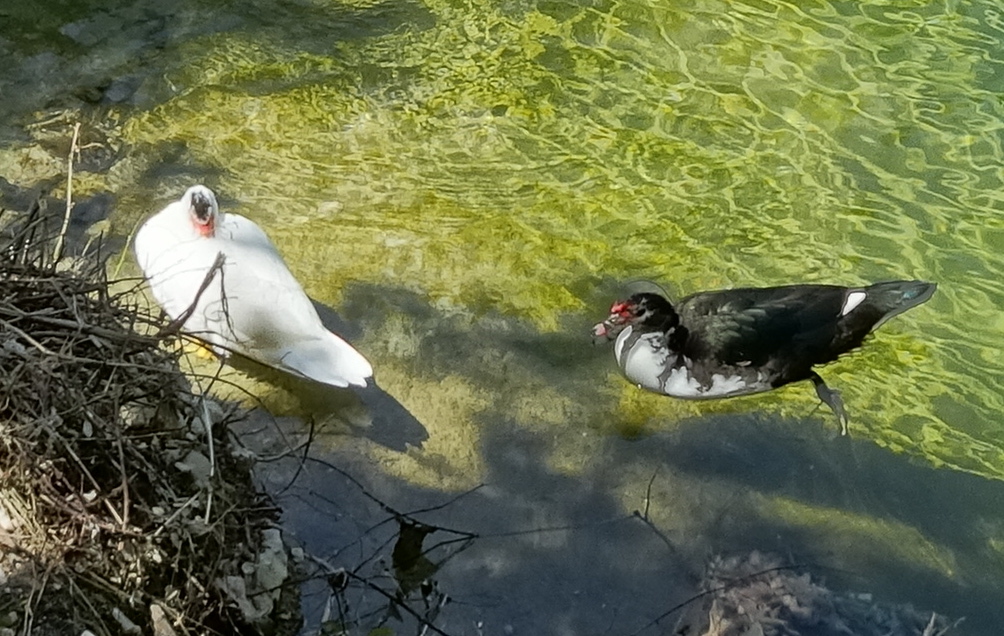
The ducks here are a different breed than the mallards common in Denver.
It is a tranquil haven right off a highway, but down below you can’t even hear the cars.
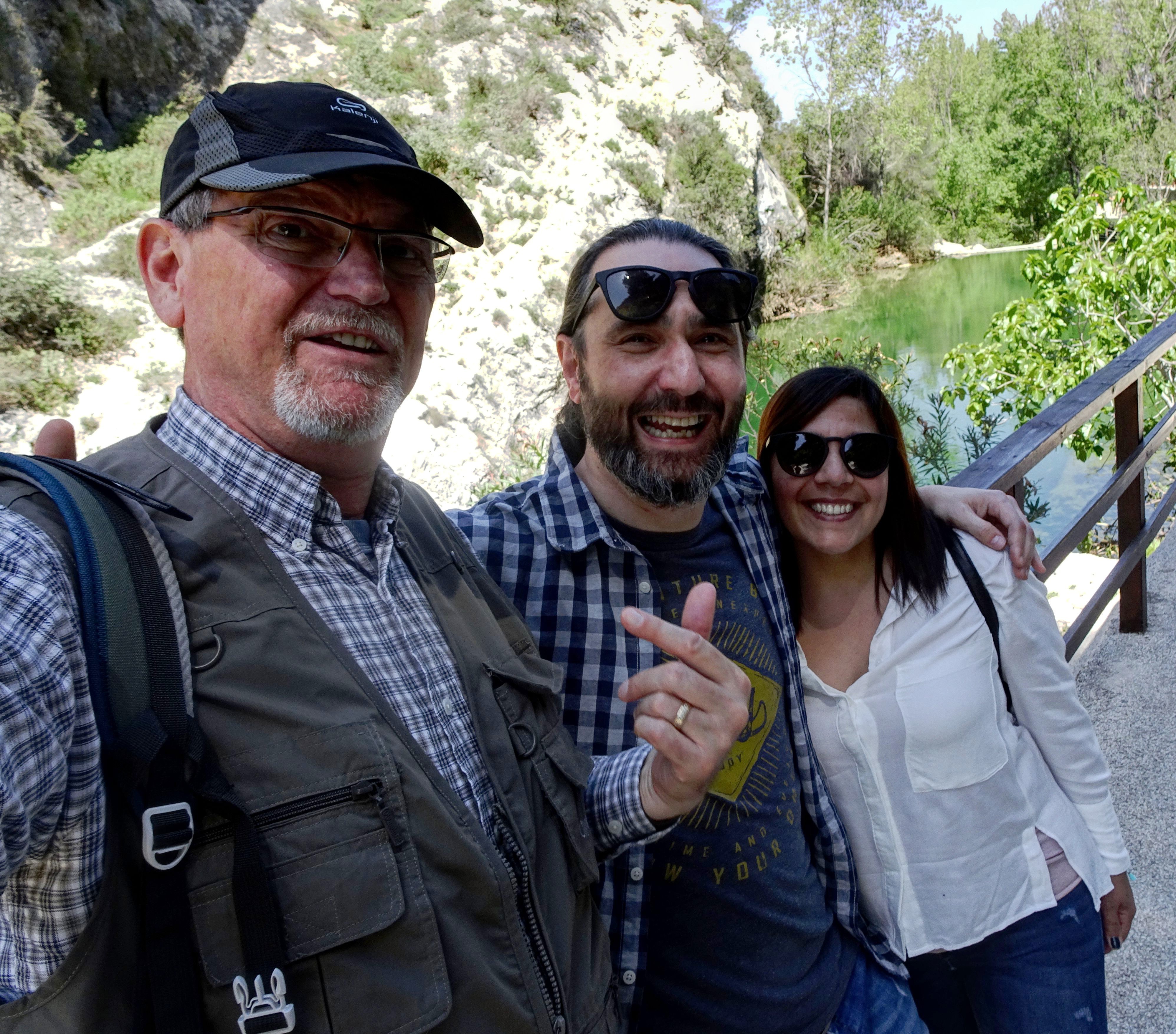
The time is always right for a “selfie”
This park is quite extensive with a series of trails that follow the water, but one trail also climbs up the hill on the other side where there are picnic benches protected by signs that warn that picnicking is strictly forbidden. 😂😂
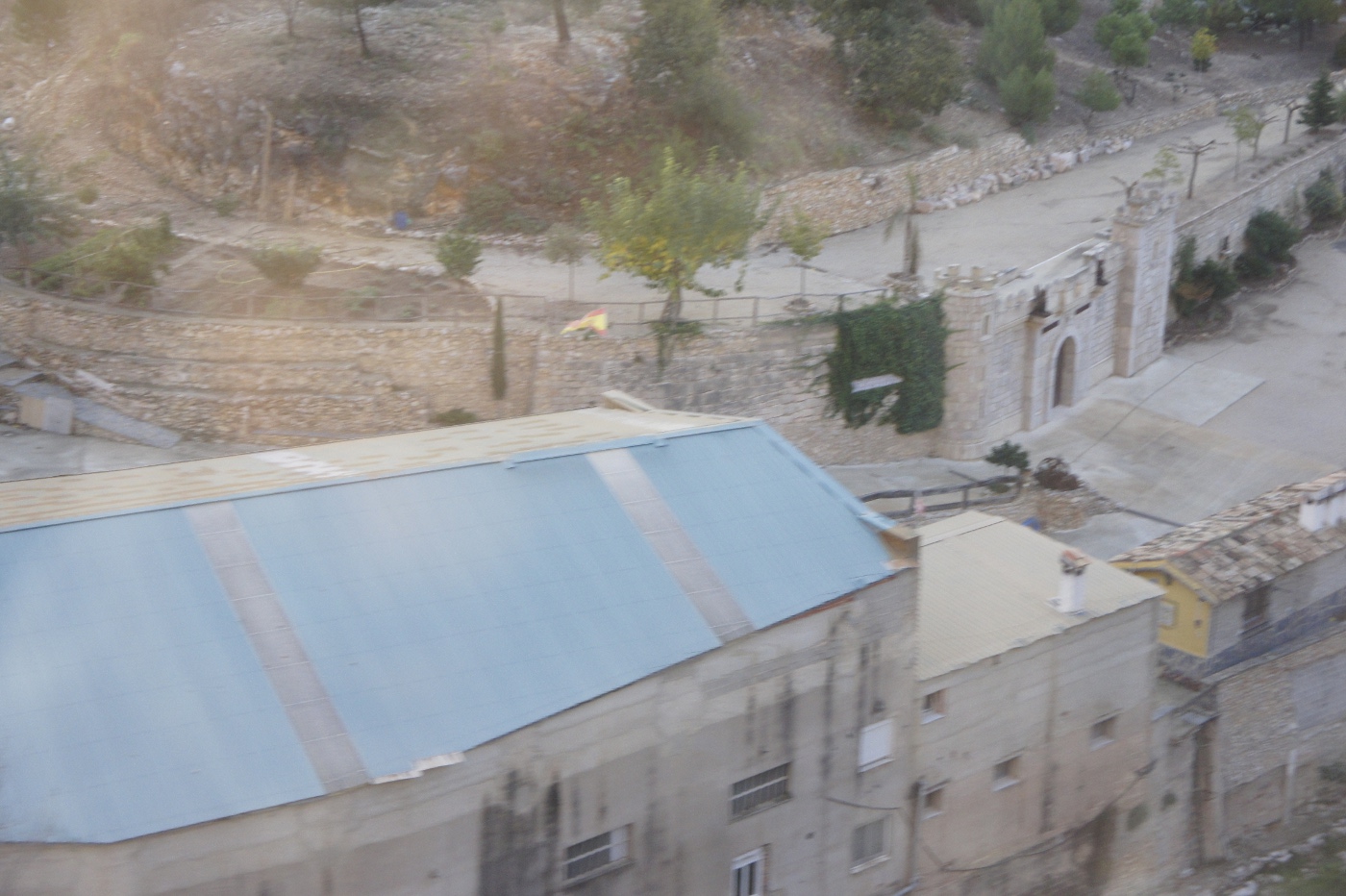
This area is near a spot I have often admired from the train that runs to Alcoy. As the train slips out into the open air between tunnels, there is a quick glimpse of a complex of buildings that includes what looks like a castle gate leading into the hillside. I have always been curious about it, but nobody seemed to know much about it.
Mystery spot
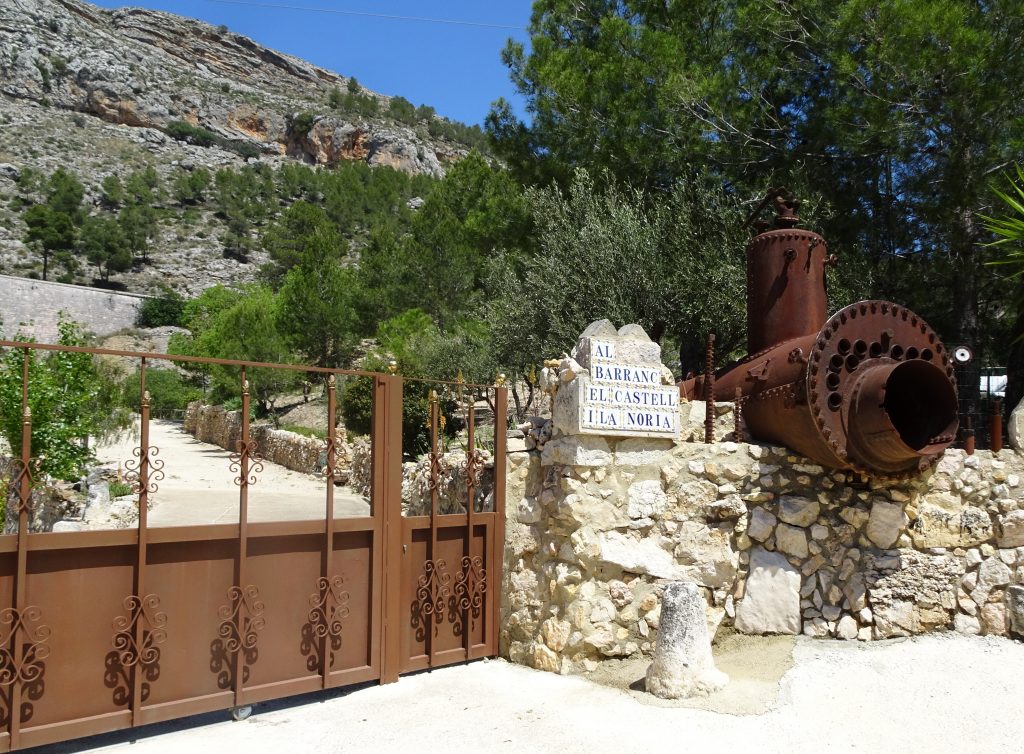
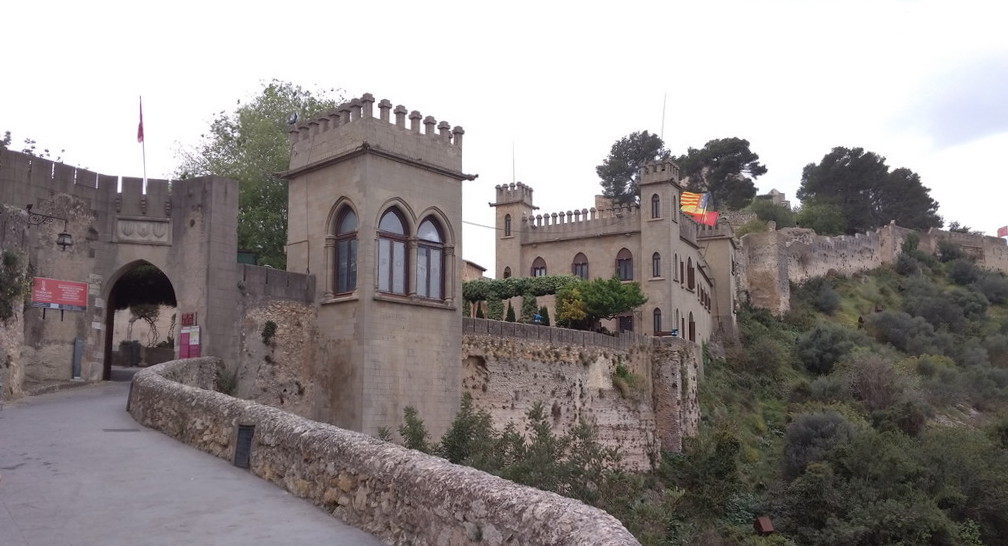
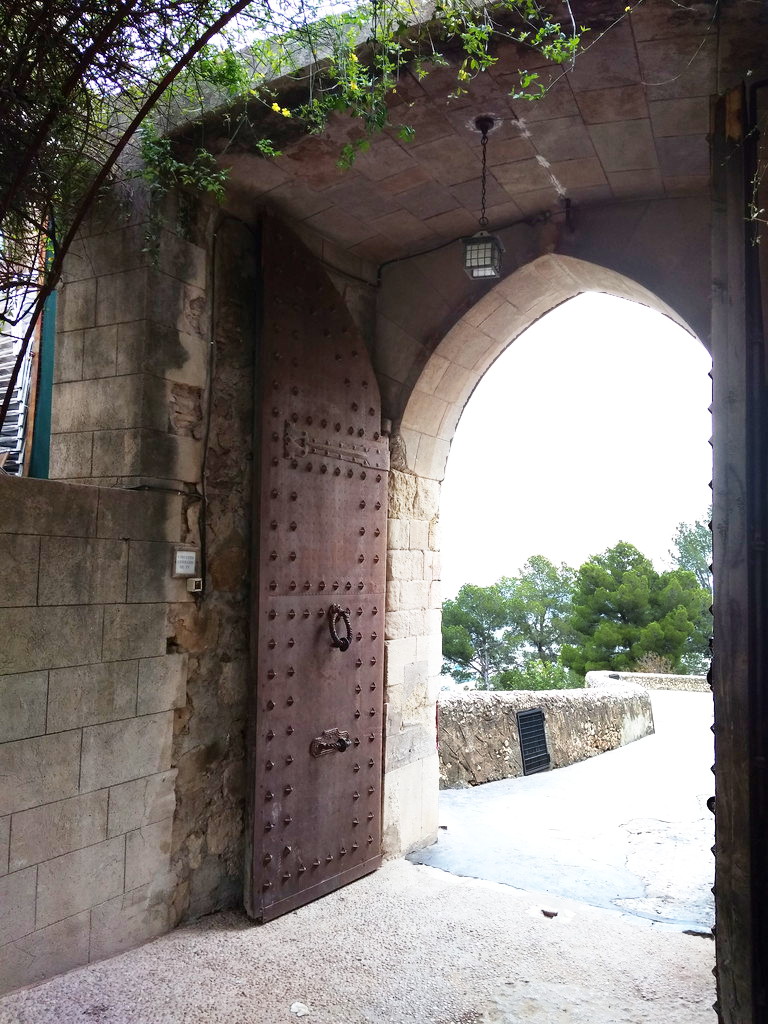
Well, today, a couple of kilometers from Pou Clar, we stopped by the entrance to that site. “Al Barranc el Castell i la Noria” (the castle and wheelhouse in the ravine)
The front door of: Al Barranc el Castell i la Noria
After getting that all straightened out, we headed to our next destination!
Bocarient
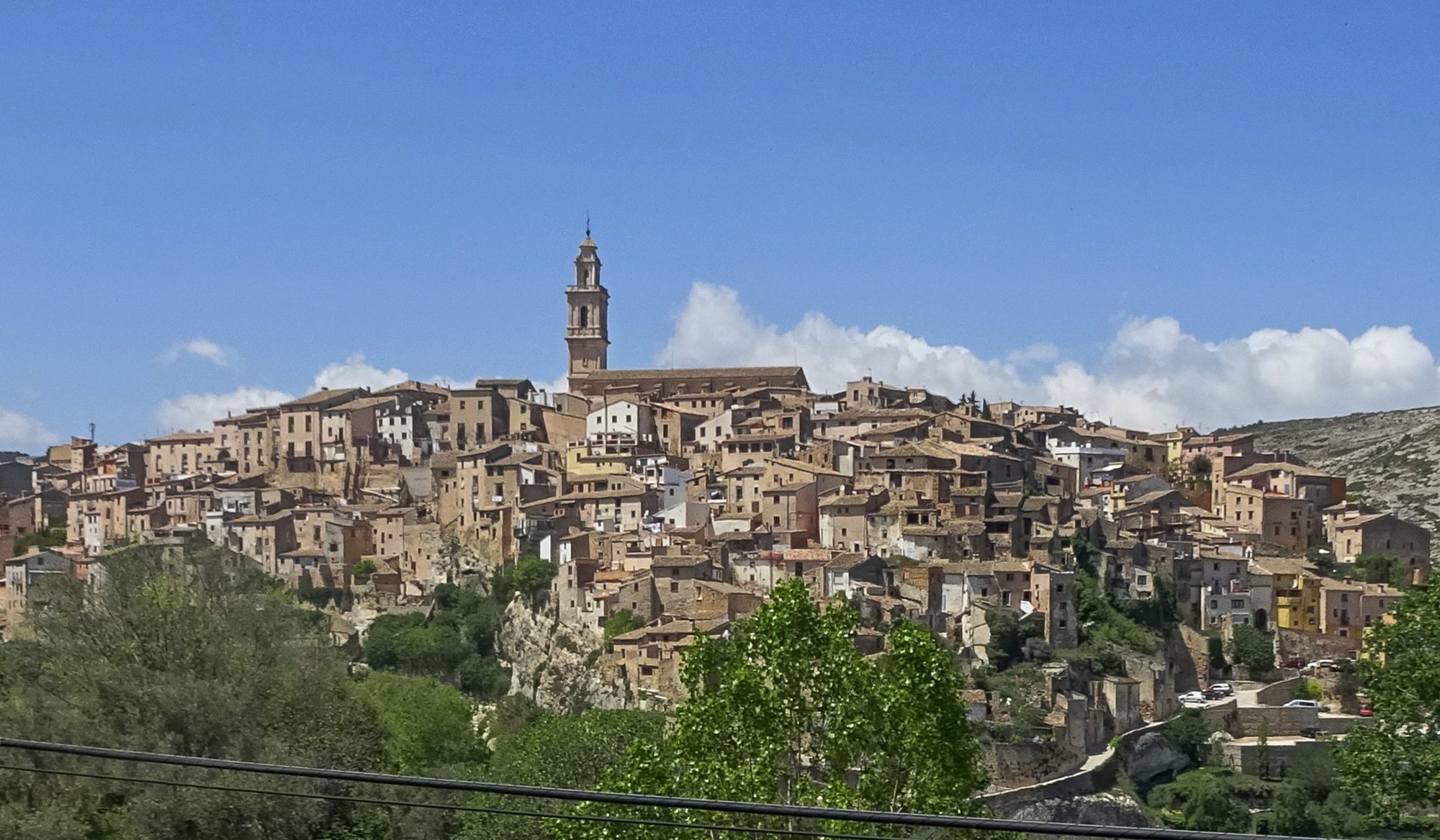
We continued up the road to the beautiful little town of Bocarient. Rhonda and I had been there a decade or more ago. From the highway, the view of the church and the town’s jumble of old houses is stunning!
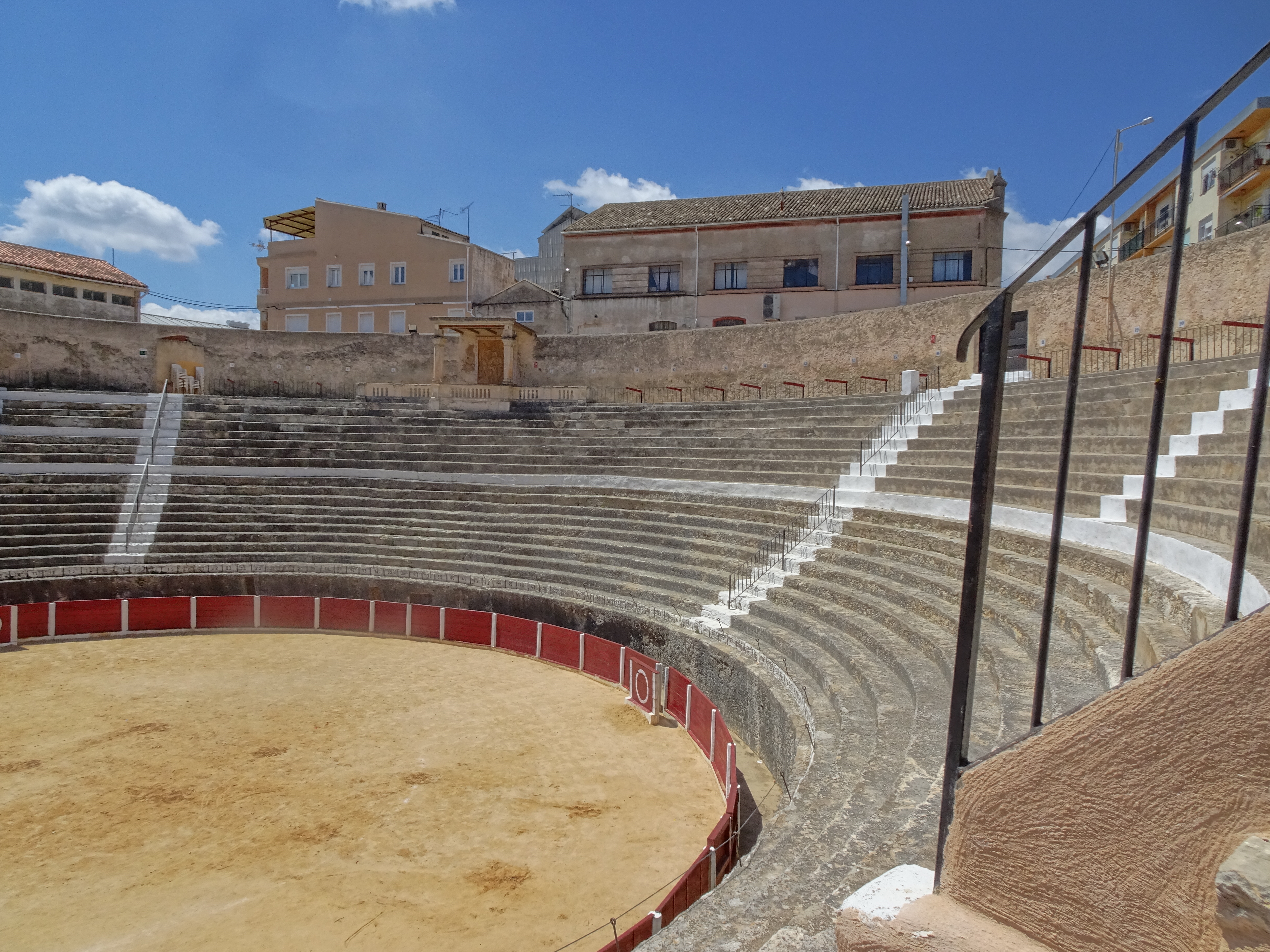
Bull ring in Bocarient
When we visited, we had heard of a hilltop bull-ring carved out of the native stone, but had been unable to find it. Rafa navigated his car up and down a series of extremely narrow one-way streets and took us to the edge of the bull ring. I am not a fan of bull fights, but this was a very interesting sight!
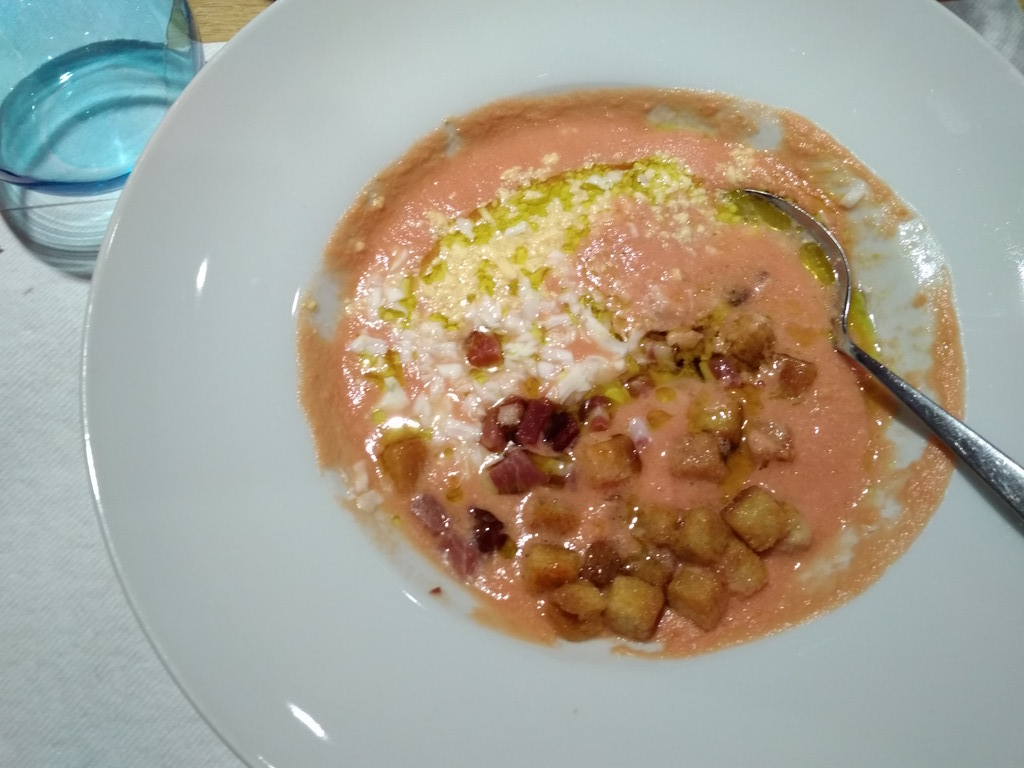
Time to eat! We headed back to Ontinyent, where our treasured guide
Marta led us to an elegant restaurant. The morning travels had sparked
our appetites. The Salmorejo I had as my “first dish” was definitely not
on my diet plan! But it was delicious!
Salmorejo
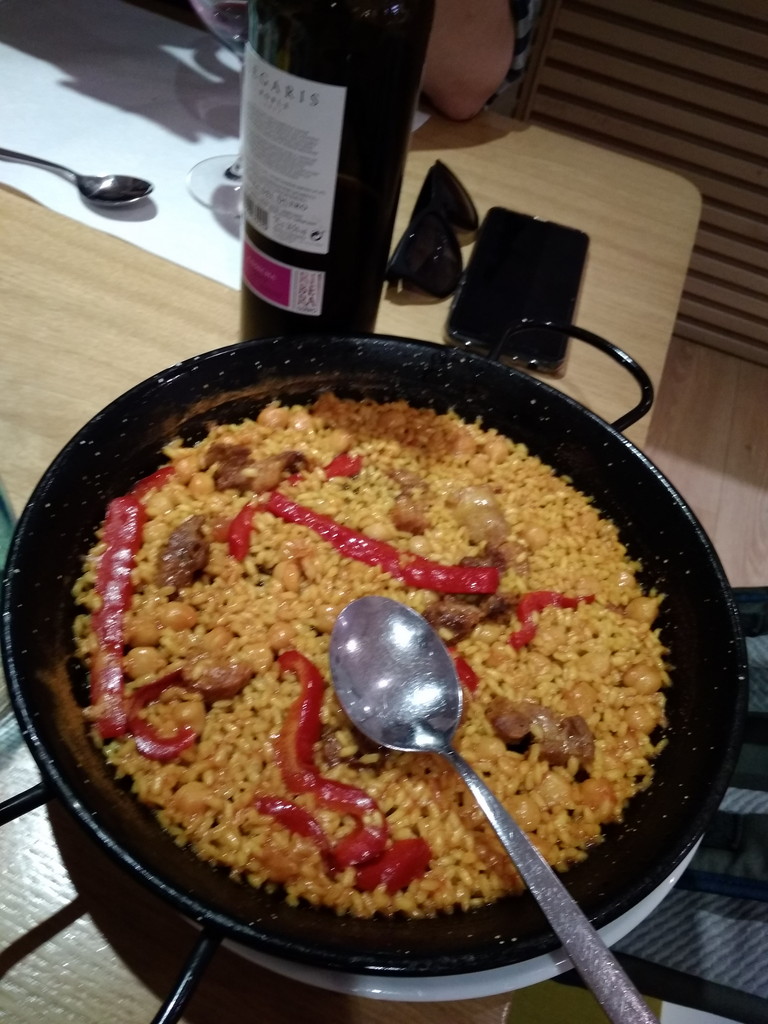
Paella
My “second course” was “Grandma’s paella”. This wasn’t going to help my diet either! (and don’t even ask about how the wine you see in the photo fits in!) To wrap things up we each had yummy flan. OK, this probably set my weight reduction plan back a whole week, but it was so delicious!
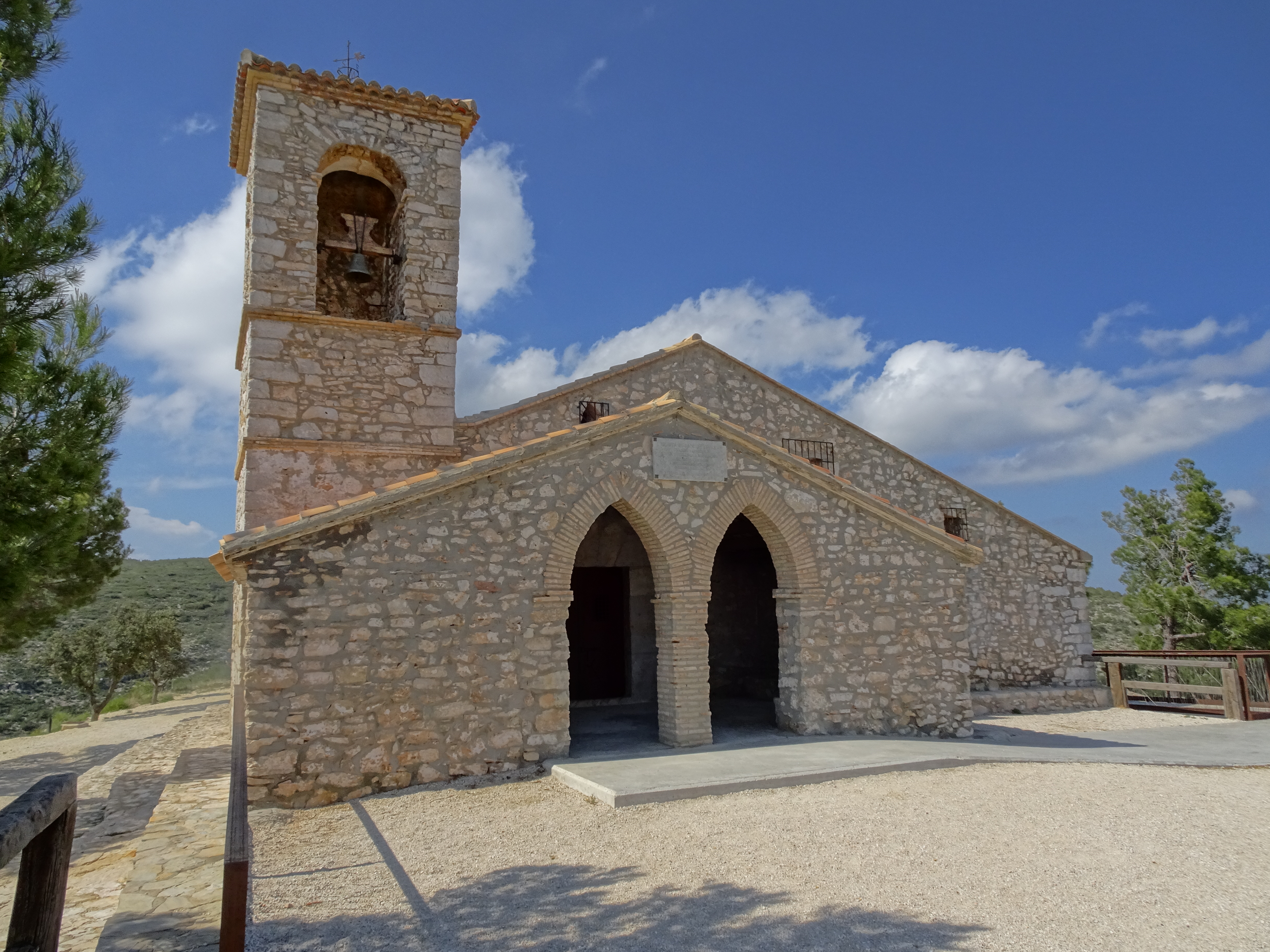
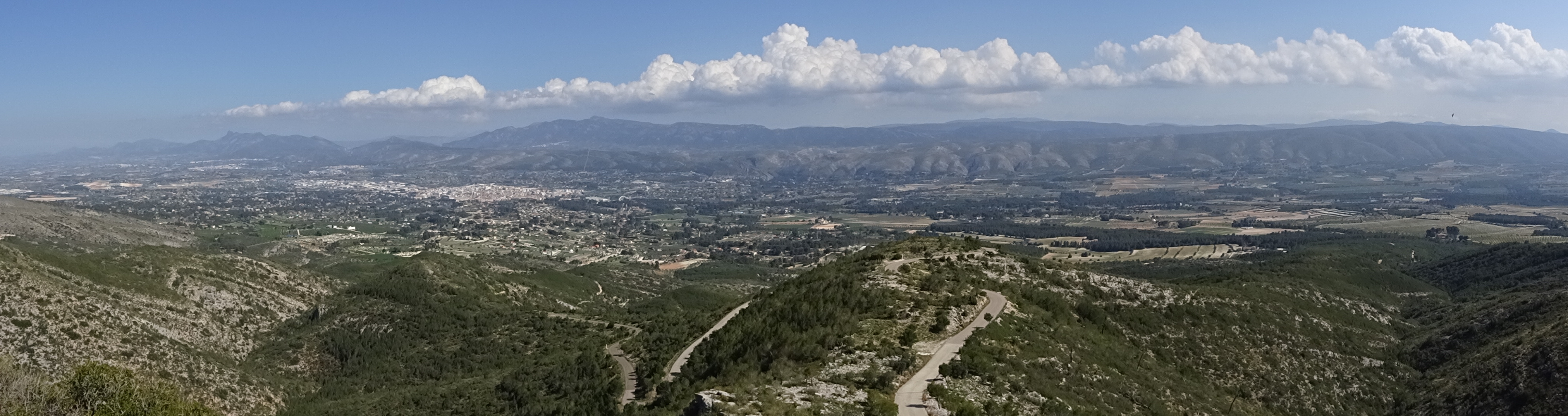
Next, Rafa and Marta took me to the Hermita de San Esteve, which is high atop a mountain with a stunning view over the entire area. On the drive up, Rafa recounted a recent strenuous bicycle ride up to the top.
Hermita de San Esteve
I felt as if I had worked off some of my meal’s calories just by listening to the account!
The view from San Esteve (click to enlarge!)
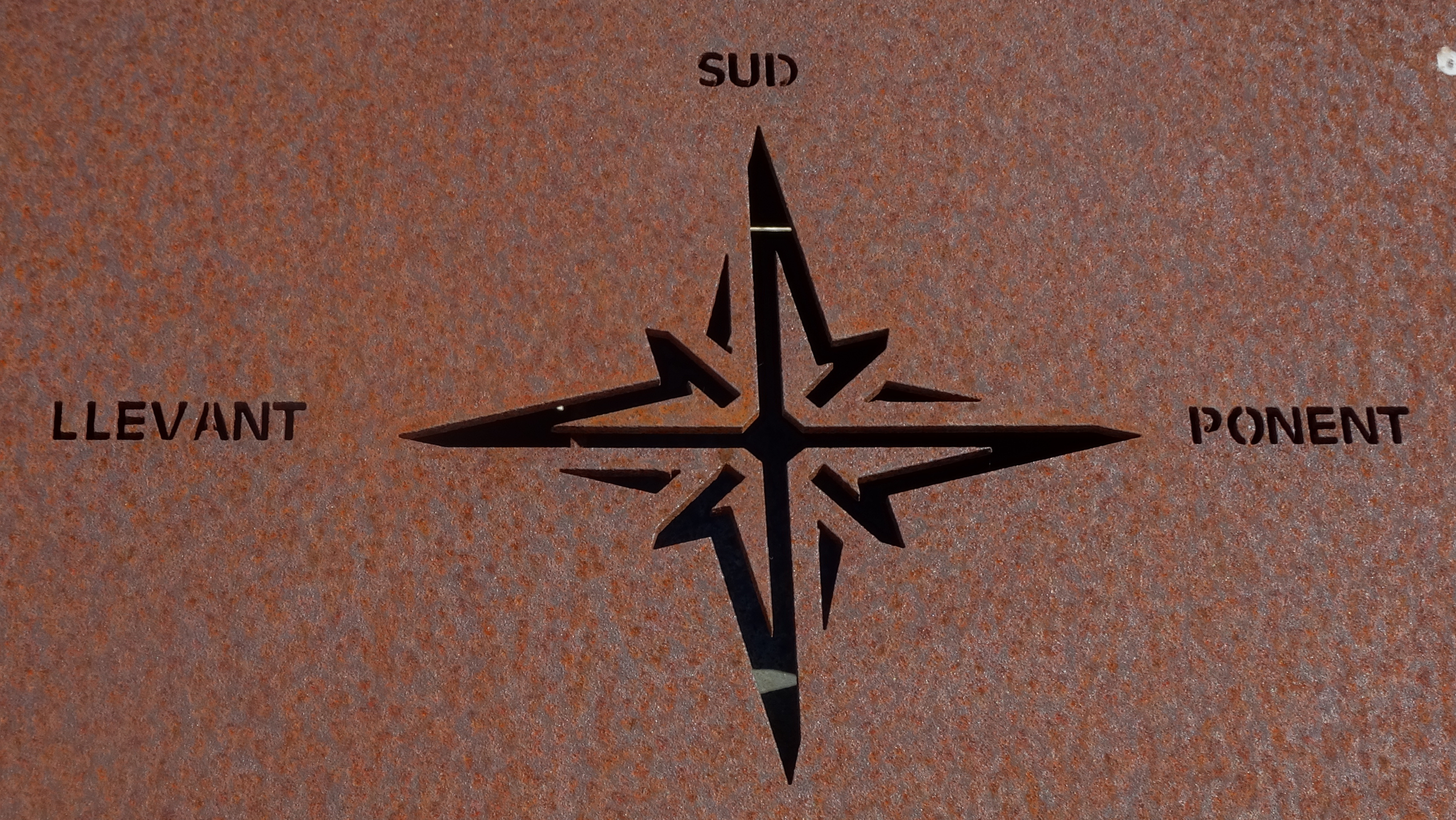
Compass rose
There are metal plates with all the sights you can see from this panoramic view. Of great interest me was the “compass rose” that identified which directions the view included. At the top it says south. But I was fascinated by the labels for east and west: Llevant (rise) for east, and Ponent (set) for west!
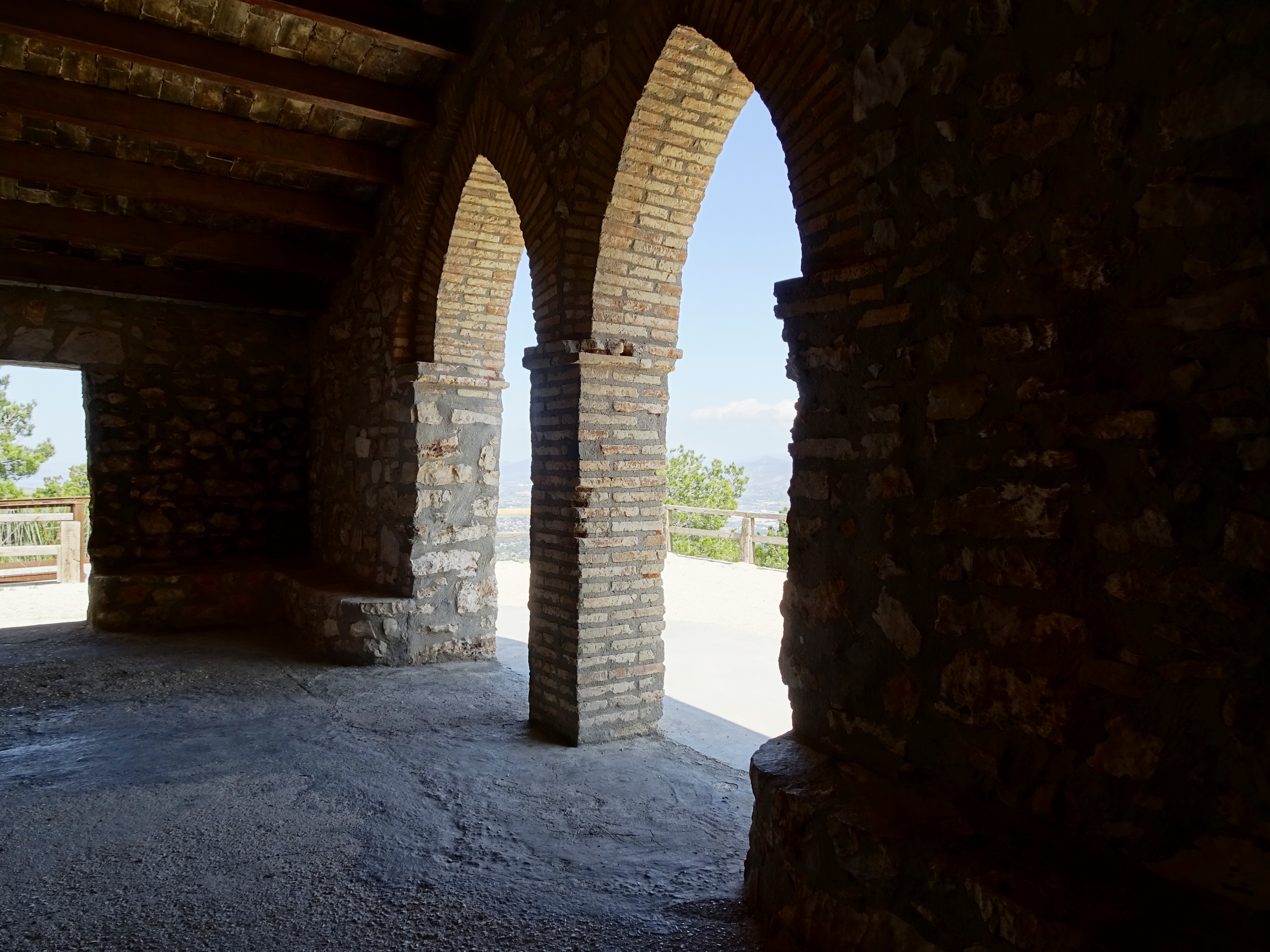
In the shade
After admiring the view for a bit, we took shelter from the sun and sat for a bit to recover from the meal.
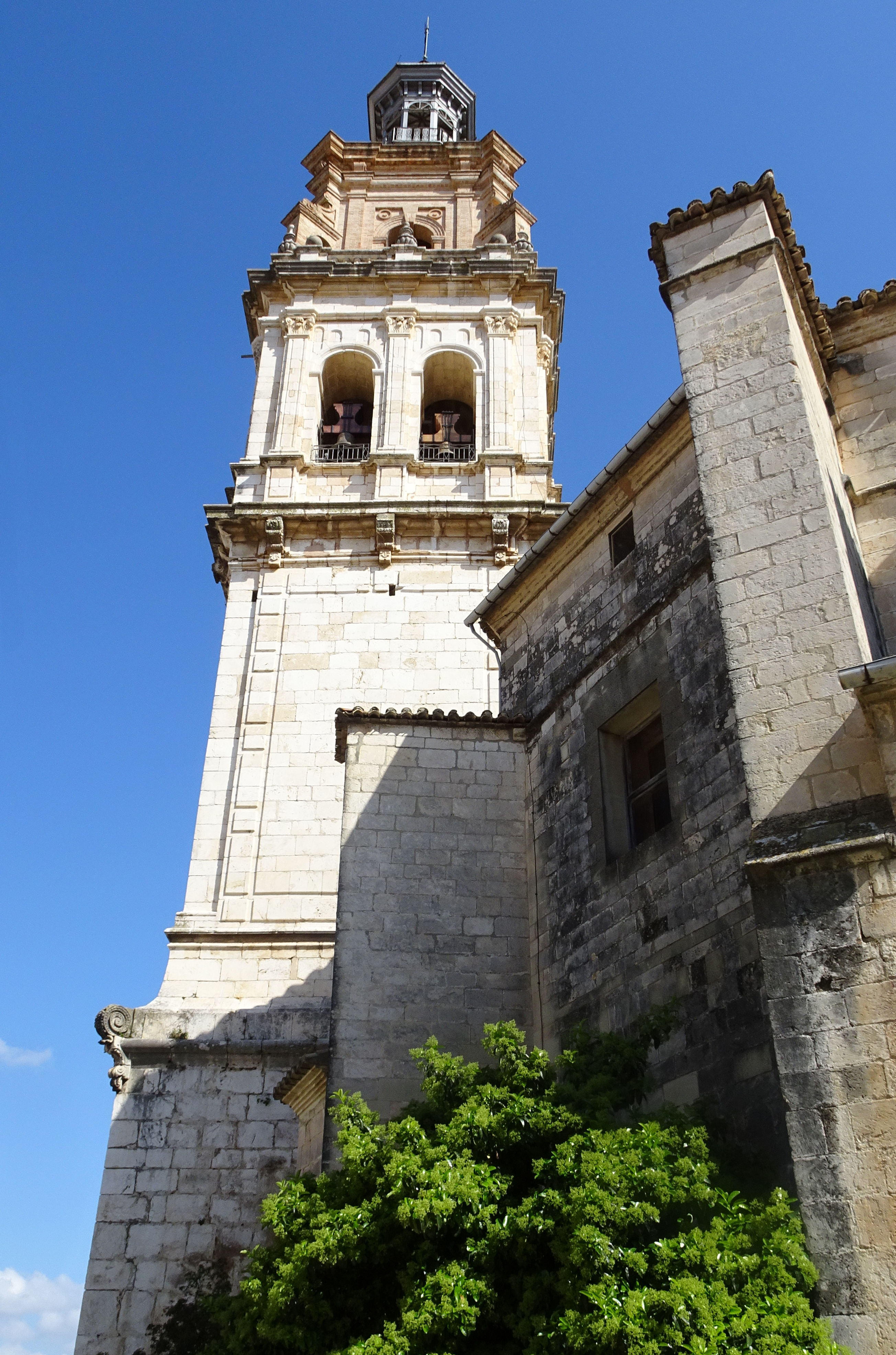
OK, time to stop lollygagging! Back to Oninyent to see the sights of the town! We headed toward the old quarter and walked past the Santa Maria church which boasts the tallest bell tower in the region.
Bell tower of Santa Maria
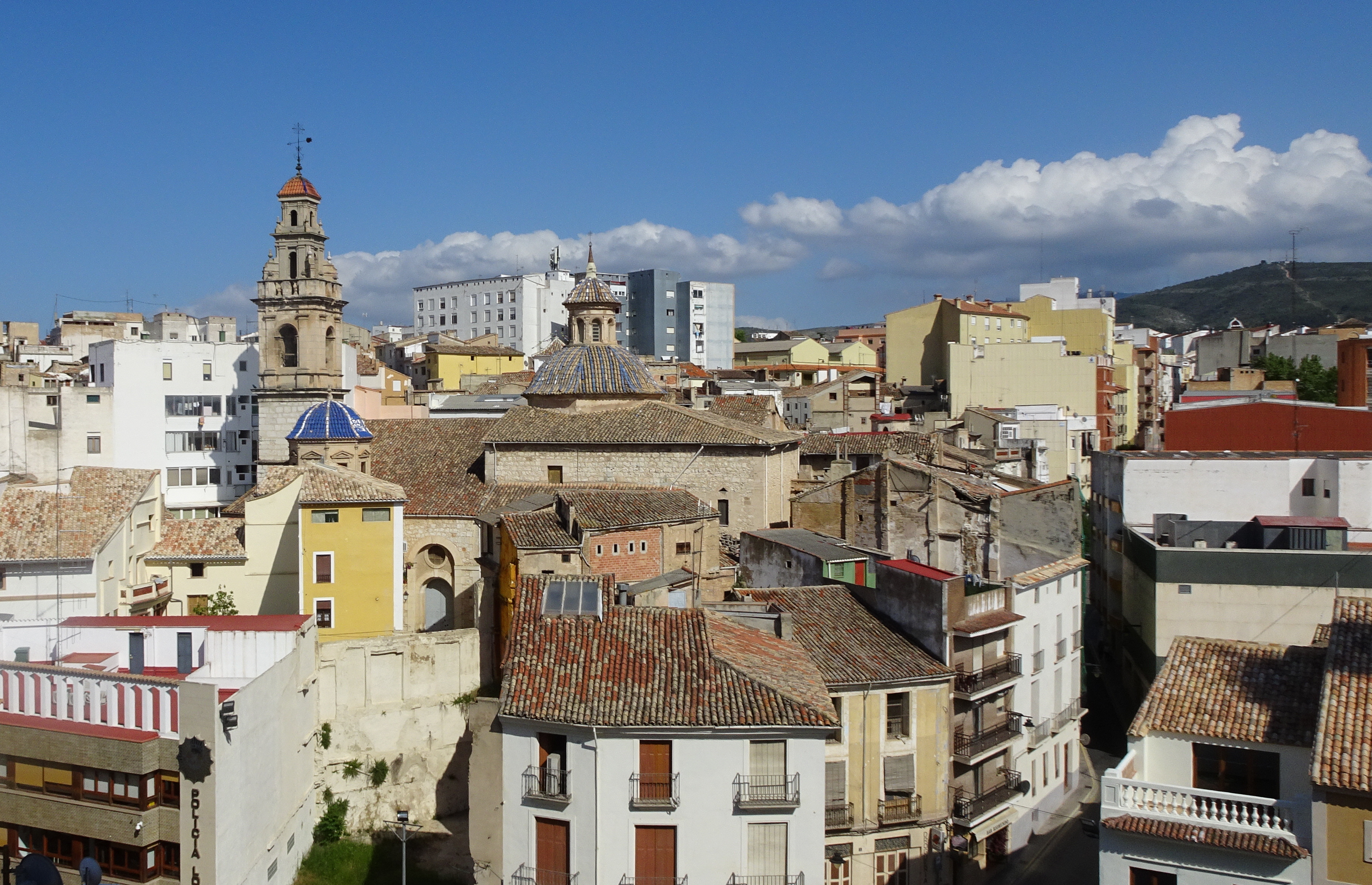
The view across the old part of town was quite pleasant!
Rooftops of the old part of town
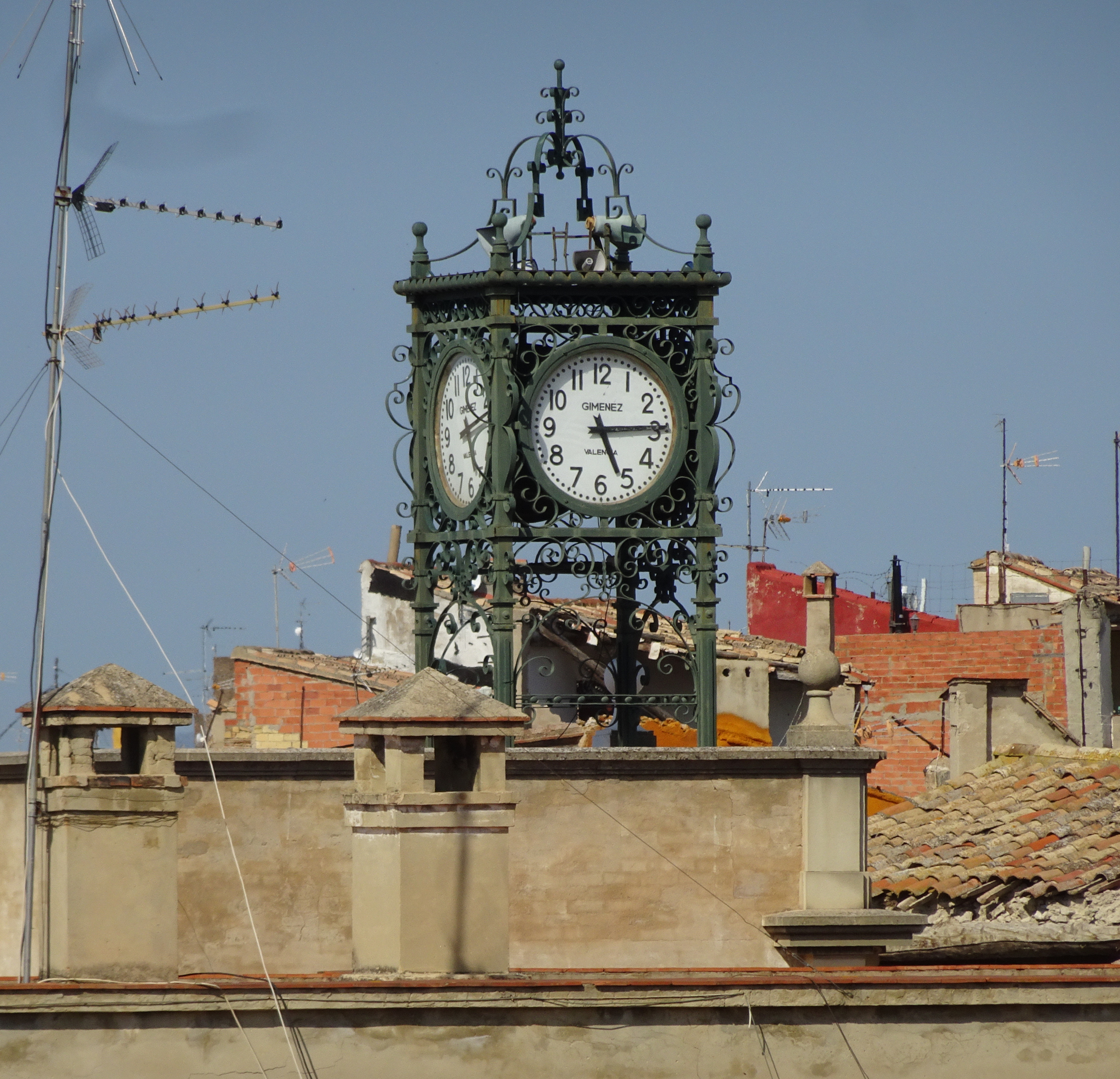
Clock of mystery
One roof sported a strange, intricate clock. It was a mystery. We later walked in front of the building that the clock adorned, but it was nothing special at all. Go figure. Somewhere there is a story…
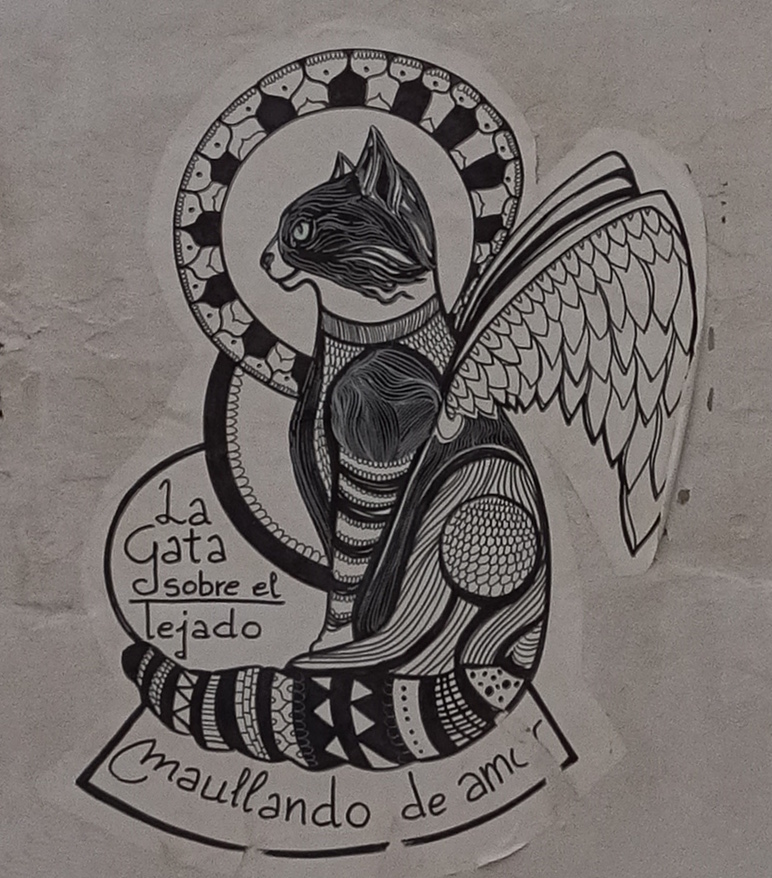
On a wall, there was a painted image of a cat with wings: “The cat on the roof meowing for love”
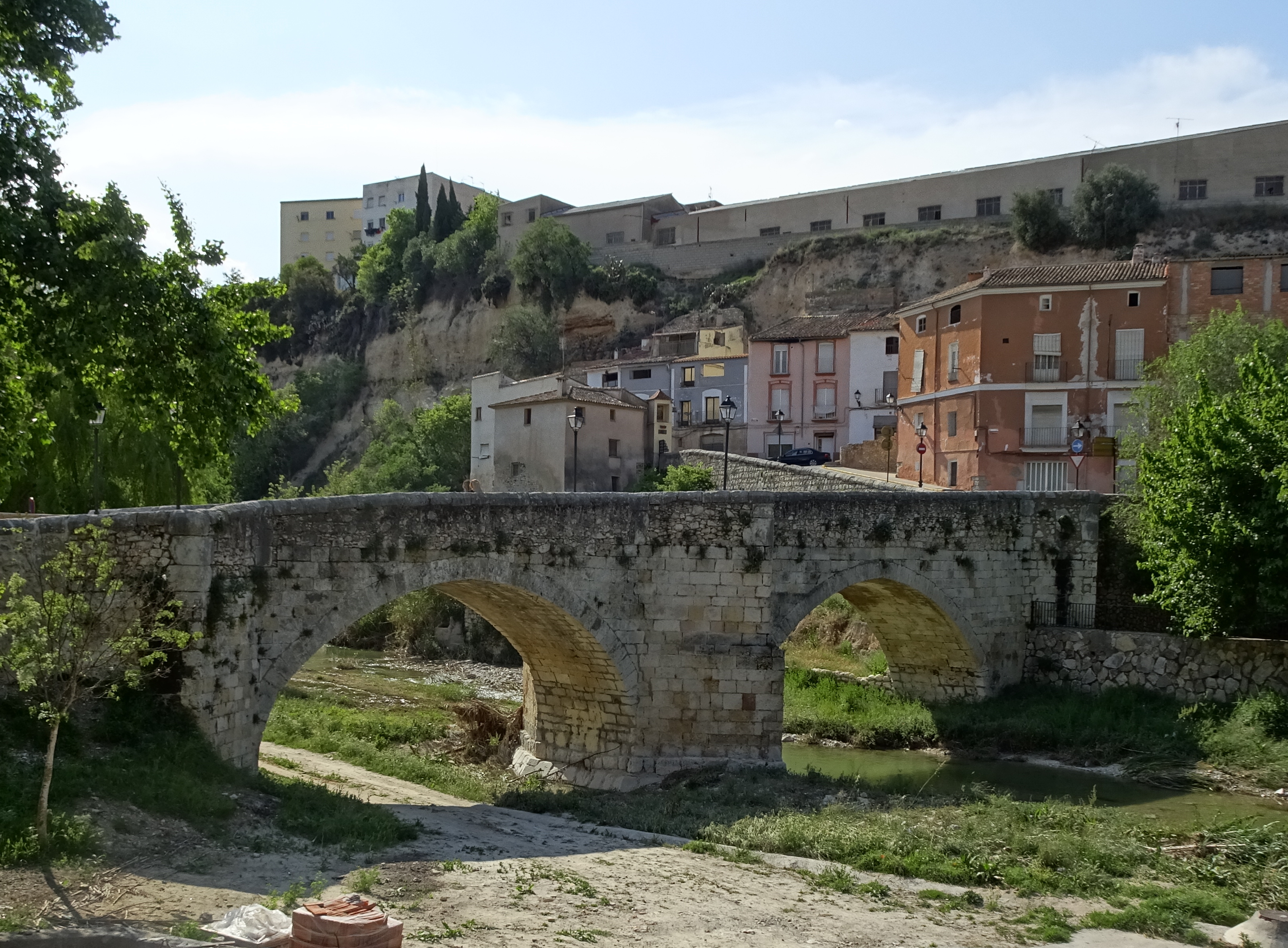
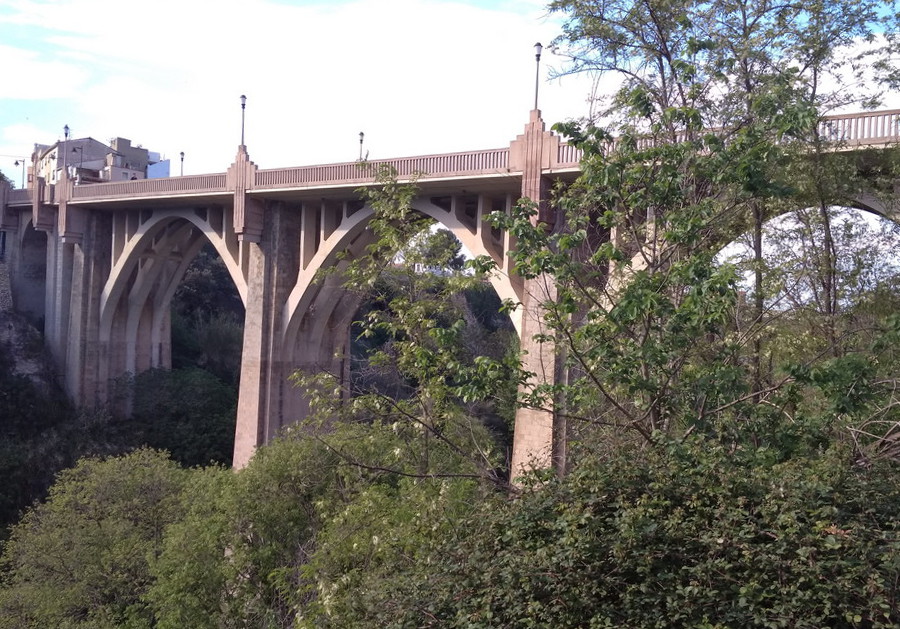
Last but not least, two bridges over the Clariano River: One low, one high.
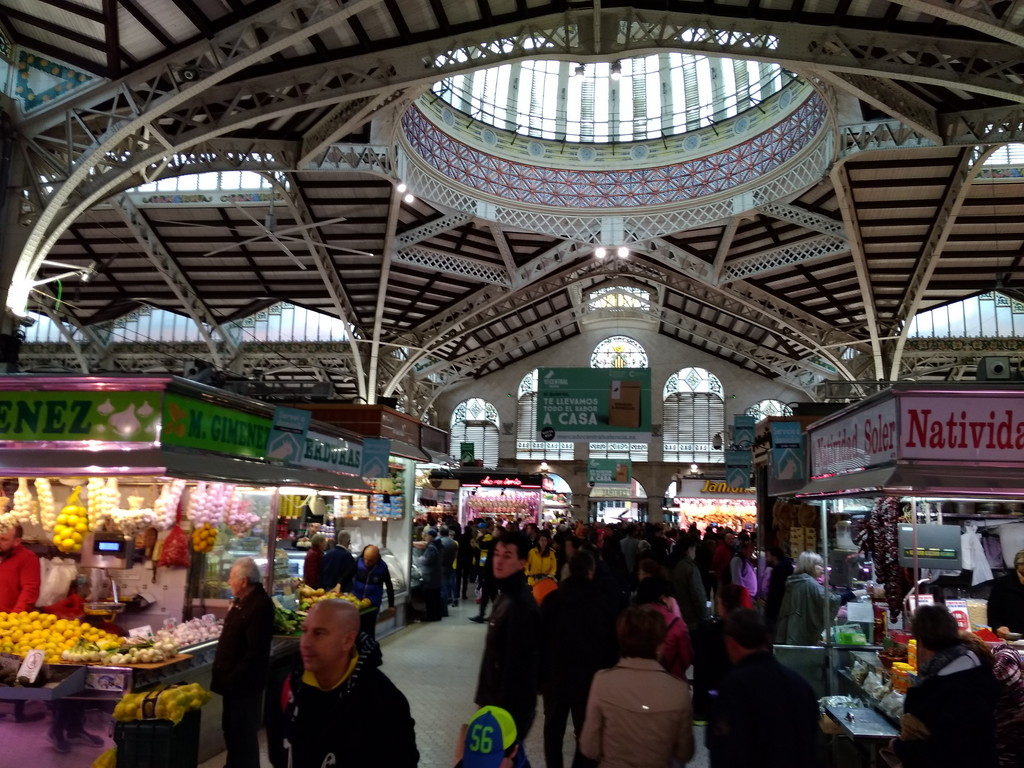
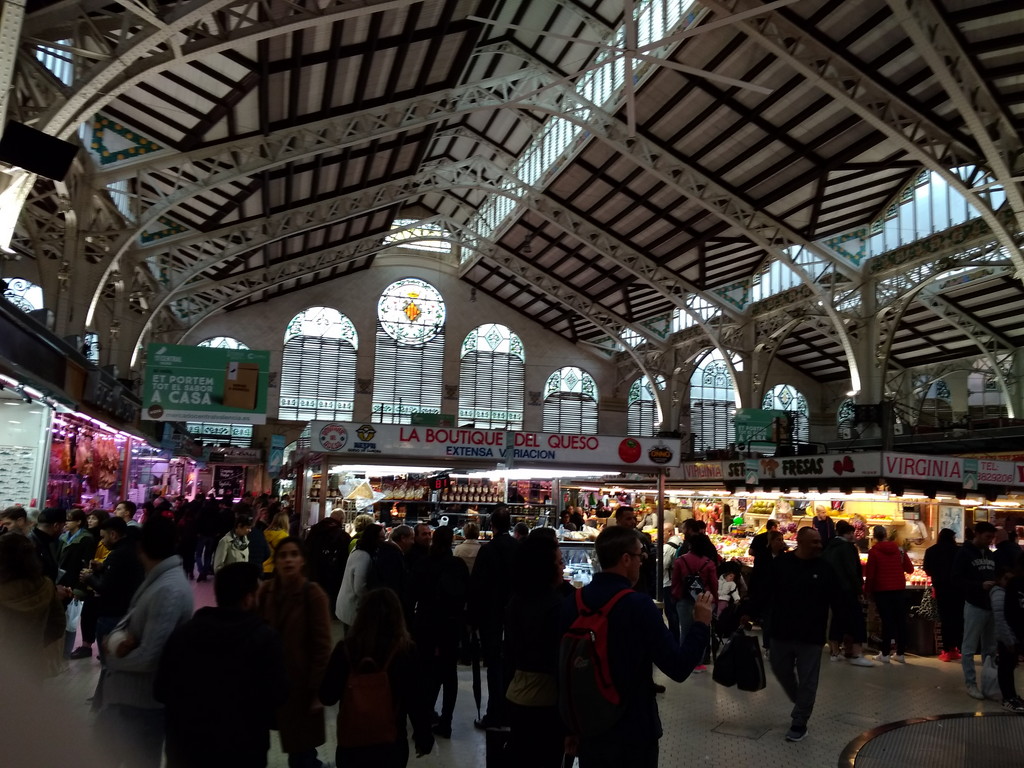
Today I was on a special shopping mission in Valencia. During my search for a particular item, I made a brief detour through Valencia’s massive, covered Central Market.
We had been to it several times about 15 years ago, but then massive renovations began. I am not sure exactly when the work finished, but this was the first time I had been inside the building since its rebirth.
Oh my goodness!
Amazing: Such a beautiful building! And what a wide assortment of fruits, seafood, meats, and any other type of food you can imagine. There is a sign that says something to the effect of “If you can’t find something here, it is quite possible it is not available anywhere.” They could be right!
My “SlackerBit” (the anti-FitBit) started nagging me that being a slacker is one thing, but that I had become almost immobile. It gave me a kick in the posterior and told me I had better walk, or else start looking for pants with a yet-larger waist size. So… I ambled up to the handy nearby castle and back. 🙂
My SlackerBit said “OK, fine. Now what are you going to do tomorrow?”
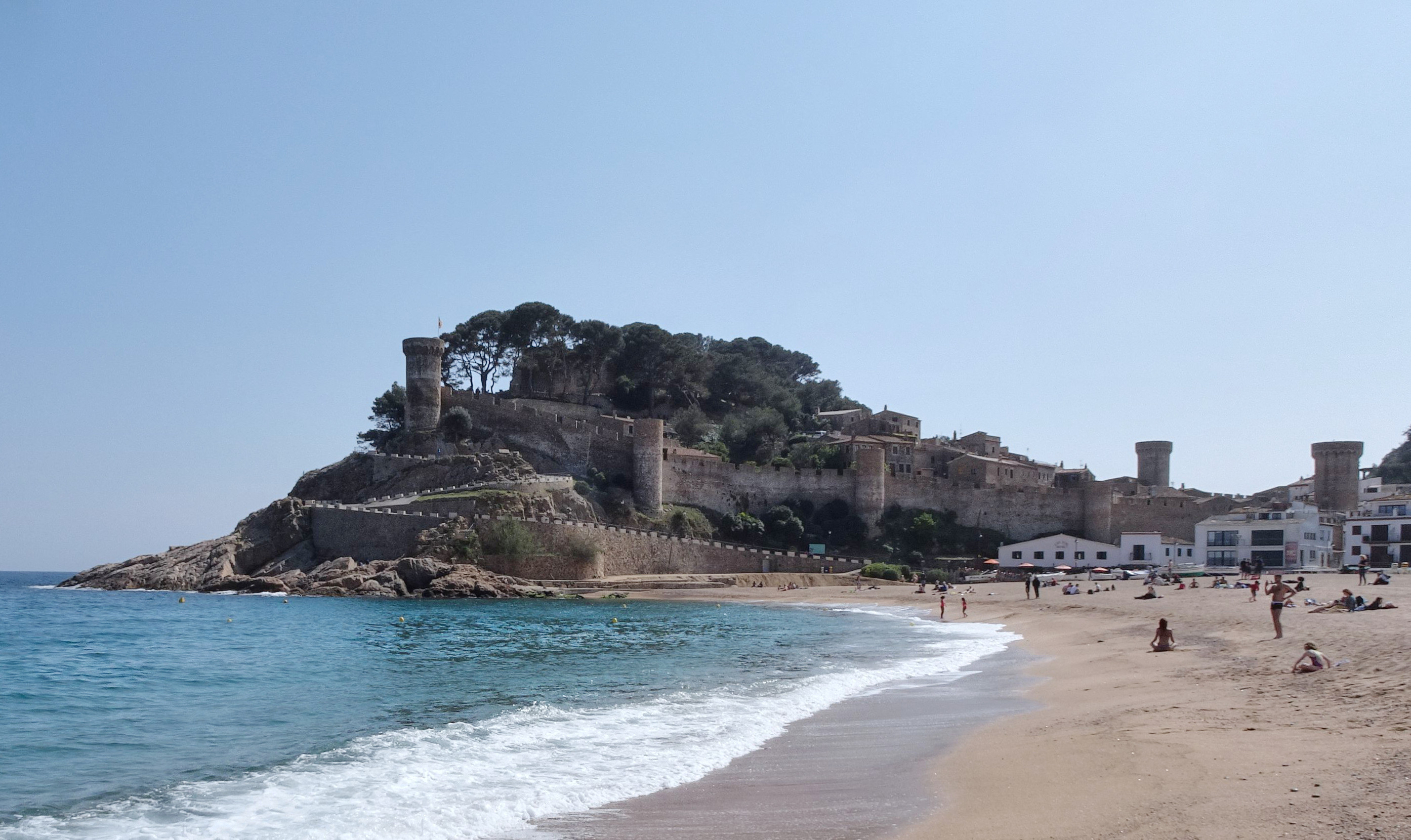
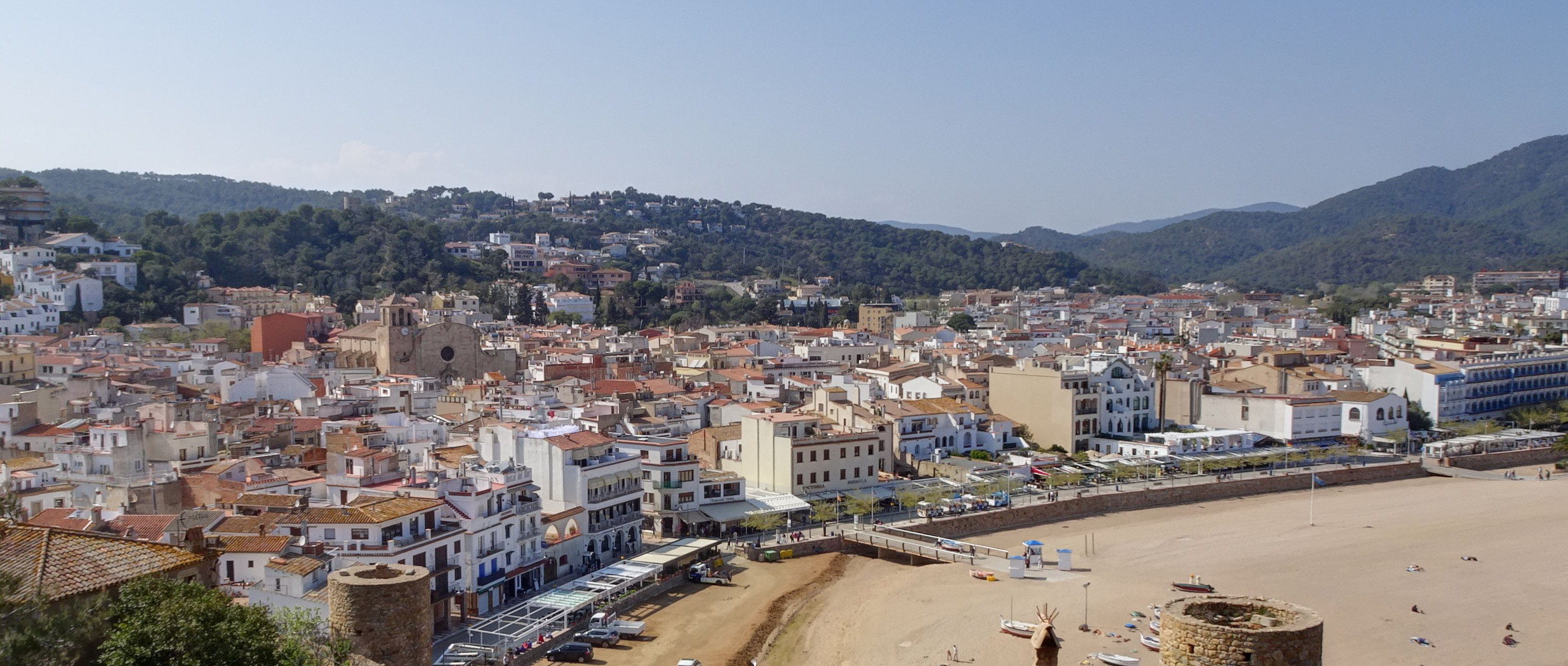
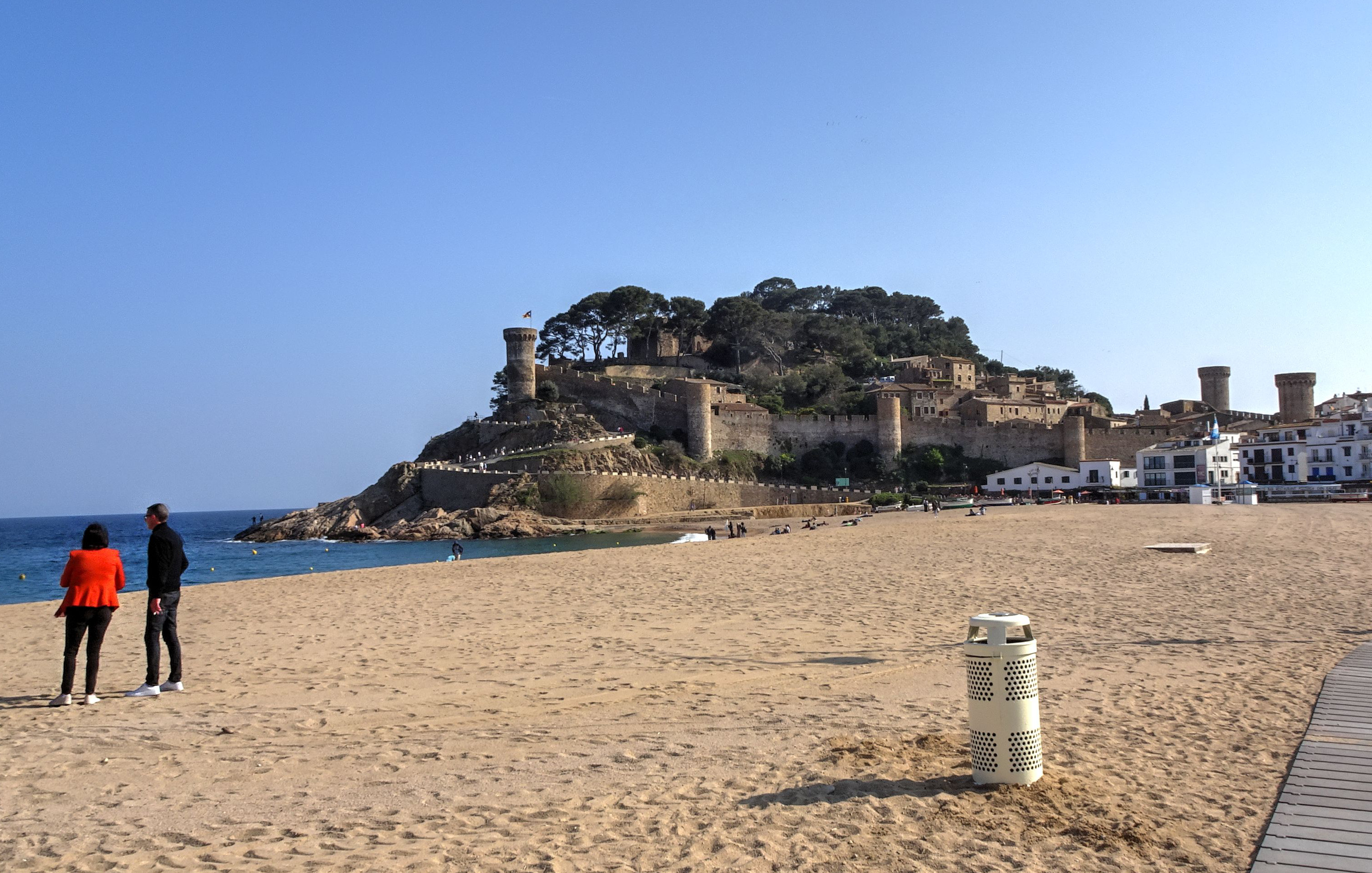
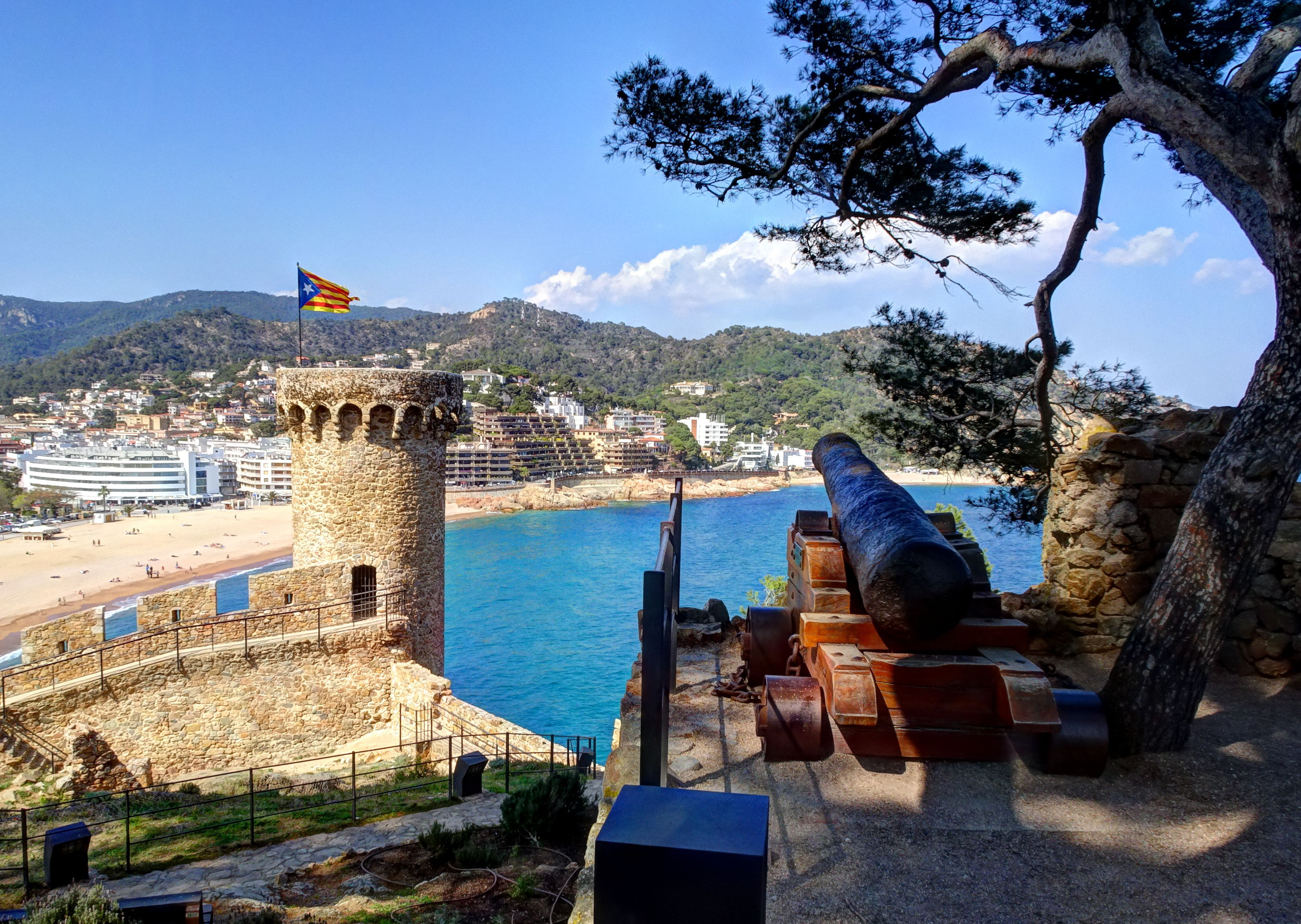
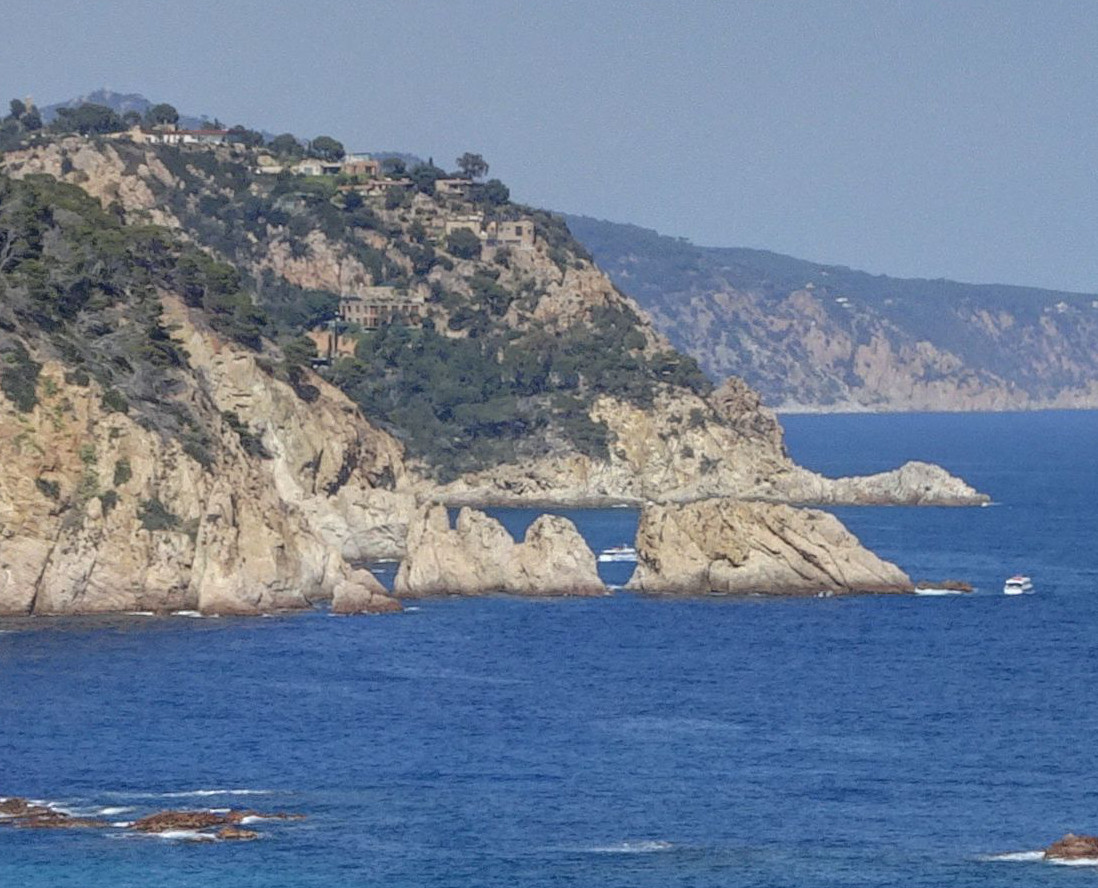
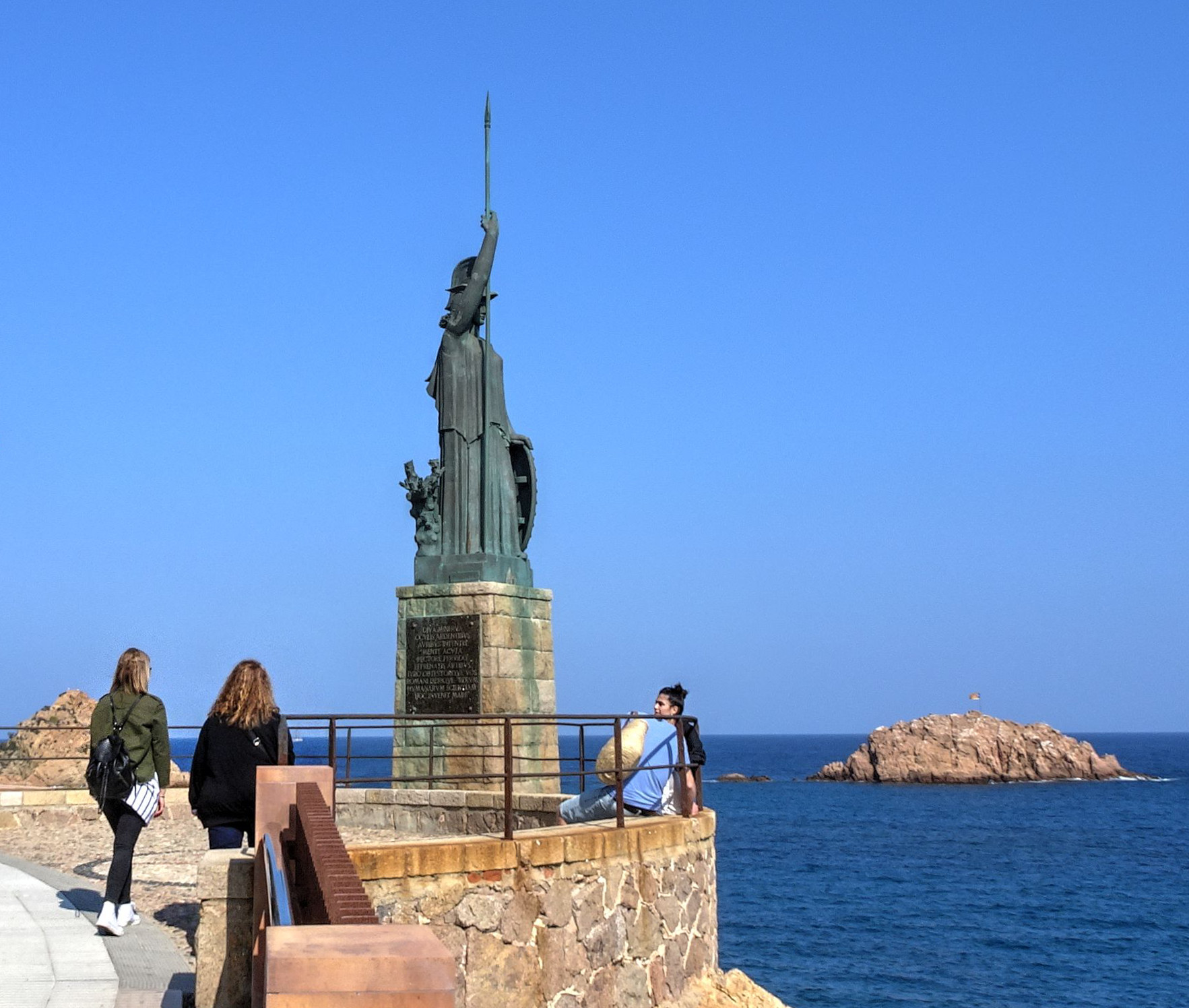
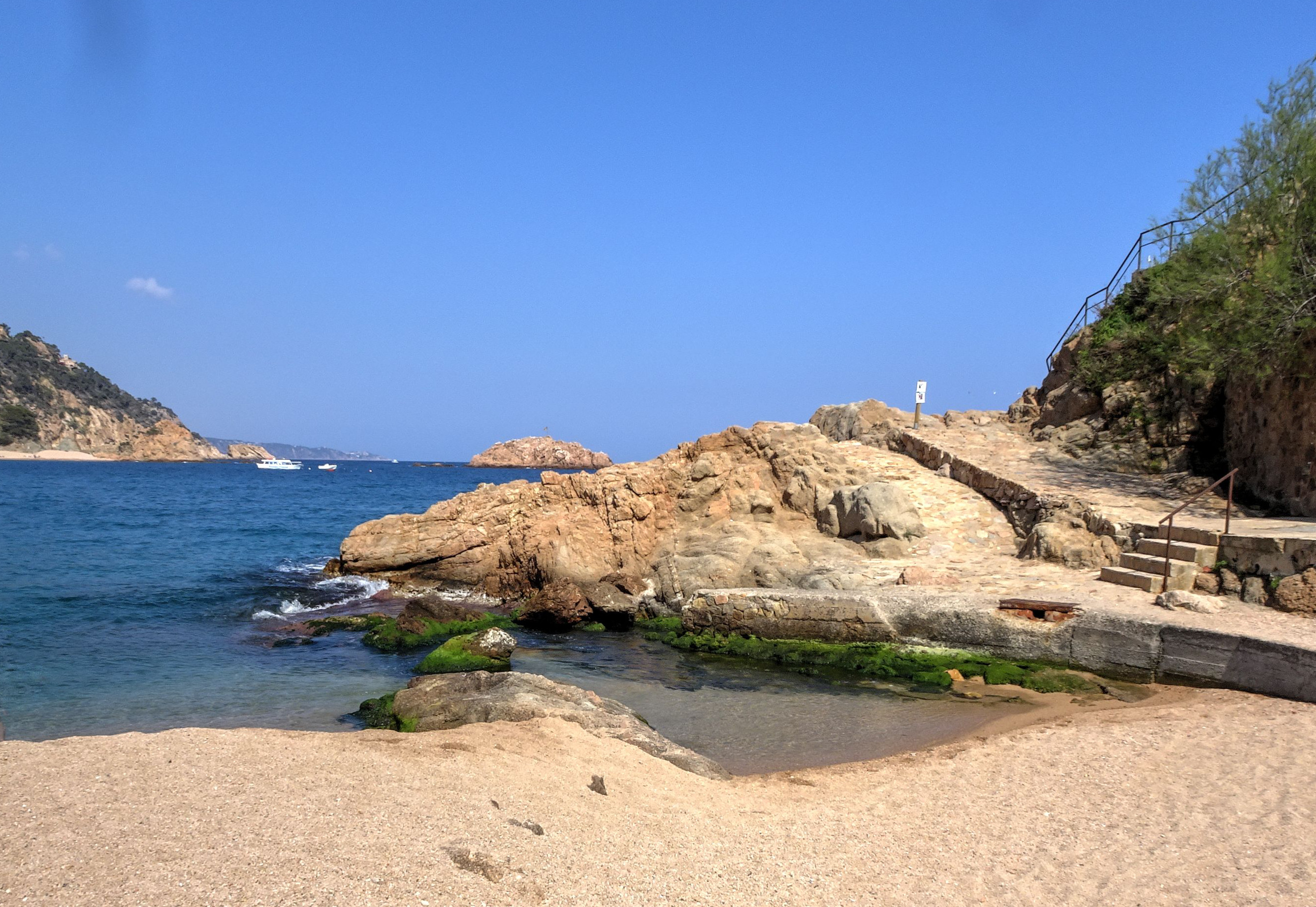
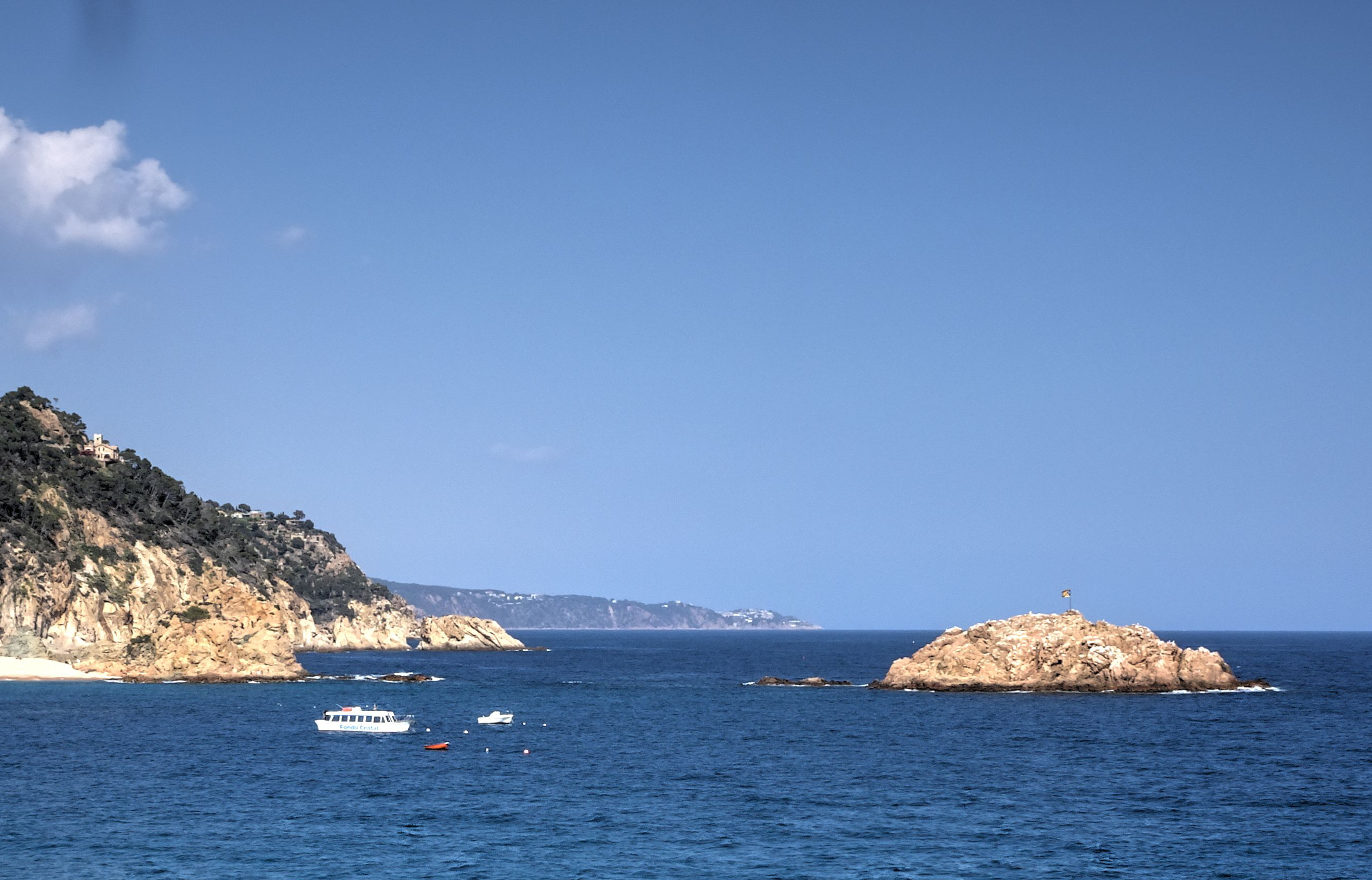
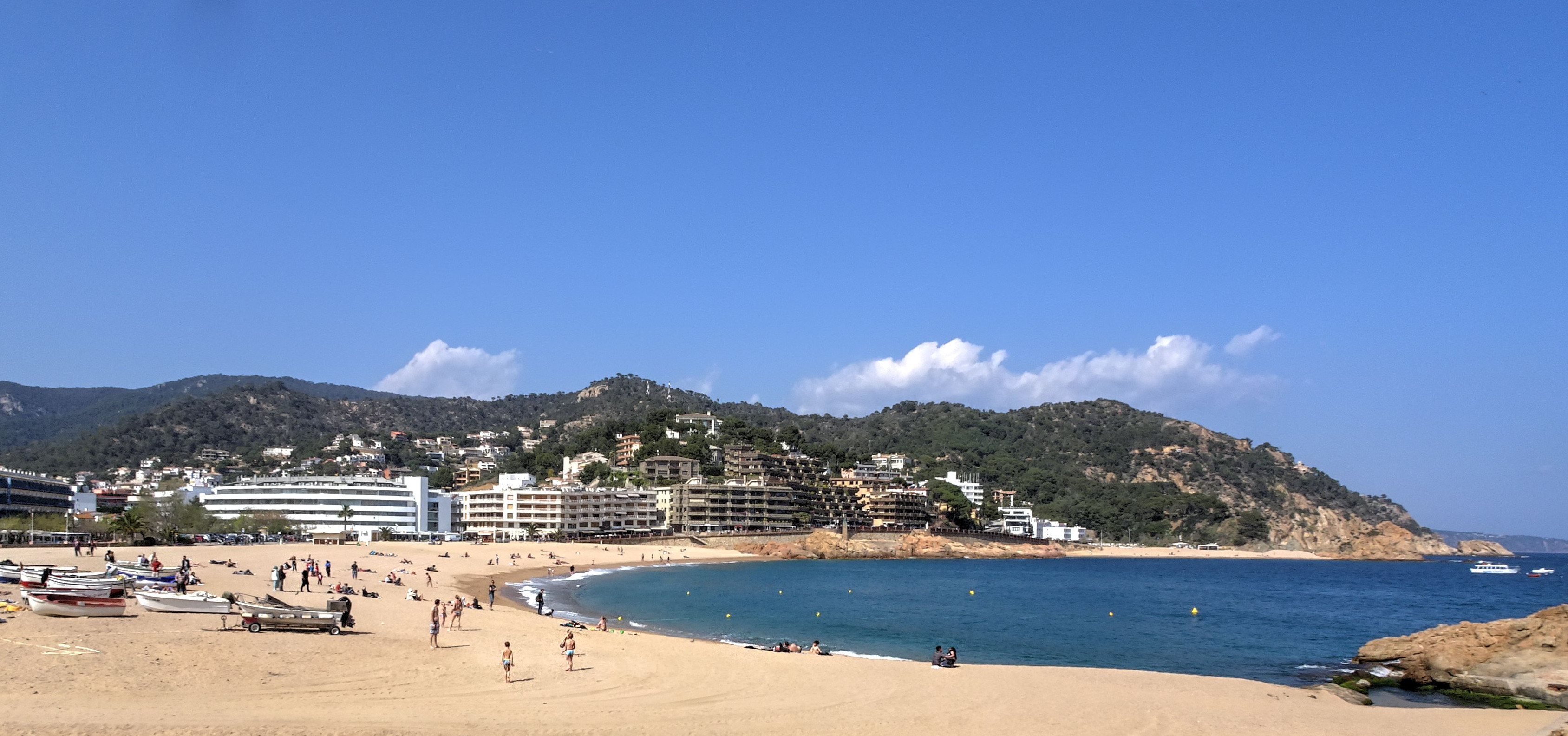
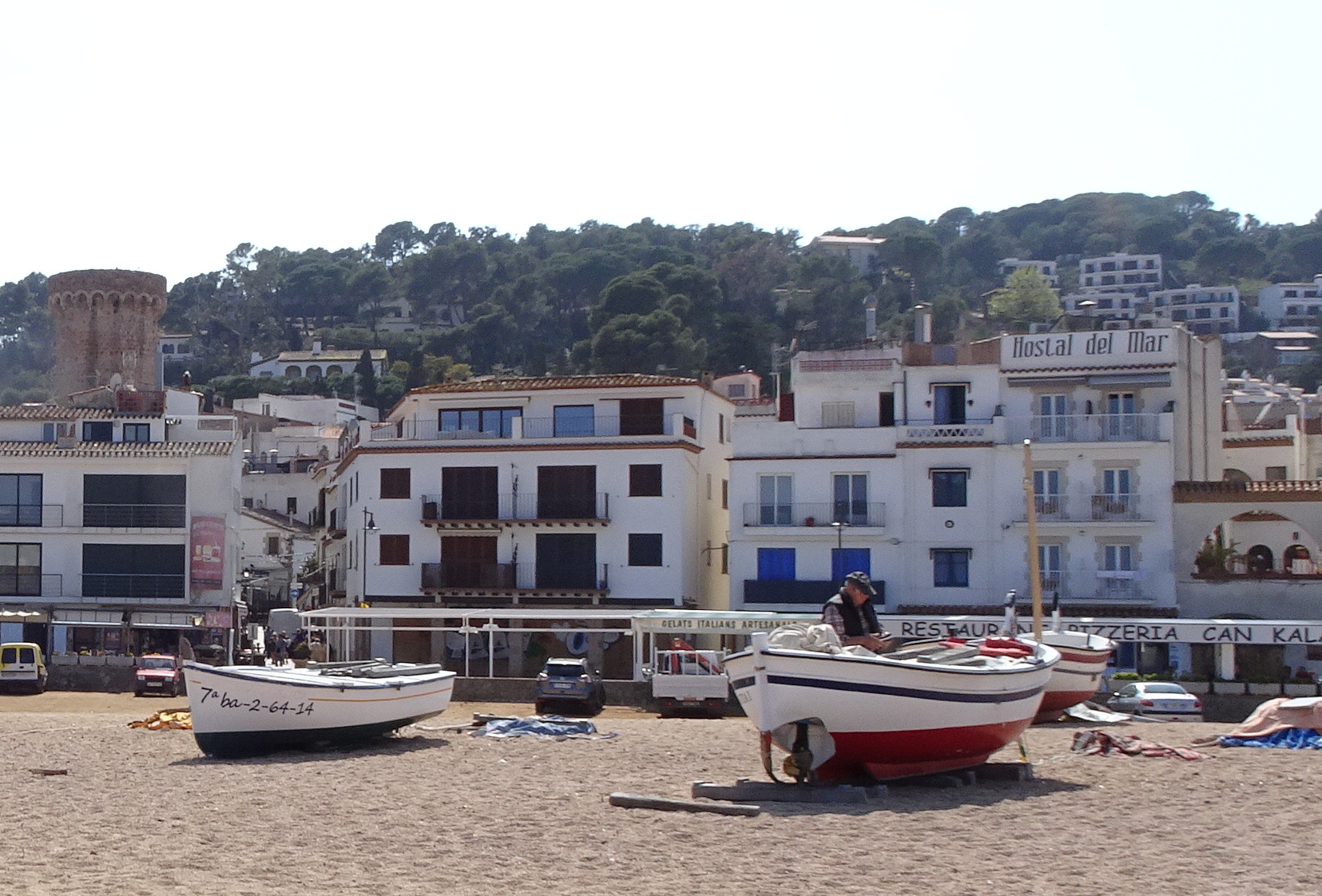
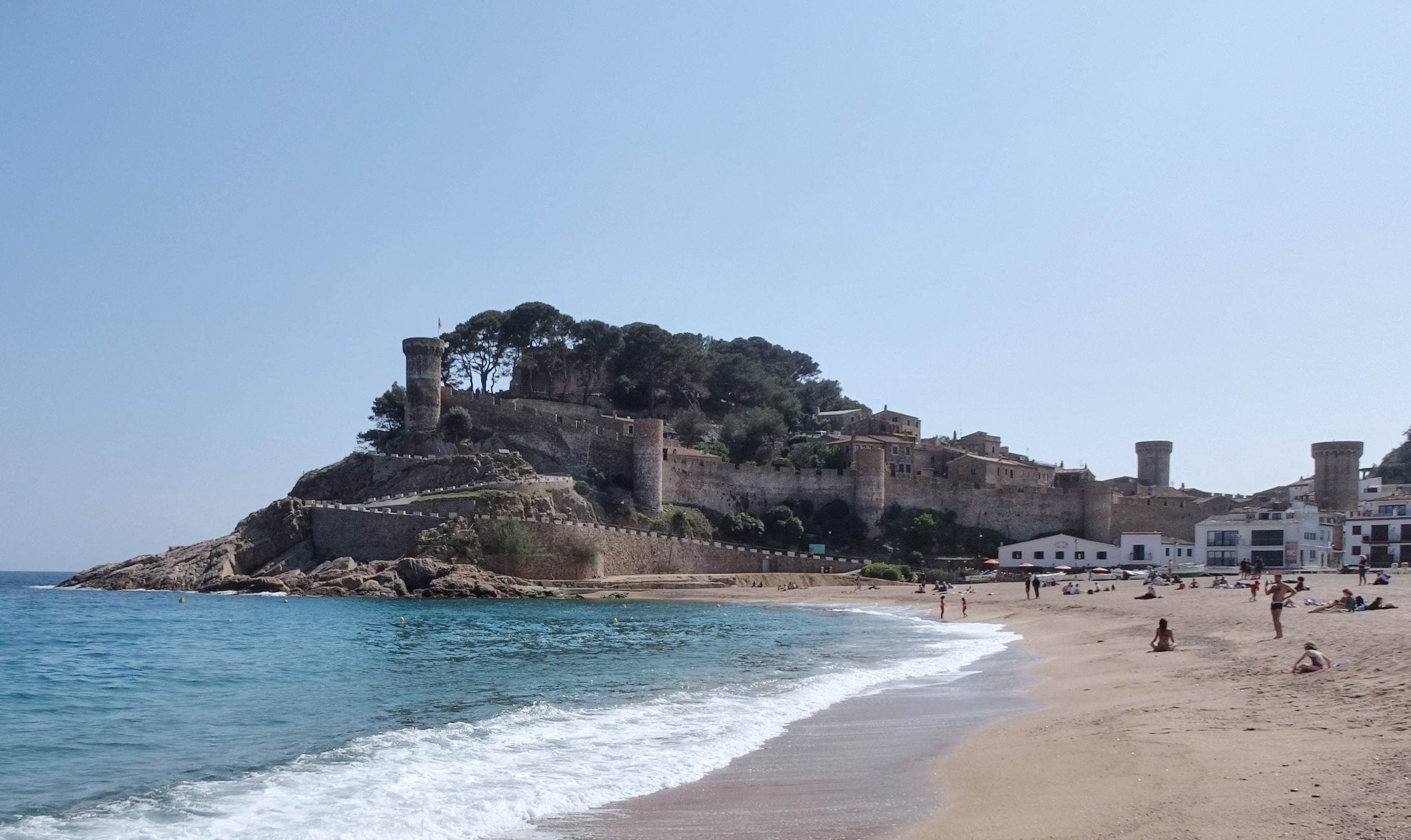
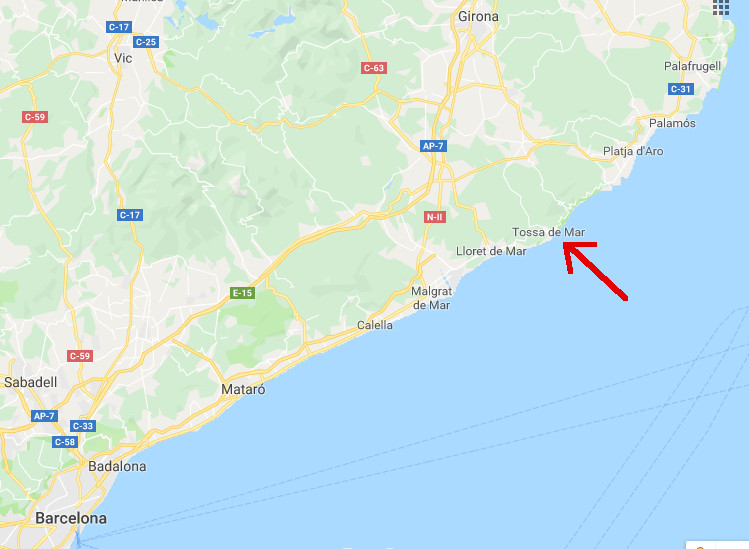
Mid-April during a short stay in Barcelona, I took a day trip by bus to Tossa De Mar. This is an old, pleasant town on the ‘Costa Brava” northeast of Barcelona.
My timing was good. The day was warm but it was too early in the season to be overly crowded with (other!) tourists.
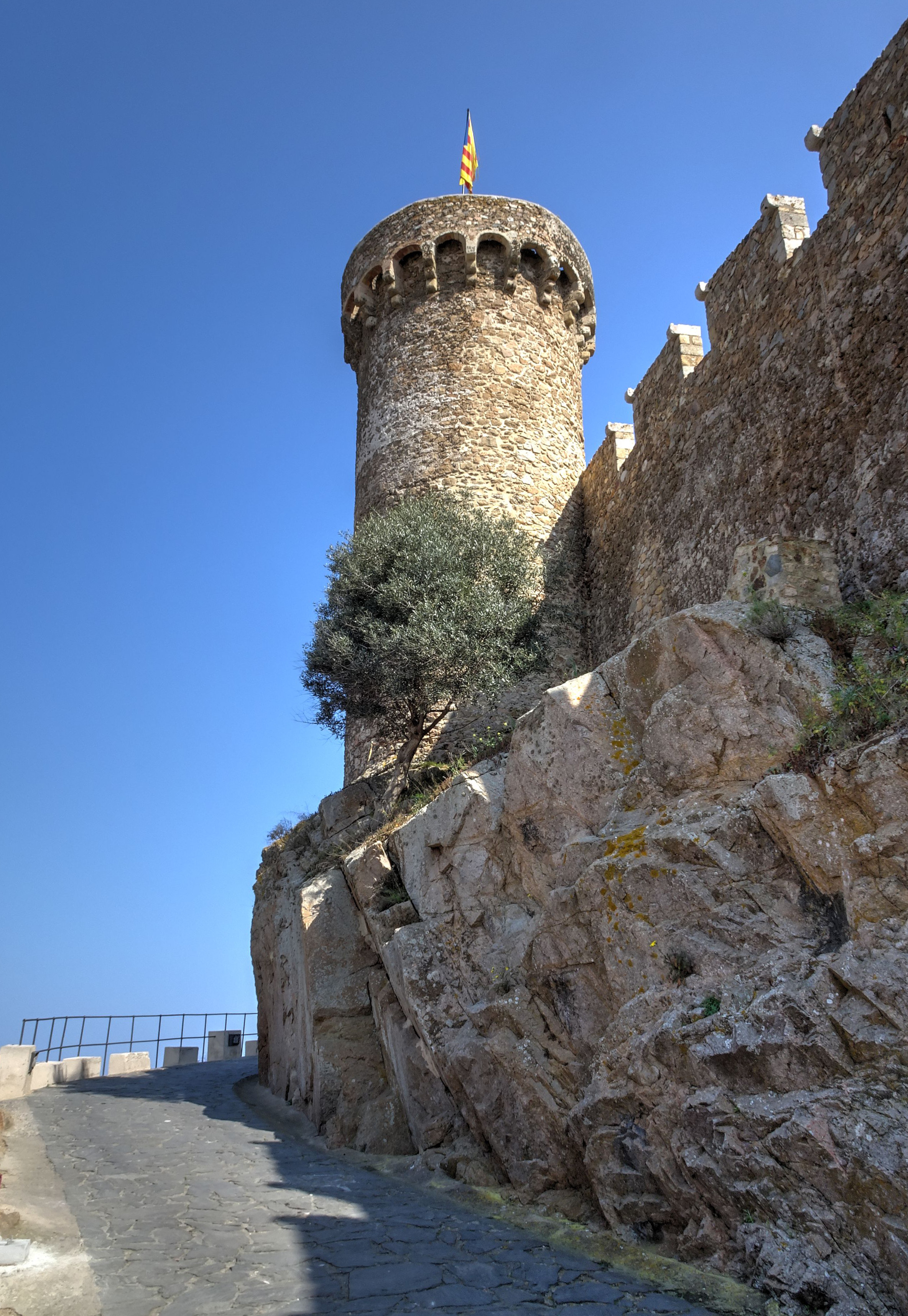
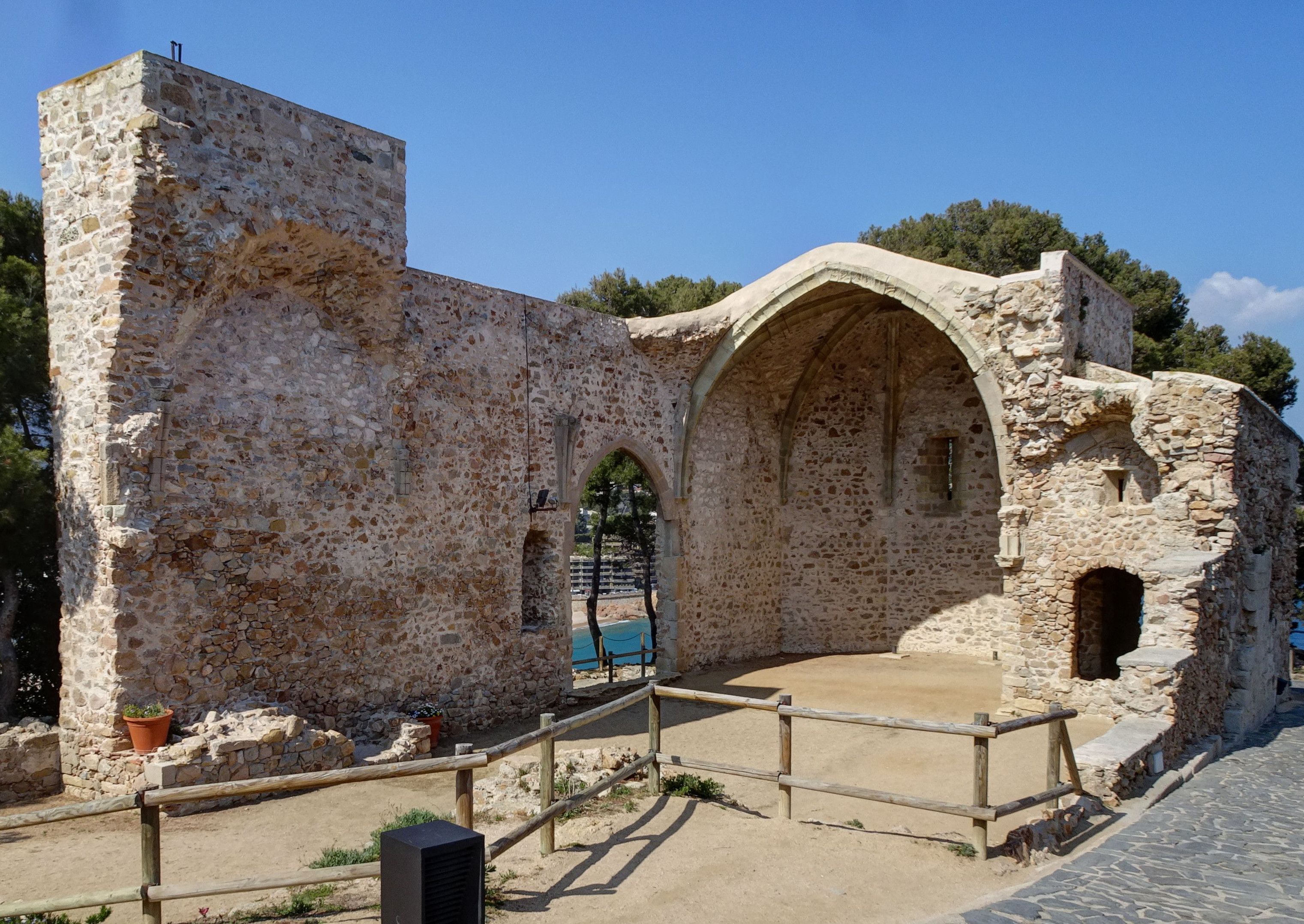
This spot was inhabited as far back as the neolithic period. But the existing “old quarter” of the town dates to the 12th century. It was built on a hill, surrounded by a protective wall.
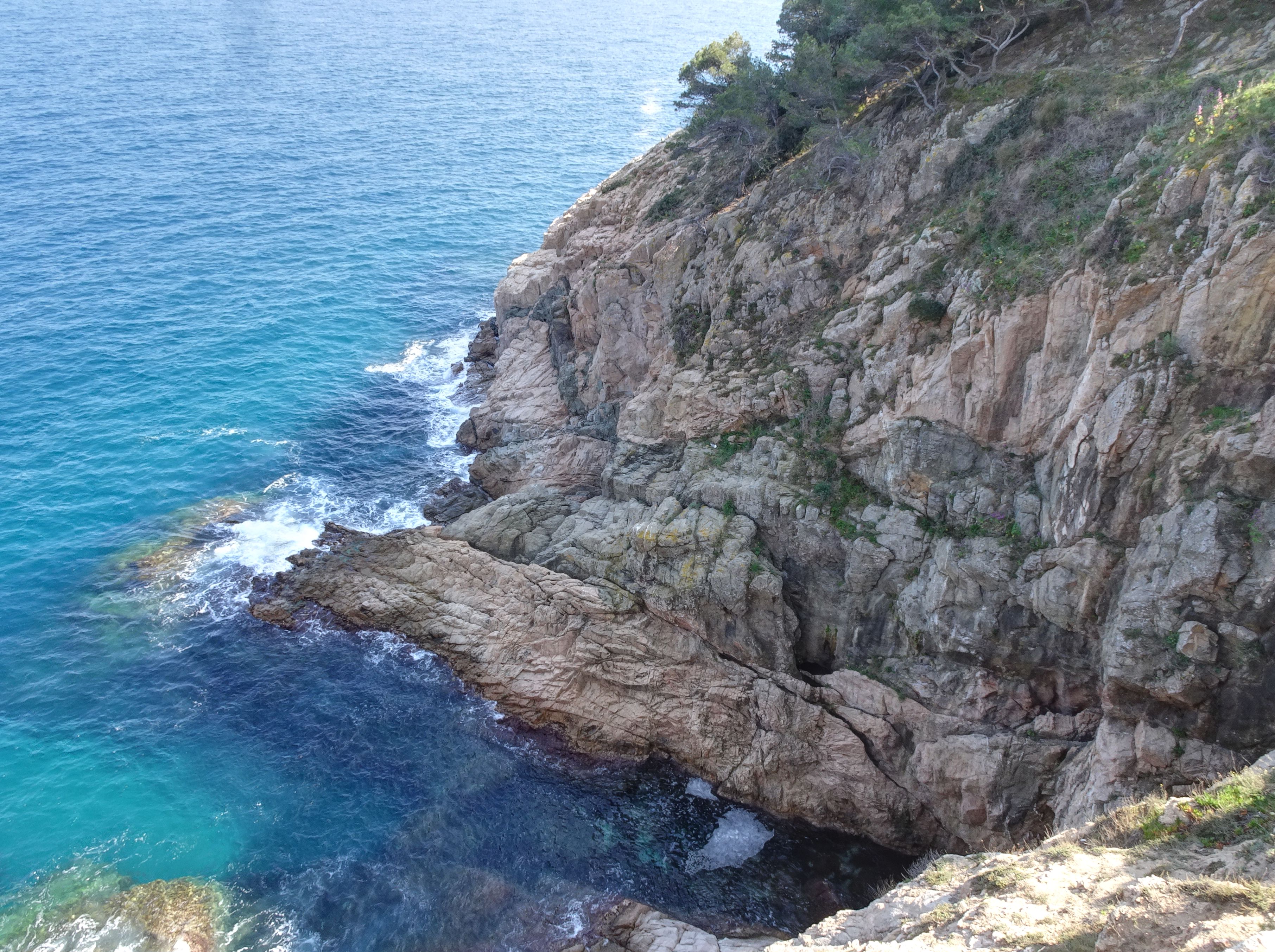
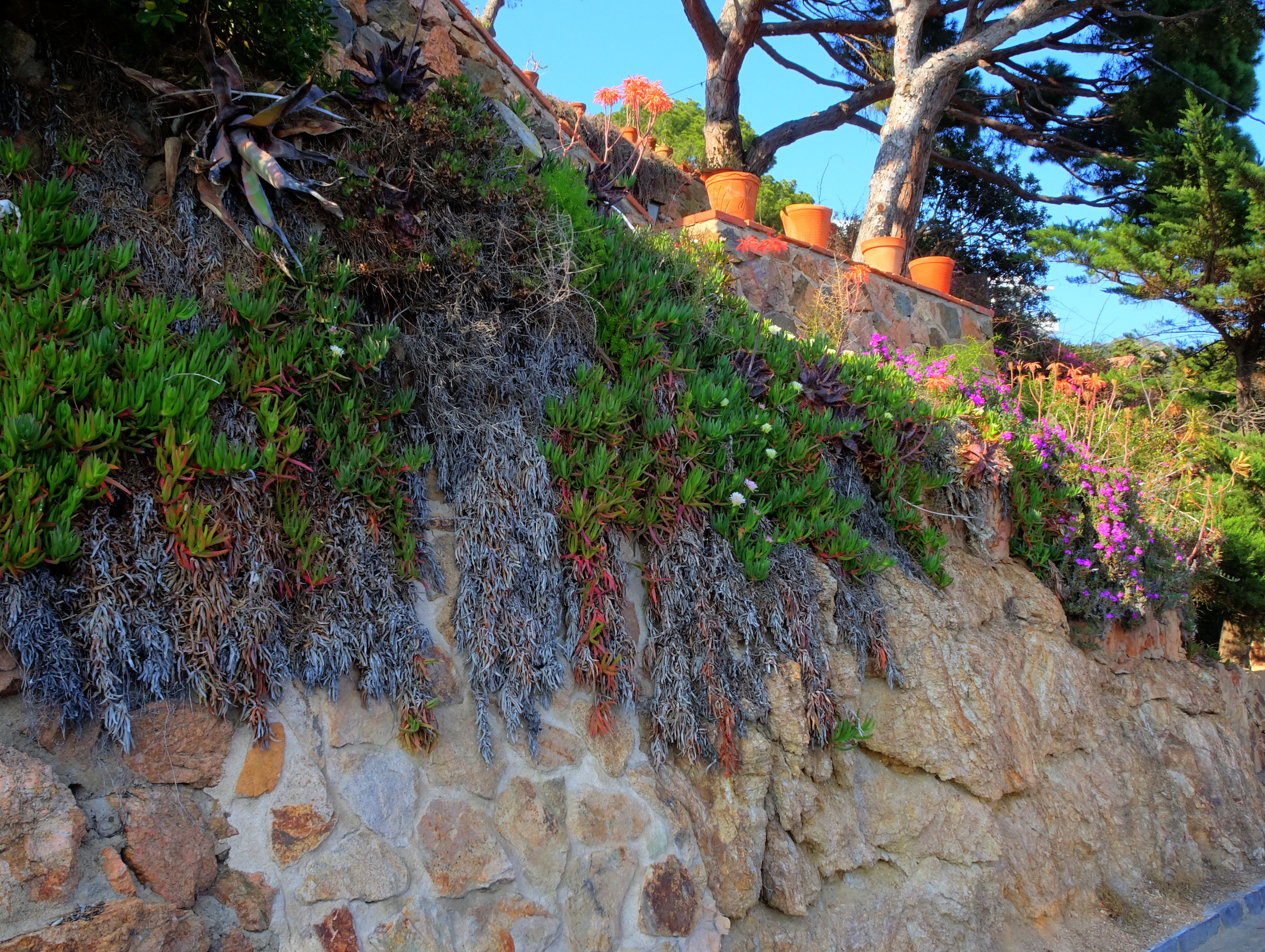
Now I will quit gabbing, and let the photos speak for themselves. (Remember that if you click on a photo, you will see an enlarged version.)
This could be a nice spot for a return visit and a hotel overlooking the beach and sea!
It also means “nose to the grindstone” as I work on a variety of projects.
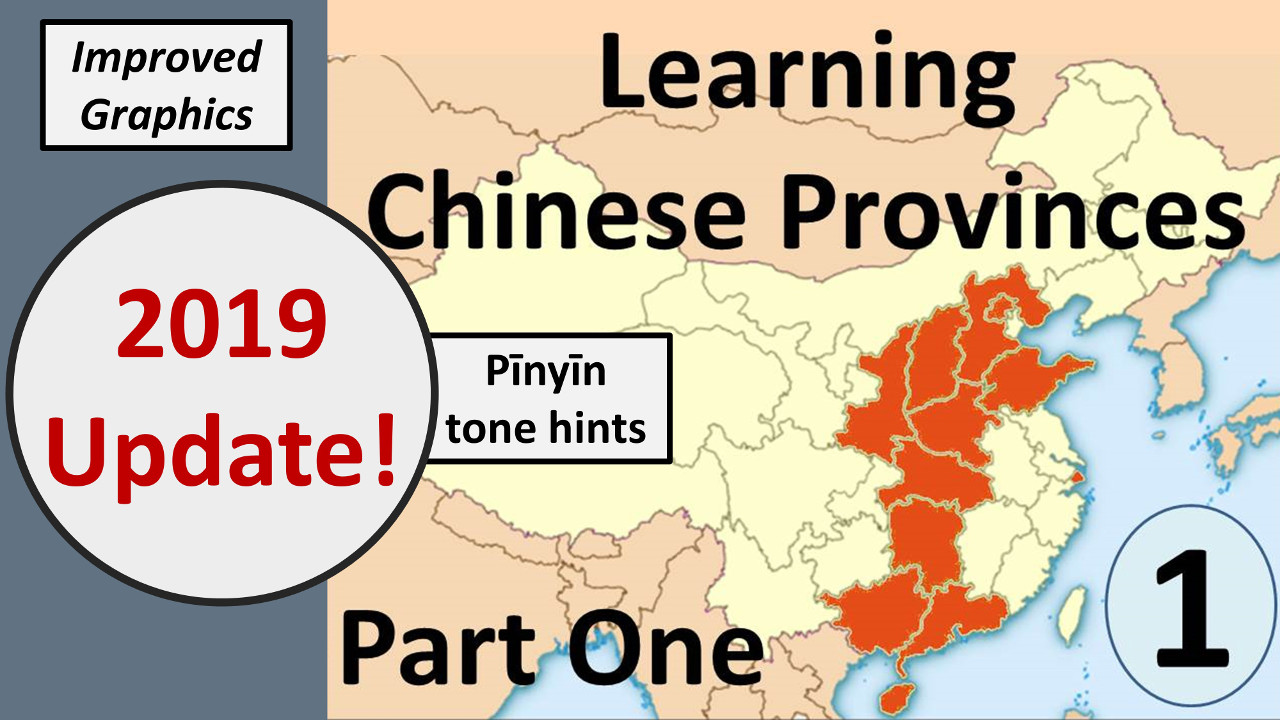
Before leaving Denver, I uploaded an updated version of my “Learning Chinese Provinces: Part One”. Lots of nice improvements included the requested “hint” box that now includes full pinyin with tone marks. If the word “pinyin” leaves you scratching your head, don’t worry. People studying Chinese will understand, and the rest of us will not even notice that item!
Unfortunately, for the moment the new video seems to be somewhat “invisible” because it shares the same name as the older version that I released about a year ago. That version is quickly approaching 6,000 views. OK, I know that number is not very impressive in the overall context of Youtube, especially when measured against “hate videos” which garner hundreds of thousands of views…
Oh well… an educational video is no match…
(Update February 2024: Well, several updates later, there is a new version of this “Part One” which now has over 40 thousand views. (Still a tiny fraction of even the stupidest posts available on YouTube, and a tiny fraction of the number of views for offensive racist/hate-speech videos! oh well!)
Parts Two and Three have completed the provinces series. There are now Spanish and French versions of that series and an Italian version of just the first part. I have expanded the videos to include a series on the provincial capitals as well as a couple of miscellaneous ones related to China! More coming in the future! If you want to see, skip the dreaded YouTube copies, and instead take a look at my “Pere-X” site. (Click HERE for the Pere-X site.)
On that site you can choose to navigate in English, Spanish, French, Italian, or Chinese!
Even the most pleasant visits eventually come to an end. Today I return to Denver. I am excited to be heading back home to Rhonda. But of course I am sad to have to leave family and friends in Spain.
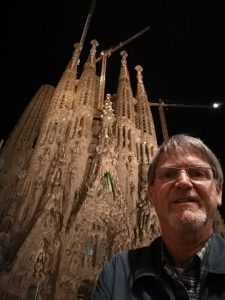
Sagrada Familia in Barcelona
This time, my exit city is Barcelona. What better way to bid farewell to that city than with a night visit to the Sagrada Familia. The ongoing construction of this beautiful and unique cathedral designed by Gaudi never ceases to interest me. For decades I have watched it’s slow, but steady, progress. And now that several of the larger towers have begun their stretch skyward, it feels like a whole new phase.
(Clicking on any of the images will enlarge it. In many cases, clicking a second time will make it even bigger)
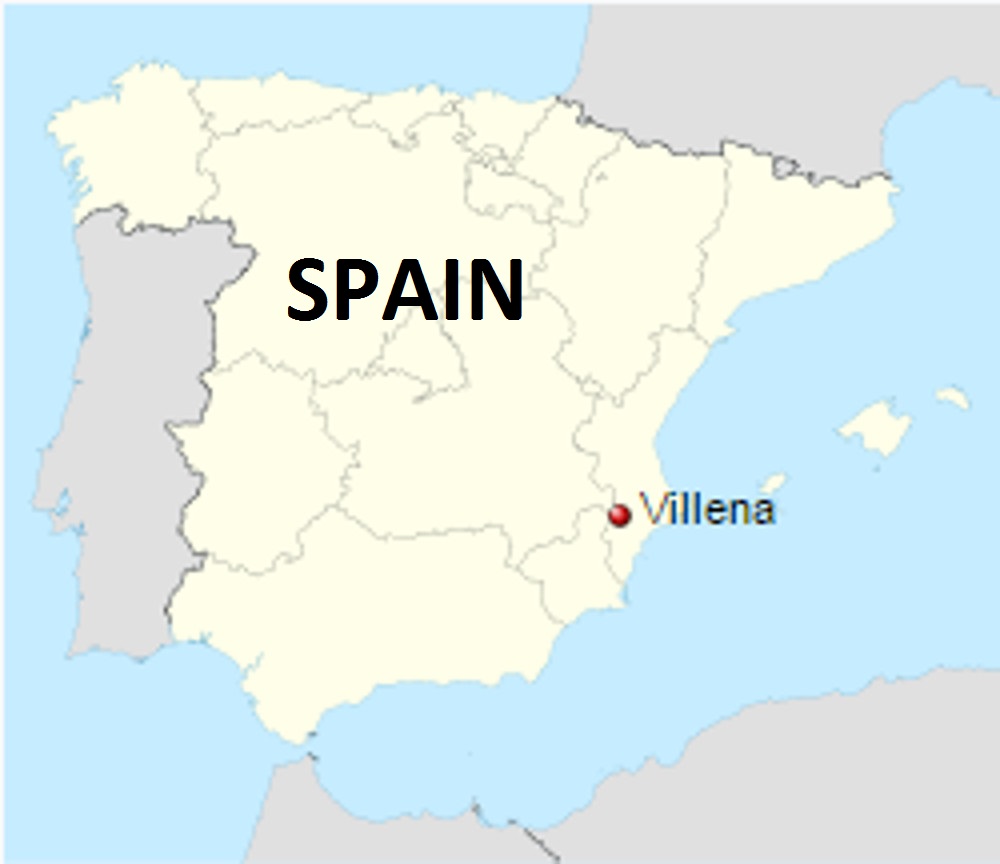
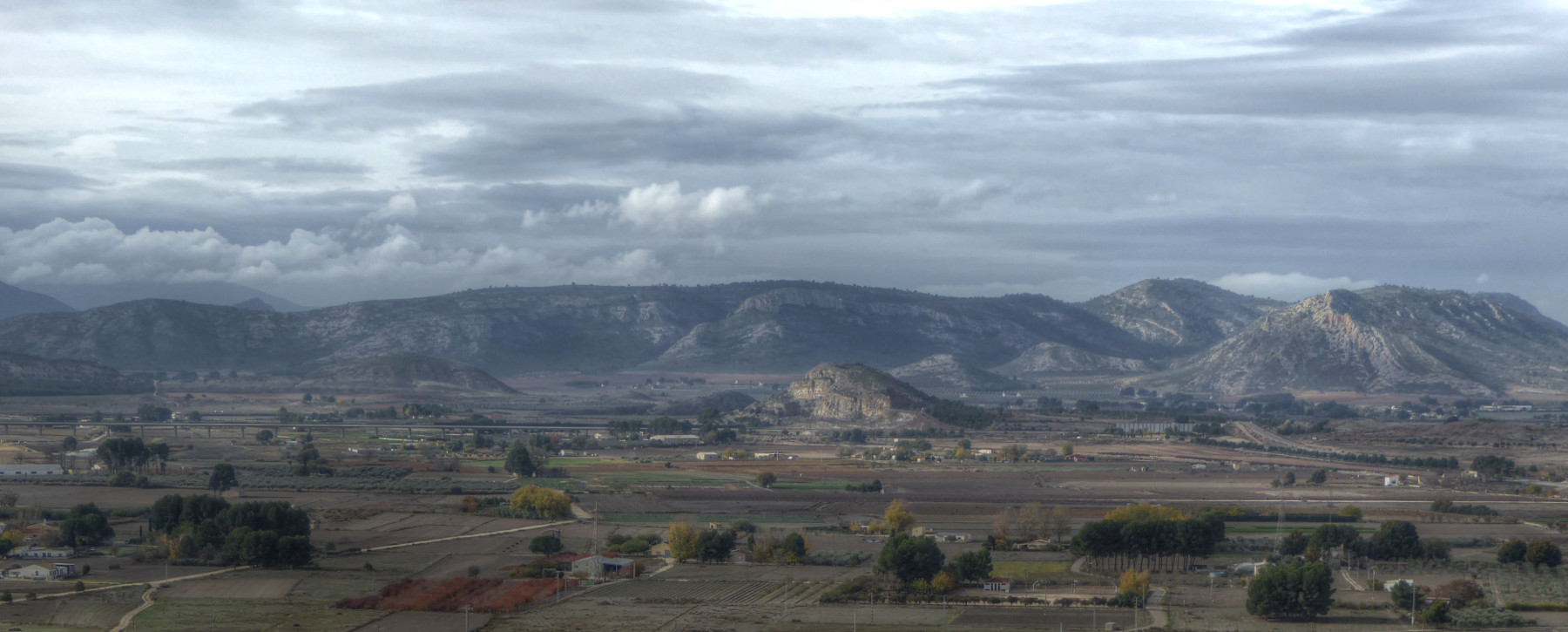
At the end of November (2016) I had a chance to visit Villena.
The town is located in the province of Alicante, but is just over a half hour distant from Xàtiva by train.
Those who are familiar with Spanish literature might know of the nephew of King Alfonso X “el Sabio”, Don Juan Manuel. Living in the 14th century, this Prince of Villena wrote a number of books and is considered one of the most important authors of his era. His series of stories involving the “Conde Lucanor” are delightful.
Villena also has some fame for footwear and wines produced in the area. It was the birthplace of Ruperto Chapi, composer of symphonies and zarzuelas (a Spanish cross between a musical and opera).
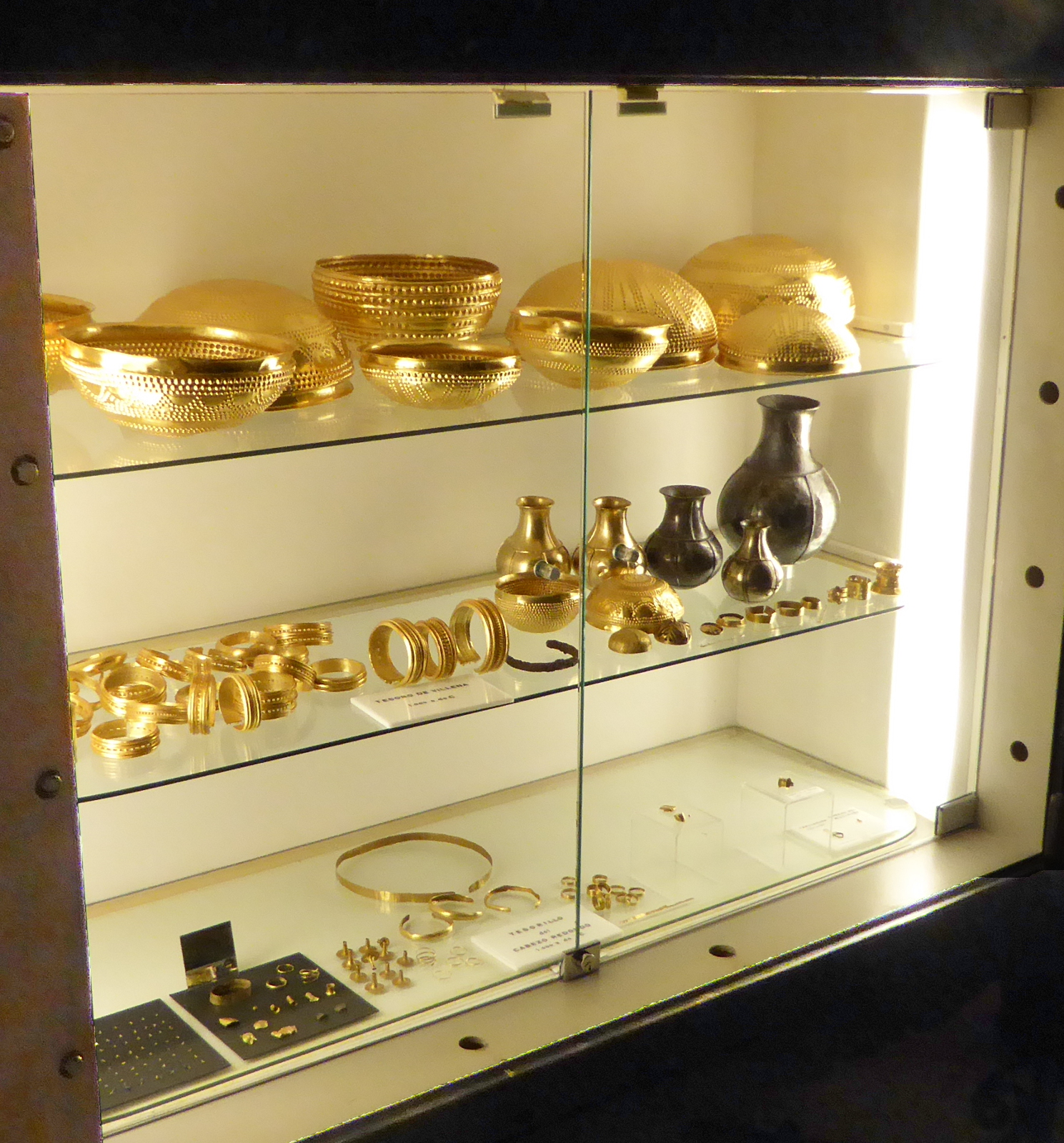
Tourist attractions in the town include a lovely 11th century castle, and the “Tesoro de Villena” (treasure of Villena), which was a trove of gold bowls and bracelets that have been dated to the bronze age 3,000 years ago.
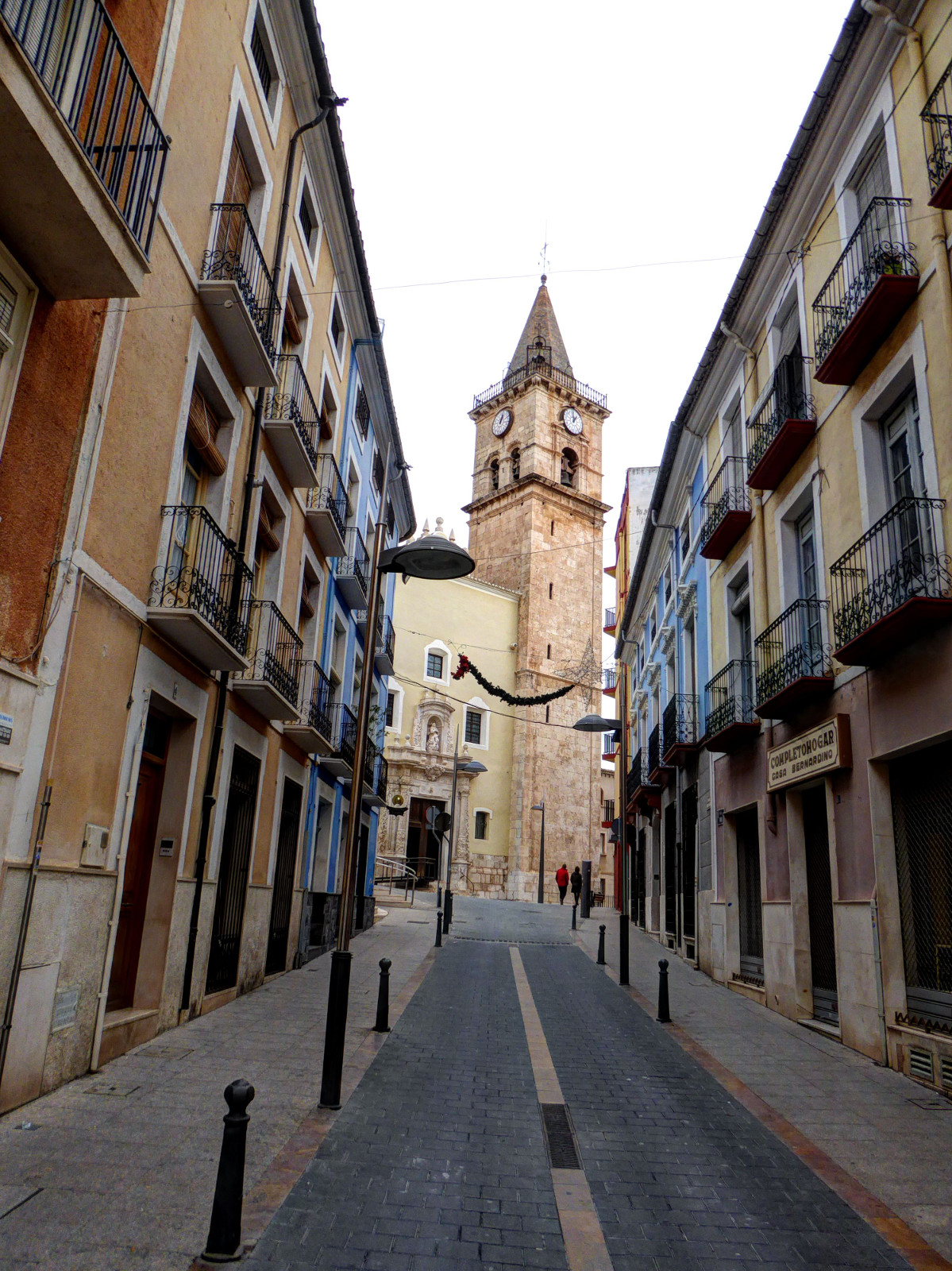
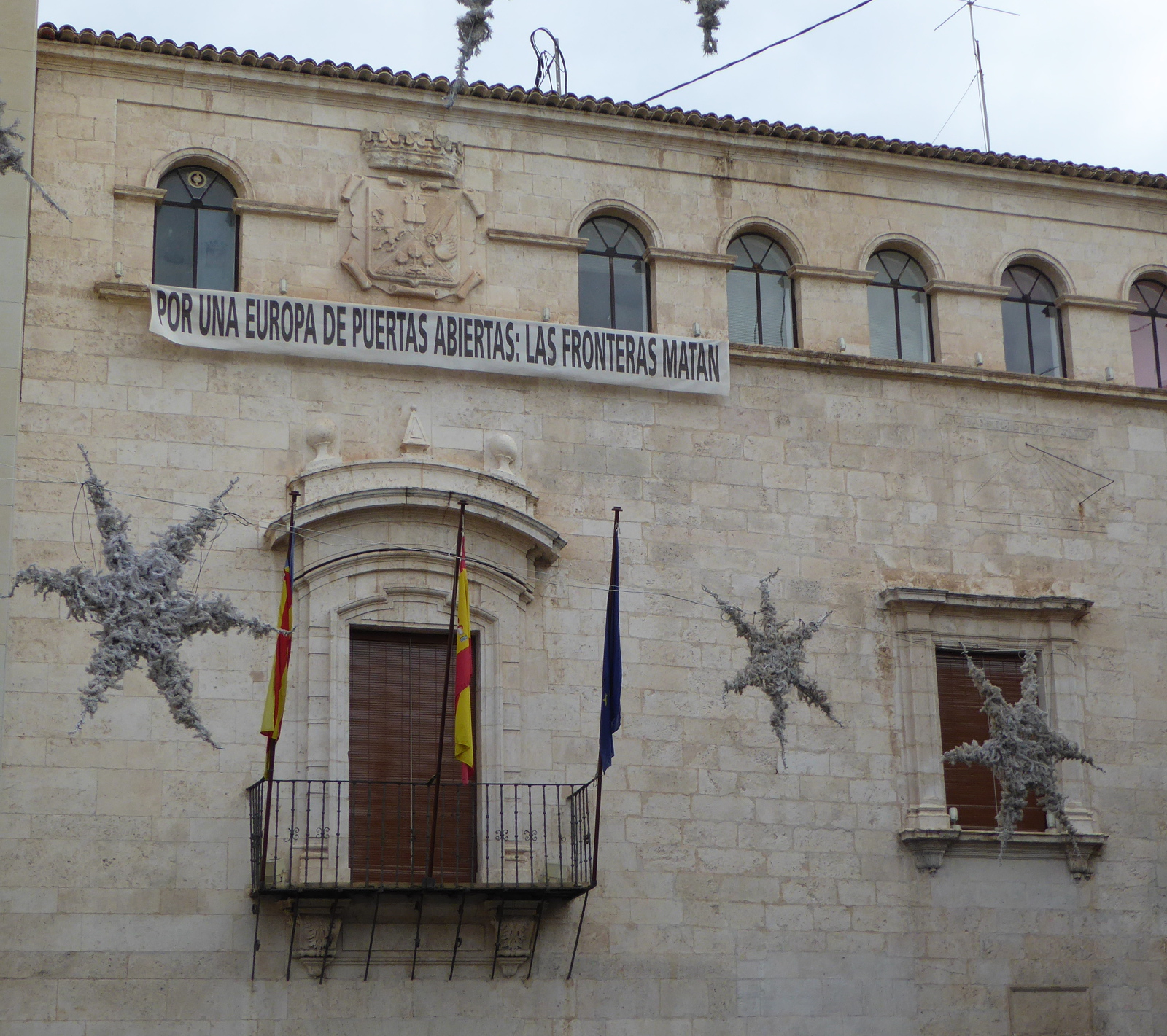
Heading into town, I encountered the church of Santiago (Saint James) and a small plaza with municipal buildings
It was pleasing to see a banner hanging from the town hall which read: “In favor of a Europe with open doors. Borders kill”.
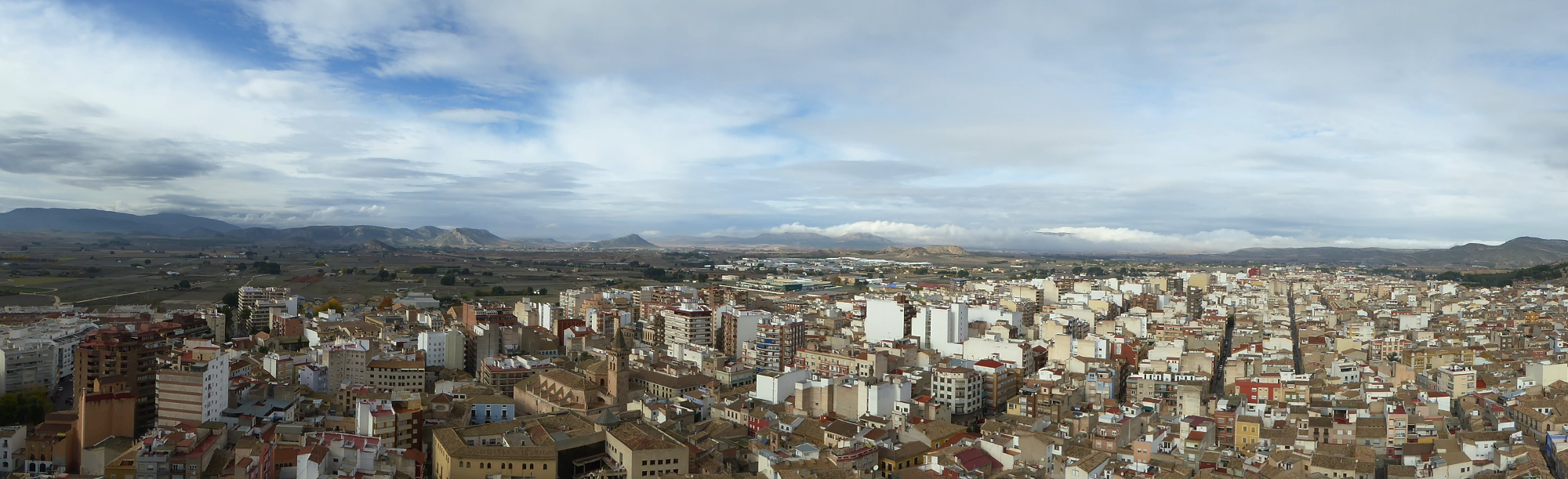
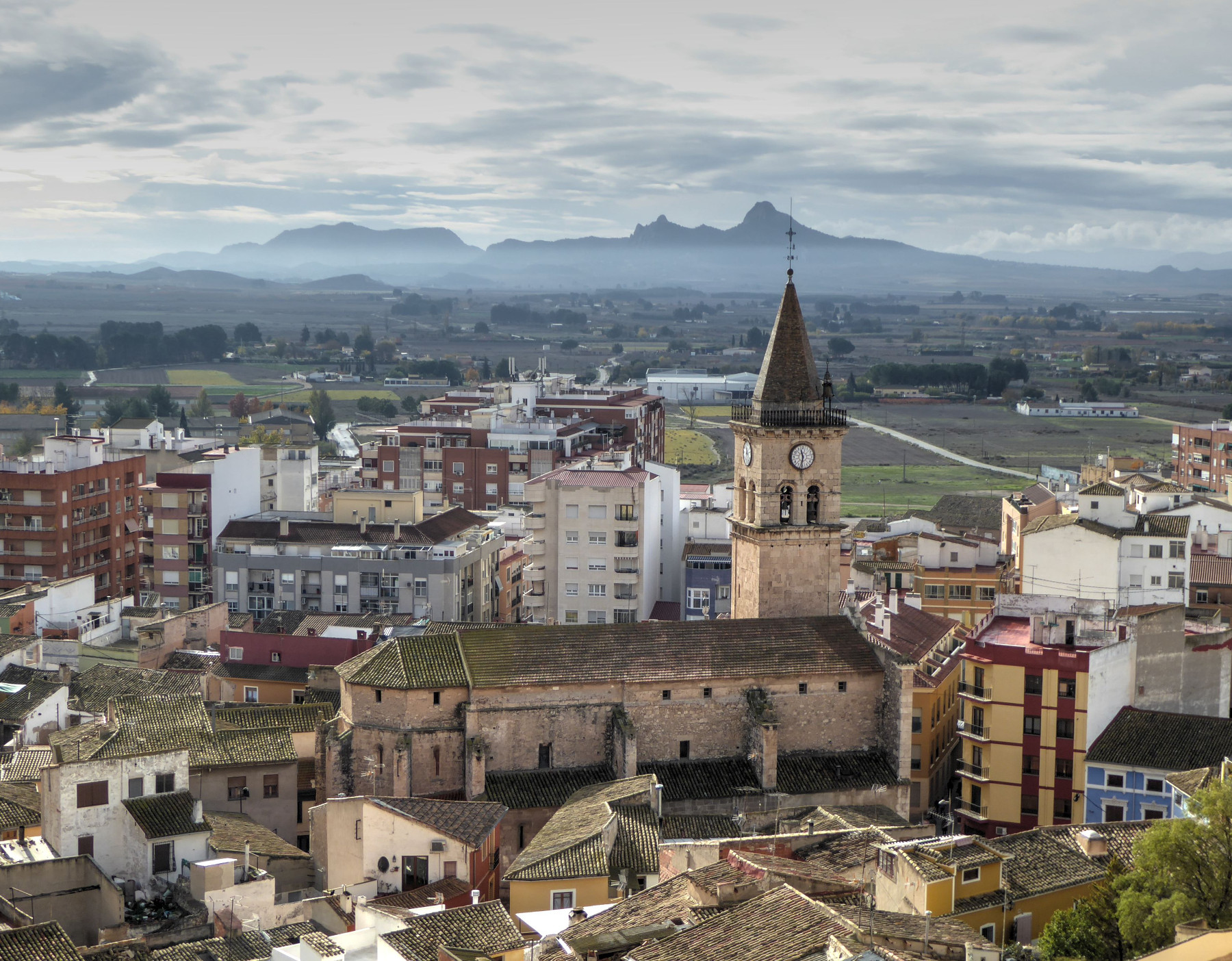
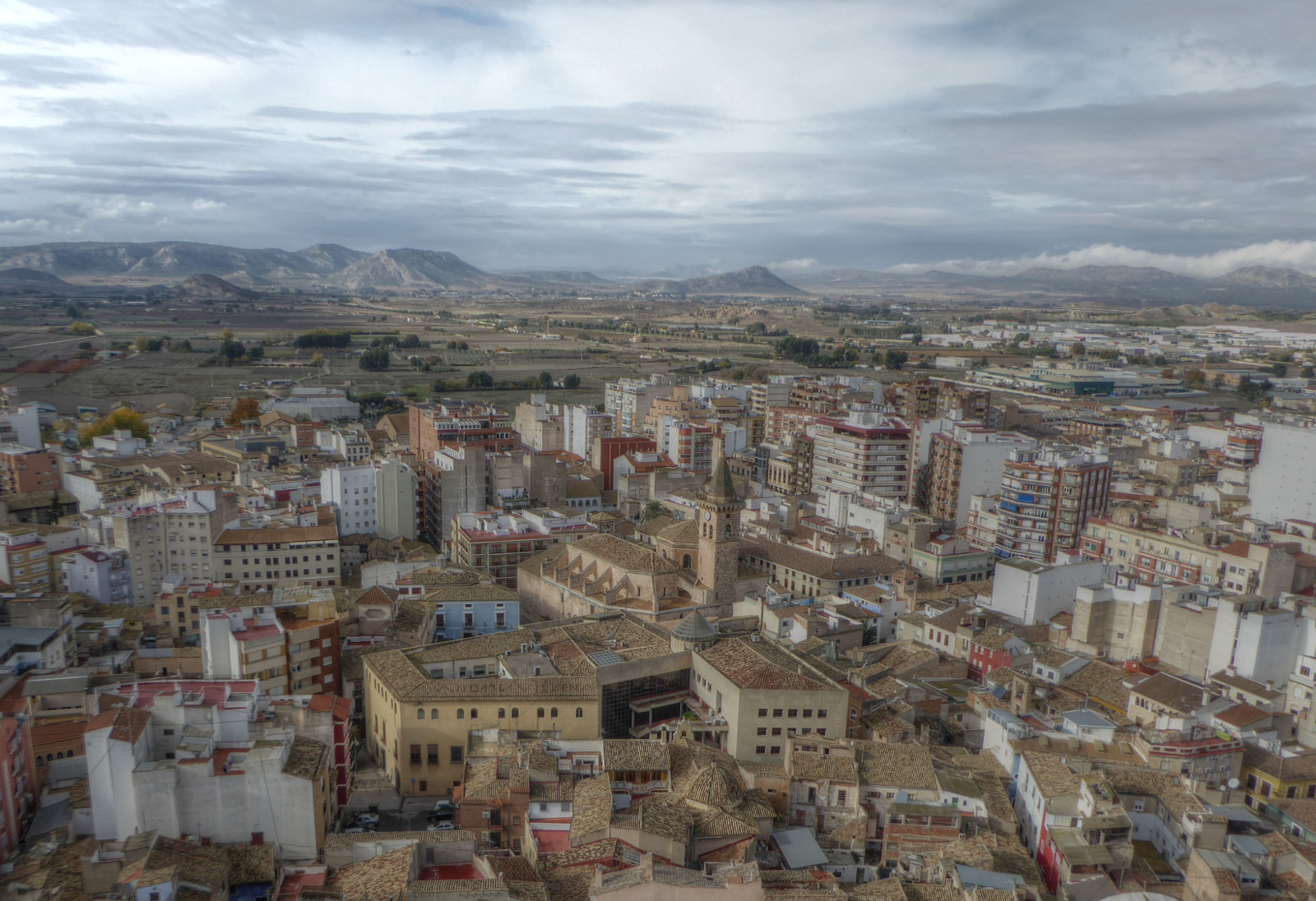
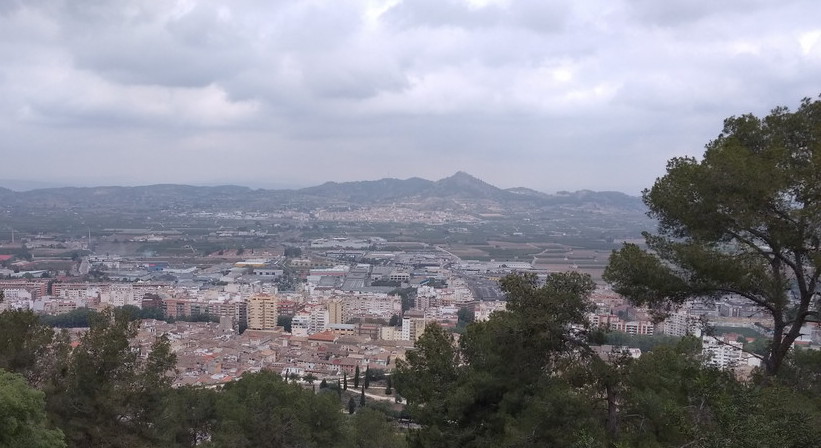
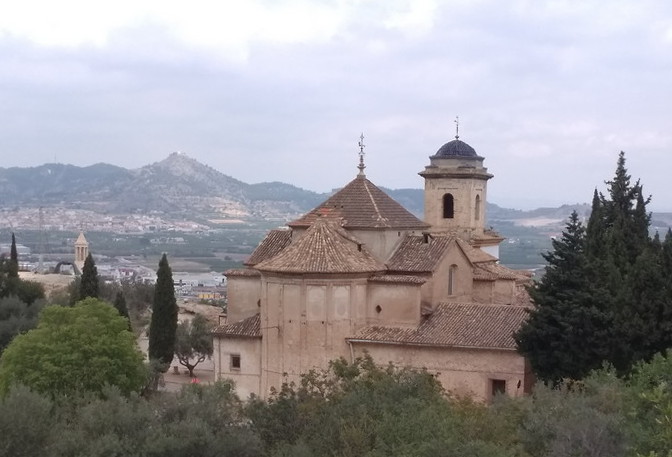
On this stormy day, the view of the Santa Maria church (15th century) with its mountain backdrop was stunning.
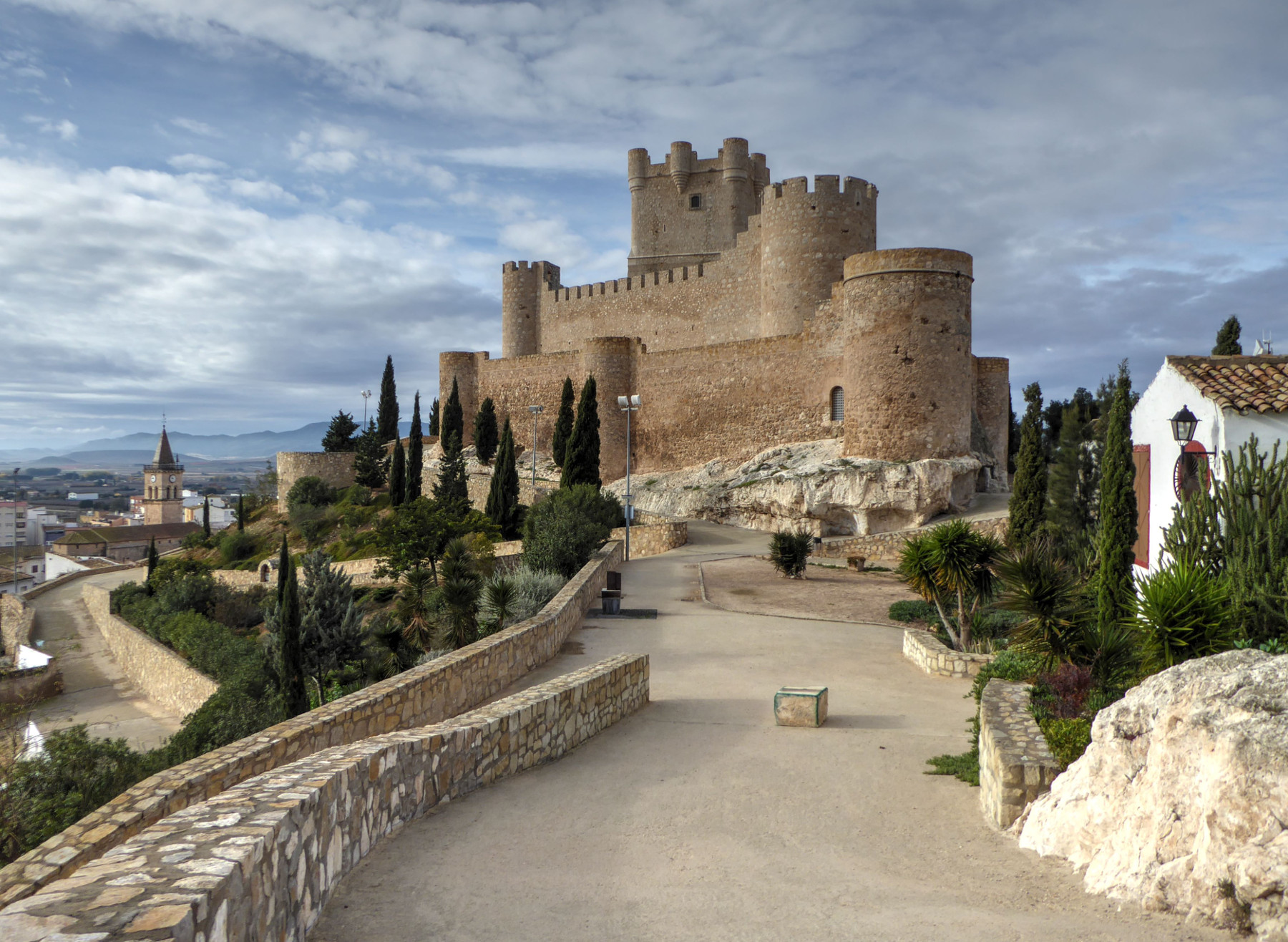
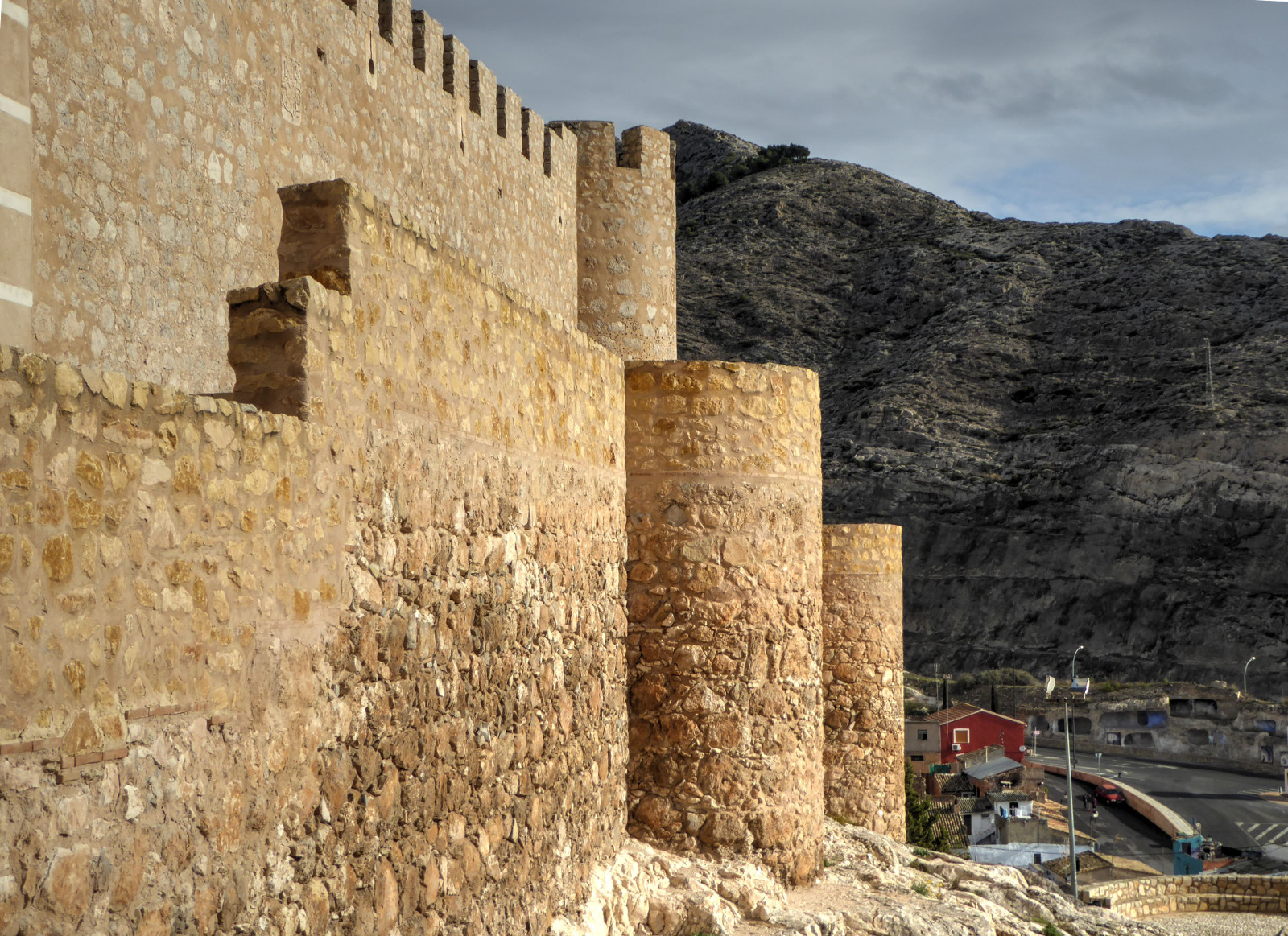
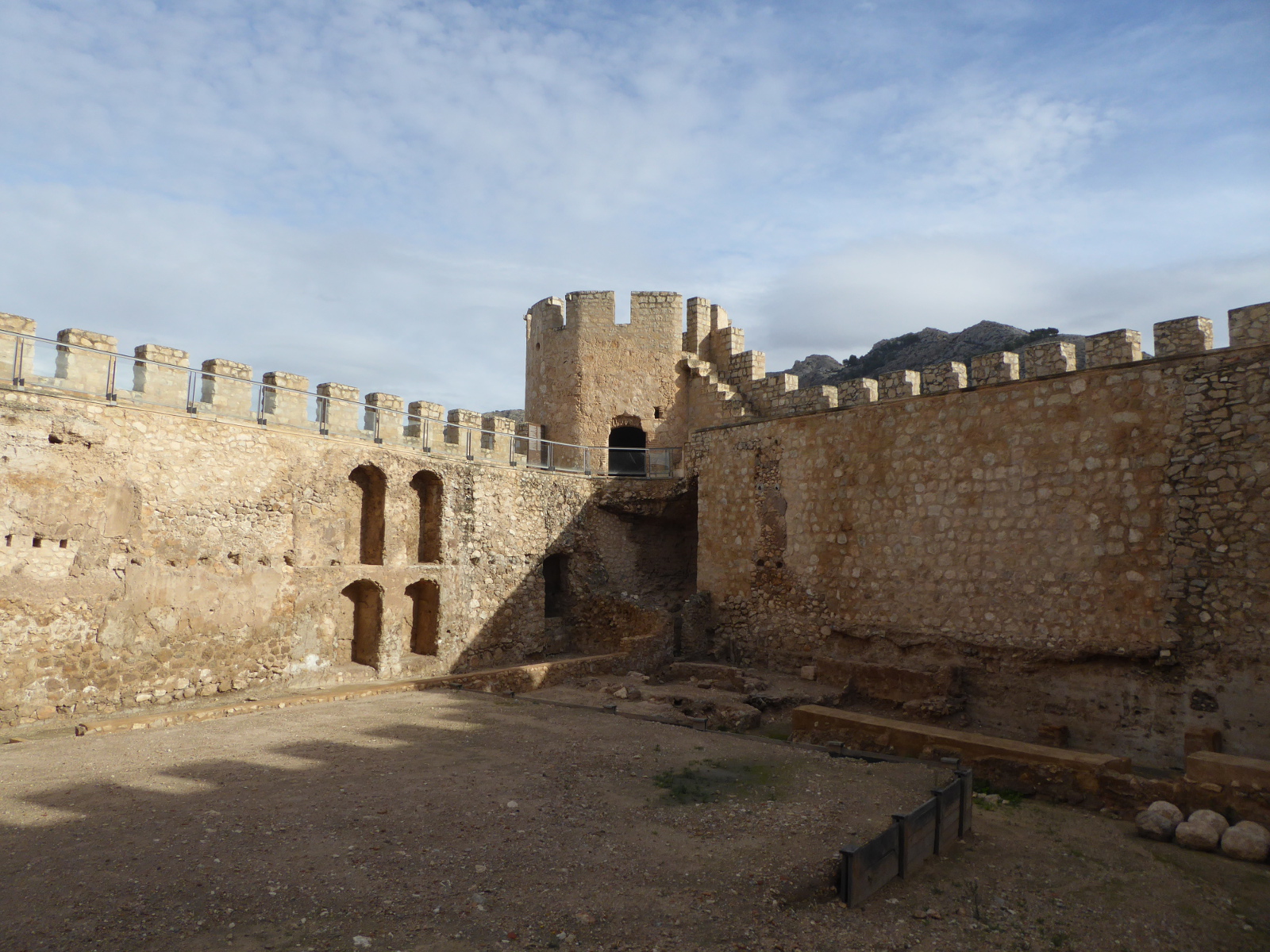
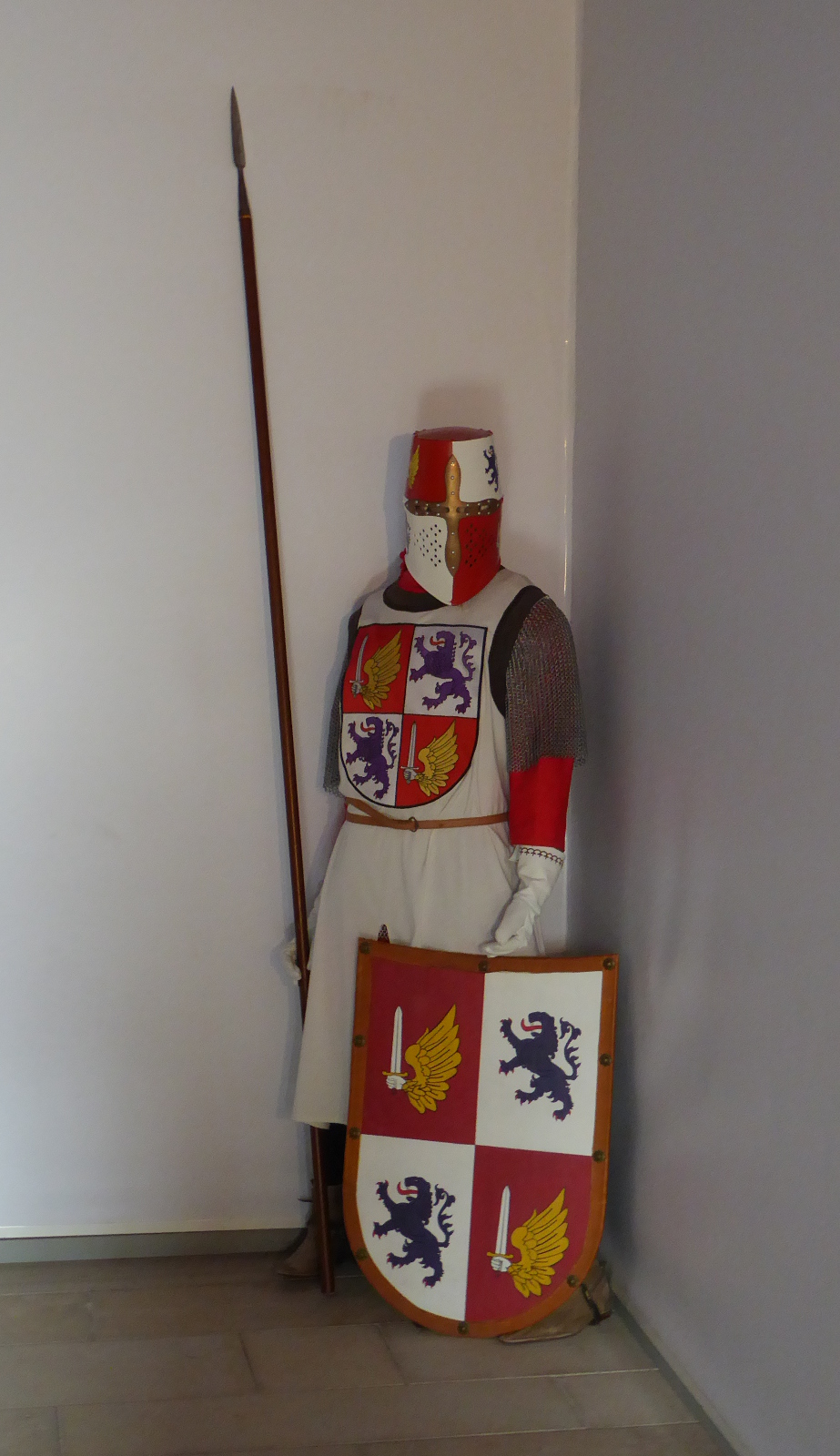
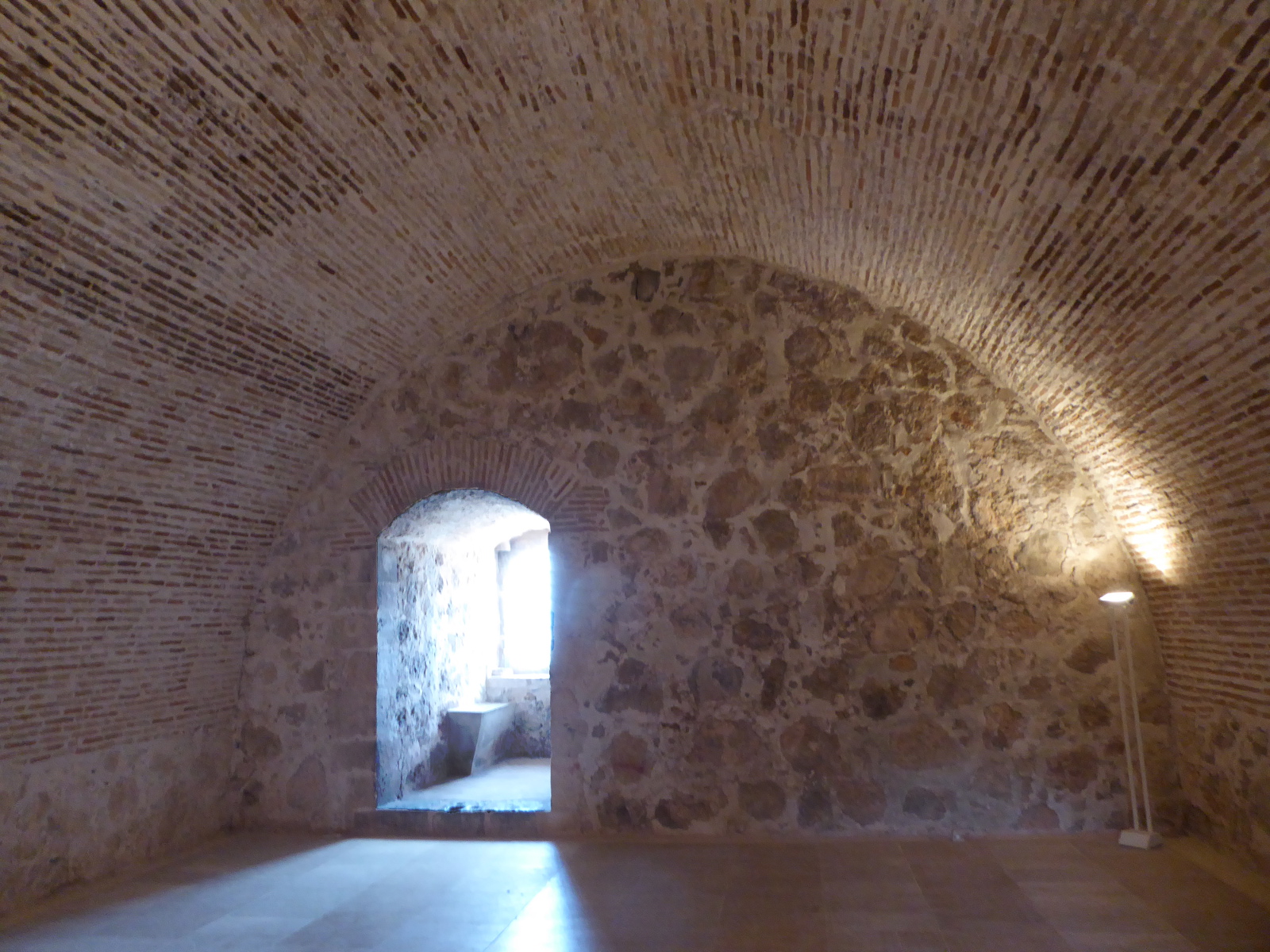
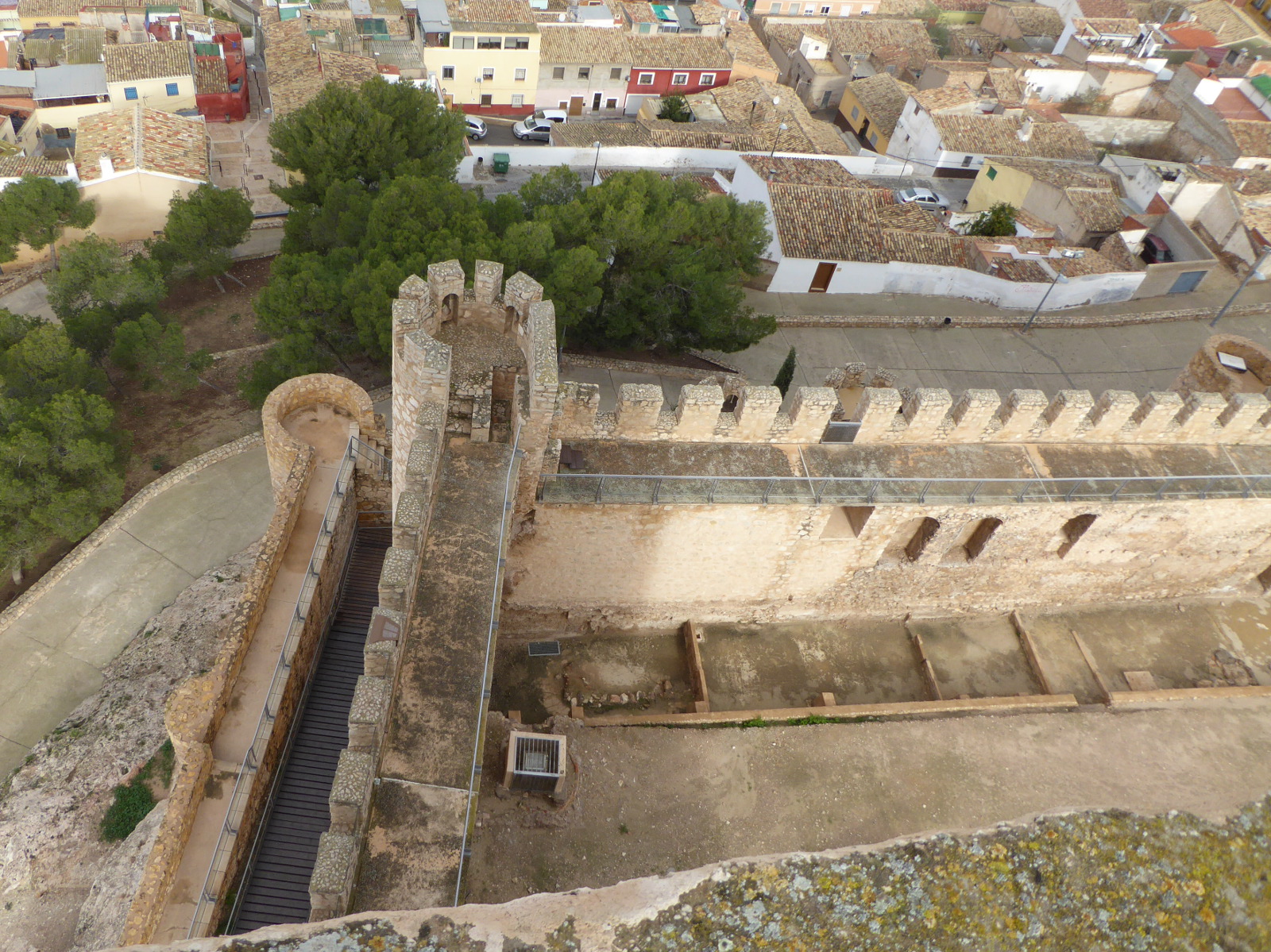
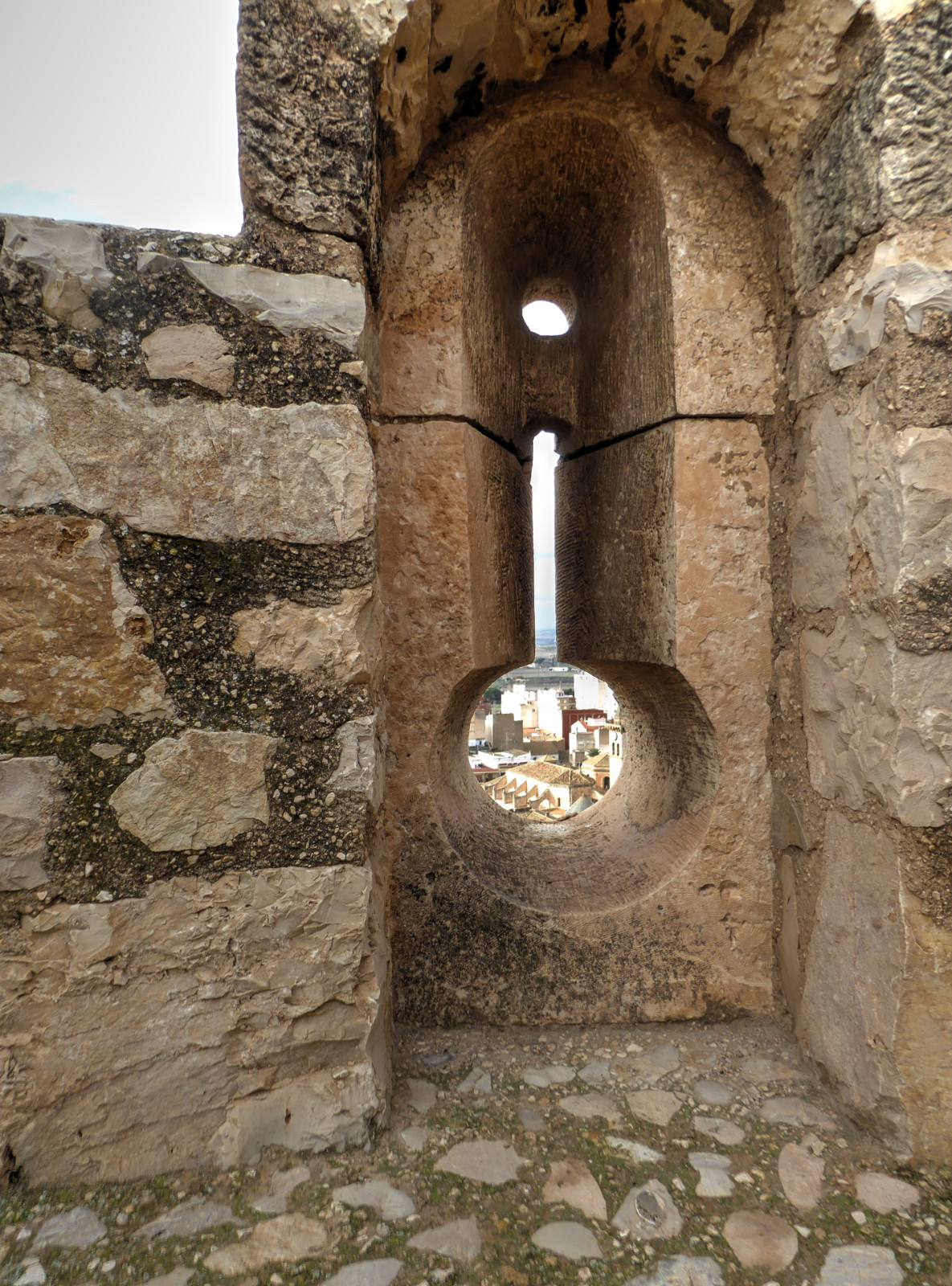
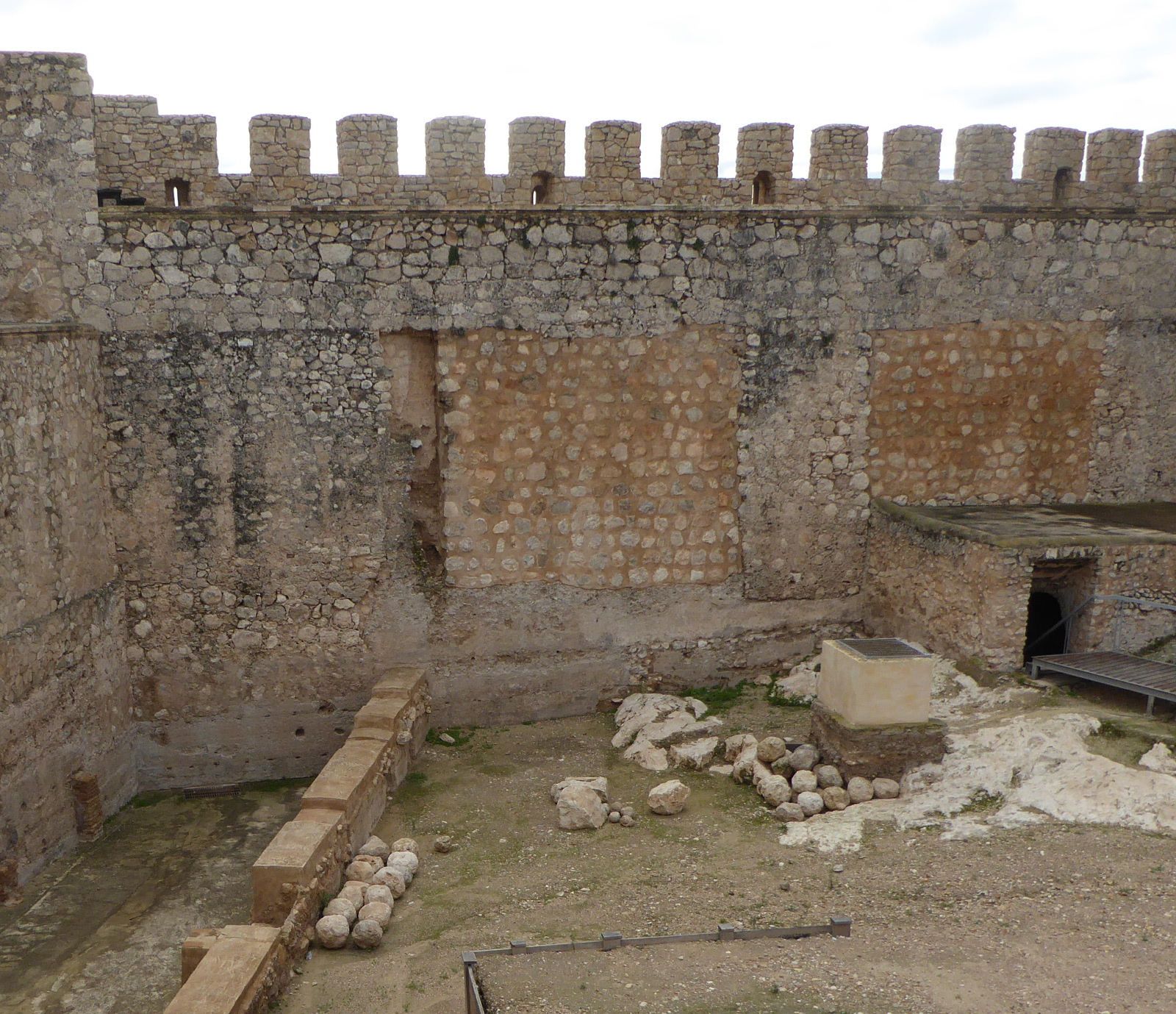
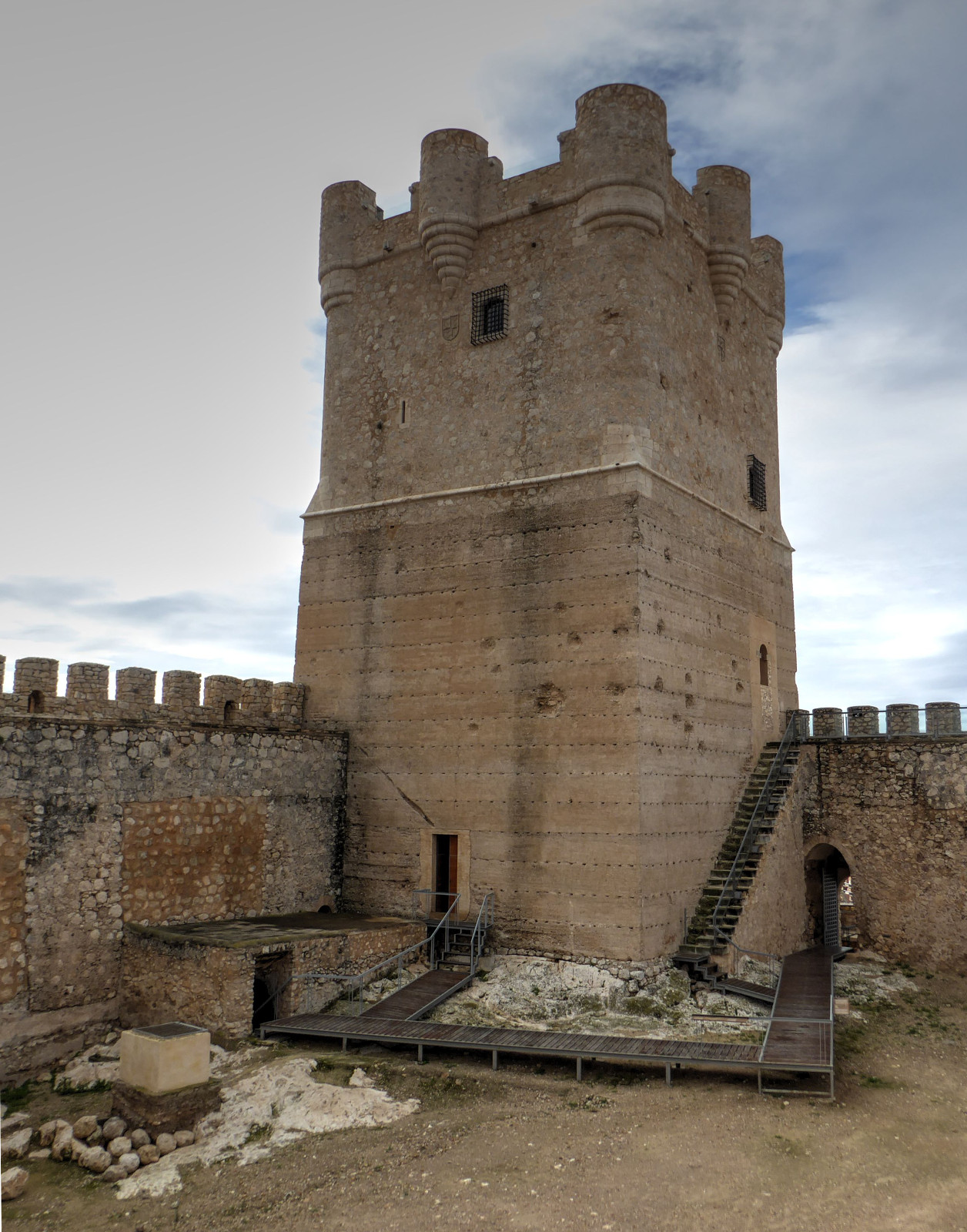
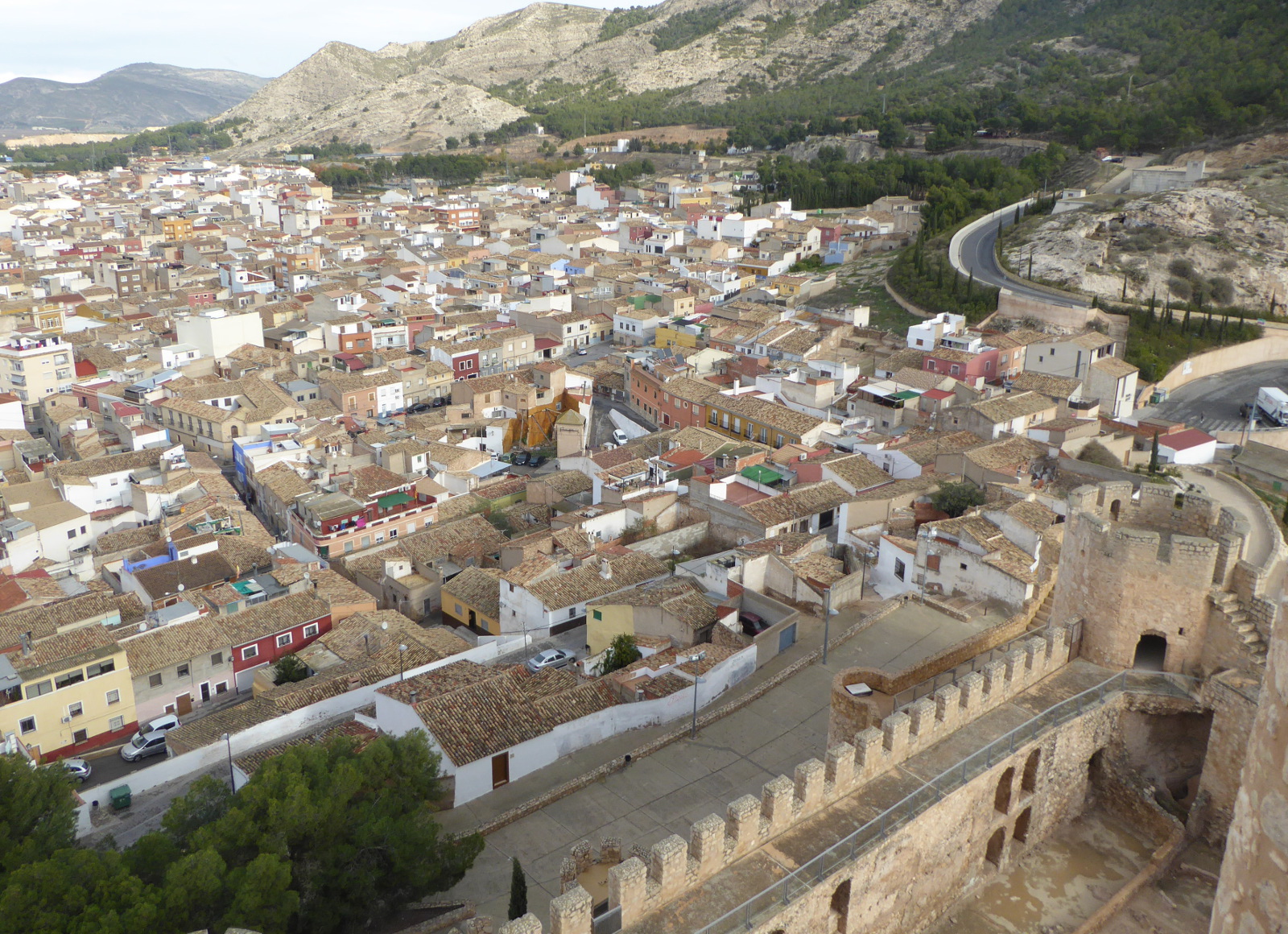
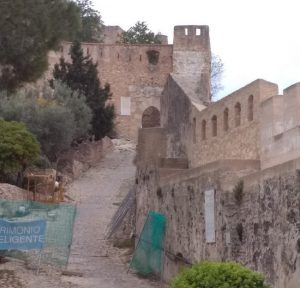
The Atalaya Castle was built in the eleventh century by the Islamic rulers of Spain. It sits on a hill more or less in the middle of town.
(Rhonda and I had attempted to visit the castle several years earlier. But at that time it was closed due to damage from an earlier lightning strike.
“Torre de Homenaje” or “Castle Keep”
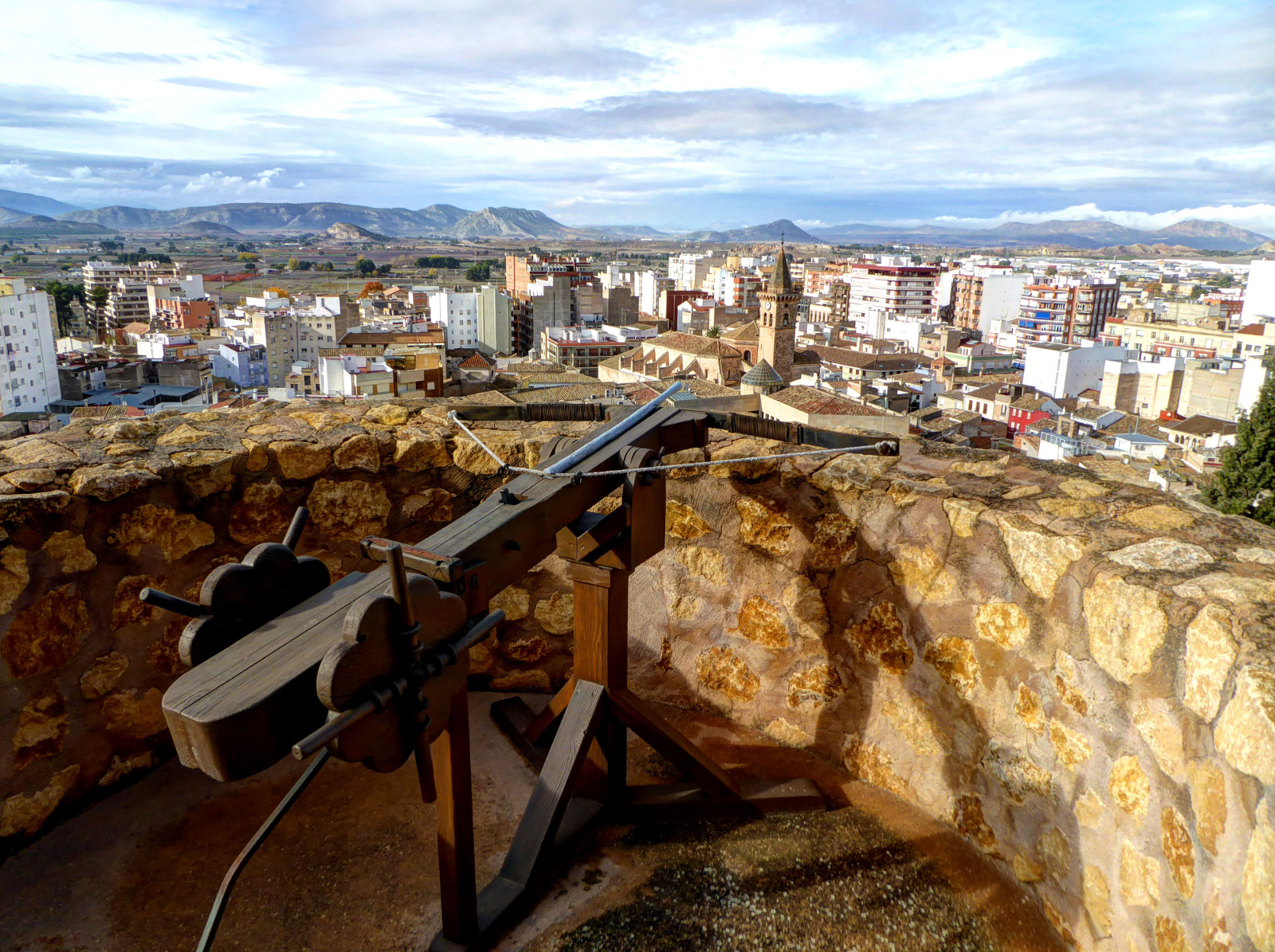
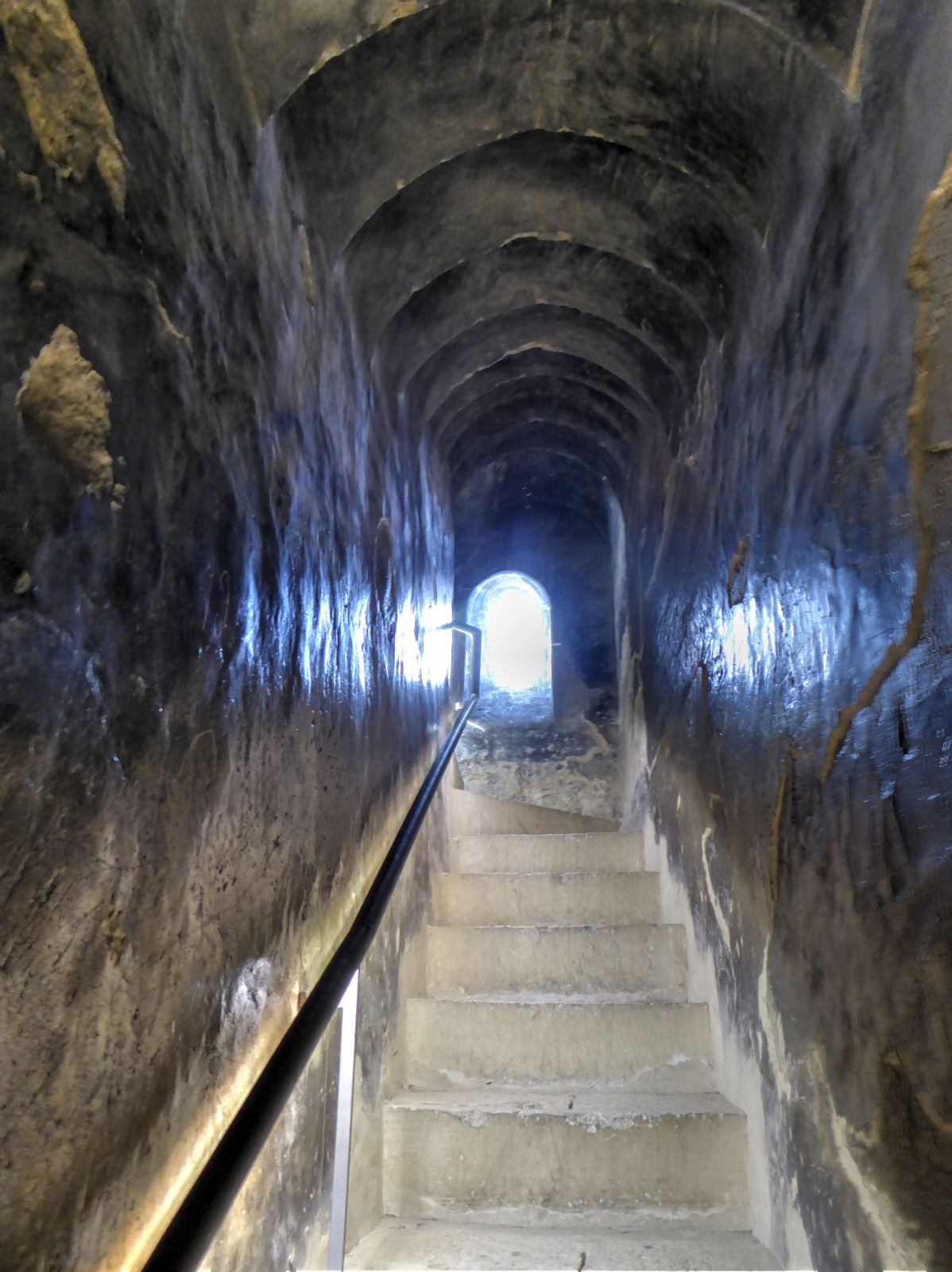
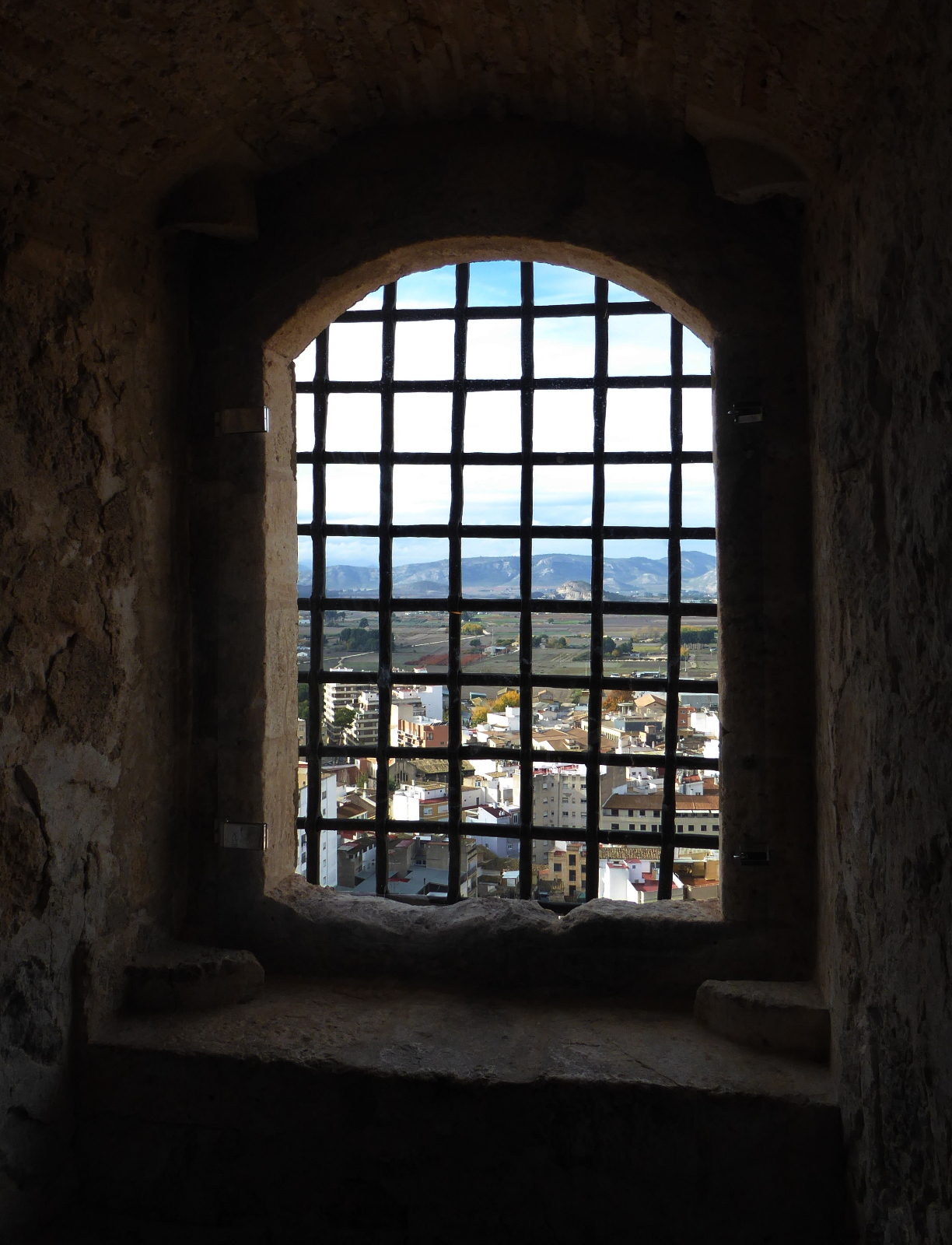
Interior stairs led to the top of this inner tower, and from the top the views were phenomenal.
Treasure Discovery Video
After enjoying the castle, I went to see the “Tesoro de Villena” (Treasure of Villena) which is housed in the José Maria Soler museum within the municipal building. The “Treasure” is a trove of (mostly) gold objects over 3,000 years old that were found in a large clay container. This incredible find came to light in 1963 when a worker found a large pure gold bracelet in some gravel fill being used in conjunction with the construction of a building.
The initial thought was that someone in town had dropped it. But then it was taken to authorities and the town archaeologist got involved. In conjunction with the workers, the origin of the fill material was located and excavation revealed the clay vessel which contained 28 bracelets, 11 bowls, and other miscellaneous objects. Today this valuable collection is in a locked case in the museum.
My visits to the castle and museum completed, I had enough time left in town to enjoy wandering around, exploring side streets and people watching.
 That means great food!